
Flowers
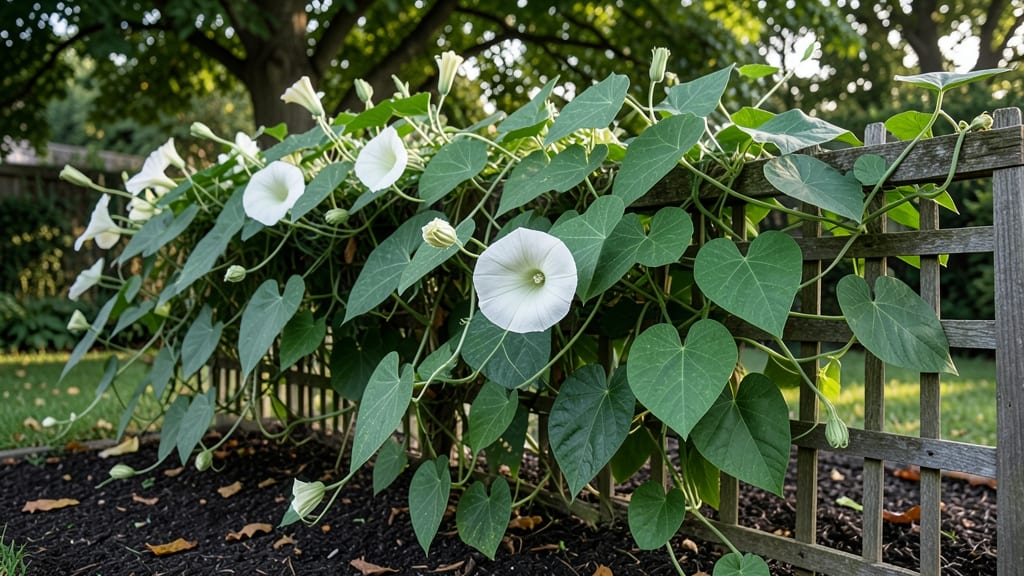
Moon flowers are annuals, not perennials, which means they grow, bloom, and die within a single growing season before frost kills them. Their tropical origins and frost sensitivity make them perfect for warm-season gardens, but they won't survive winter and must be replanted yearly.
Moon flowers thrive in summer's warmth but can't handle cold temperatures, which is why they're classified as annuals. 🌸 Unlike perennials like morning glories or clematis that regrow each spring, moon flowers complete their entire life cycle in just one season.
This makes them ideal for gardeners who want vibrant summer color but don't want to deal with winter care. The key difference lies in their tropical heritage—these flowers evolved in warm climates where frost is nonexistent, so they lack the hardiness to survive freezing temperatures.
For gardeners who love moon flowers but want to keep them around longer, there are workarounds like successive planting or even trying to overwinter cuttings in greenhouses. However, these methods require extra effort and aren't foolproof.
The truth is, moon flowers are best enjoyed as seasonal stars that bring quick bursts of beauty to summer gardens.
💡 In This Article
- Why Moon Flowers Die After One Season
- Extending Moon Flower Beauty Through Gardening Hacks
Why moon flowers die after one season
Moon flowers (Ipomoea alba) are classified as annuals because their entire life cycle—from seed germination to seed production—unfolds in just one growing season. This is primarily due to their tropical origins, where frost never occurs naturally.
When exposed to temperatures below 50°F, their delicate foliage and stems begin to blacken and collapse within 24-48 hours. Unlike perennials like morning glories (Ipomoea purpurea), which can regrow from underground tubers or roots, moon flowers lack any hardy structures to survive winter dormancy.
Their rapid growth and blooming cycle are also tied to photoperiodism—their flowers open at night (hence the name "moon flower") and close by morning, a trait optimized for warm, frost-free climates. When nighttime temperatures drop below 60°F, the plant's metabolic processes slow dramatically, halting growth and eventually killing it.
This frost intolerance is the defining factor that separates moon flowers from true perennials, which have evolved adaptations like woody stems, deep root systems, or specialized tissues to endure cold snaps.
Botanically, moon flowers are monocarpic, meaning they allocate all their energy to producing flowers and seeds in their first season rather than storing reserves for regrowth. This is similar to other annuals like marigolds or zinnias, which prioritize reproduction over longevity.
The trade-off is stunning summer blooms—each plant can produce 3-5 inches wide white flowers daily—but at the cost of seasonal survival. 🌙
Comparing them to perennials like clematis or morning glories highlights the stark difference: clematis can live for decades with proper care, while morning glories may reseed themselves annually. Moon flowers, however, are purely seasonal, making them a "use-it-or-lose-it" plant for gardeners.
Their inability to self-seed reliably in most climates further cements their annual status, as they depend entirely on gardeners to replant seeds each spring.
What makes this even more fascinating is how moon flowers prioritize reproduction: once they detect shortening daylight in late summer, they shift all resources to seed production, often at the expense of foliage health. This biological clock ensures their genes survive through seed dispersal, even if the parent plant perishes.
It's a survival strategy that works beautifully in warm climates but leaves them vulnerable to cold snaps in temperate zones.
Their short lifespan isn't a flaw—it's an evolutionary adaptation. Moon flowers thrive in environments where they can complete their life cycle before seasonal changes become hostile. For gardeners, this means embracing their fleeting beauty as a summer highlight rather than expecting perennial reliability.
The key takeaway is understanding that moon flowers are designed to be temporary, offering a burst of nocturnal elegance that's impossible to replicate with hardier plants.