
Plants
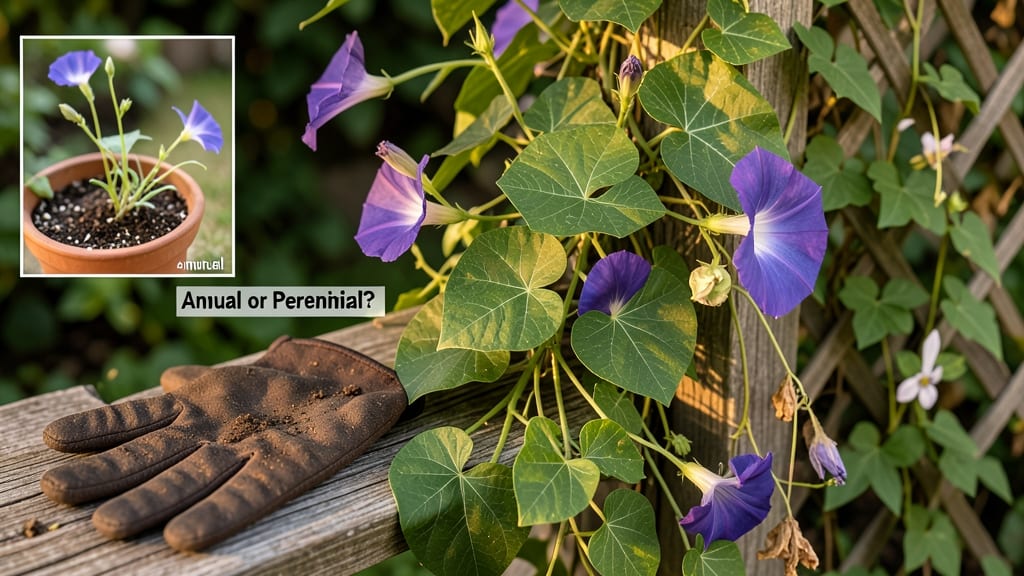
Morning glories are NOT perennials in most climates—they die back after frost and regrow from seeds each spring, though some varieties may self-seed aggressively. In warmer zones (9-11), they may persist as tender perennials with winter protection.
Morning glories behave more like annuals in colder regions because their delicate roots and tubers can't survive freezing temperatures. 🌱 When nighttime temps drop below 30°F, the plants shut down completely, only to sprout fresh from seeds the following spring.
Even in milder climates, they rarely return year after year without human intervention—most gardeners treat them as seasonal favorites rather than permanent additions.
What sets them apart is their remarkable resilience in warmer areas. In zones 9-11, morning glories can continue growing through winter if given proper mulch or frost blankets.
Some gardeners even report them returning year after year when protected, though they're still technically "tender perennials" rather than true hardy plants like daylilies or hostas.
💡 In This Article
- Why Morning Glories Die in Cold Climates
- Extending Morning Glory Growth in Cold Regions
Why morning glories die in cold climates
Morning glories (Ipomoea spp.) lack the cold-hardy root systems of true perennials like peonies or daylilies. Their fibrous roots and tuberous structures—critical for storing energy—simply can't withstand prolonged exposure to temperatures below 30°F.
When frost hits, these storage organs either shrivel or rot, depriving the plant of the energy needed to regrow. 🌱 Unlike hardy perennials that develop deep, insulated root crowns, morning glories rely on rapid above-ground growth during warm months, leaving their underground systems vulnerable.
The plant's entire life cycle accelerates in response to daylight length, a trait called photoperiodism. In colder climates, morning glories complete their growth cycle within 90-120 days, producing seeds before the first frost.
These seeds then lie dormant until spring, when temperatures rise above 50°F—a process that explains why they appear annual rather than perennial. Even in milder zones, their roots rarely survive winters without protection because they lack the protective suberin layer found in true perennials.
Microclimates can create exceptions to this rule. In sheltered spots—like against south-facing walls or under evergreen trees—morning glories might survive brief cold snaps. However, these are rare cases rather than reliable behavior.
The plant's native tropical and subtropical origins (Central/South America) mean it evolved without adaptations for freezing temperatures. 🌡️ For comparison, hardy perennials like hostas can endure -25°F winters, while morning glories typically succumb to 25°F or lower without intervention.
Another key factor is the plant's rapid growth habit. Morning glories prioritize vine expansion and flowering over root development, leaving their underground structures shallow and fragile. This growth strategy works beautifully in warm climates but becomes a liability when winter arrives.
Without proper winter protection, the roots simply can't regenerate after frost damage, which is why gardeners in colder zones must treat them as annuals.
The confusion often arises from morning glories' ability to self-seed aggressively. While they may return year after year from seeds, this doesn't make them perennials—it's more like nature's way of ensuring their survival through reproduction rather than persistent growth.
True perennials regrow from the same root system each season, while morning glories rely on a fresh start from seeds every spring. 🌿
Even in warmer zones (9-11), morning glories behave as "tender perennials"—they can persist with winter protection but still lack the hardiness of native desert or alpine plants. Their survival depends entirely on human intervention, like heavy mulching or frost blankets, rather than innate cold resistance.
This delicate balance explains why they're often grown as annuals even in mild climates.