
Vegetables
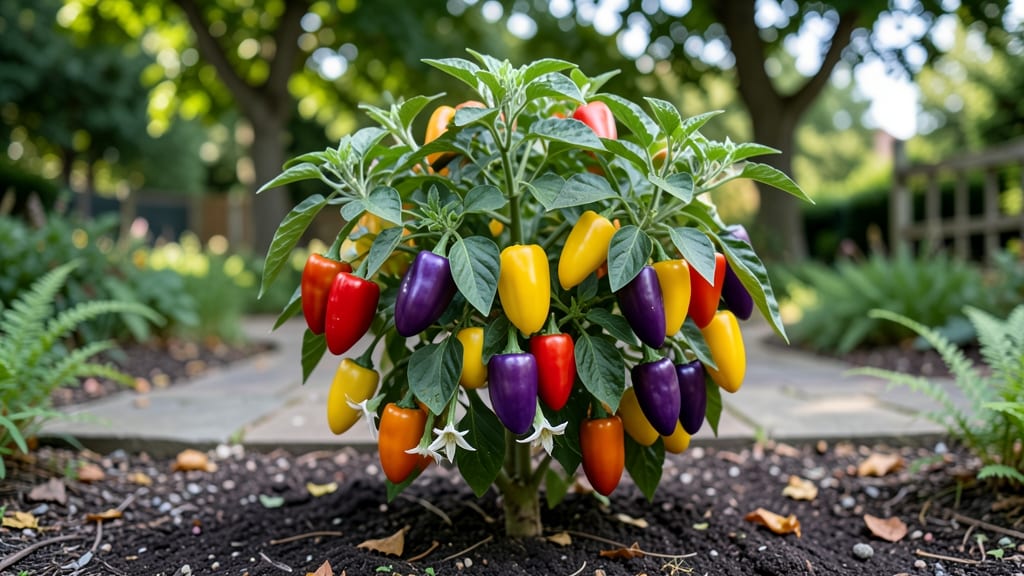
Ornamental peppers aren't true perennials in most growing regions, though they often regrow from their base after winter if protected. Their survival depends heavily on climate—acting as annuals in colder zones and semi-perennials in milder areas with proper winter care.
Ornamental peppers behave like perennials in warmer climates (USDA zones 9-11) where they naturally survive winter, but in colder zones, frost kills the foliage. 🌱 The key difference is their root system—many varieties regrow from the base if the roots stay intact, even if the tops freeze.
I’ve seen 'Apache' peppers bounce back reliably in zone 8 with thick mulch, while others need container protection for overwintering.
What makes this tricky is that some varieties self-seed aggressively, creating the illusion of perennial behavior. For true perennial-like growth, focus on protecting the root zone—whether through mulch, containers, or greenhouse overwintering. This turns them into semi-perennials rather than annuals.
💡 In This Article
- Ornamental Pepper Cold Hardiness by Variety
- Extending Ornamental Pepper Lifespan: Winter Care Tips
Ornamental pepper cold hardiness by variety
The cold hardiness of ornamental peppers varies dramatically between species and cultivars, with Capsicum annuum varieties generally handling cooler temperatures better than Capsicum frutescens or Capsicum chinense.
For example, 'Apache' peppers—a popular Capsicum annuum—can survive brief dips to 25°F with proper protection, while 'Jalapeño M' (a hybrid) often regrows from roots after exposure to 28°F for short periods.
The key threshold is 25–30°F: below this, most ornamental peppers suffer frost damage to foliage, but their roots often stay alive if insulated.
What sets resilient varieties apart is their root system depth and thickness. 'Apache' develops a robust taproot that stores energy, allowing regrowth even after the tops freeze black. In contrast, smaller-fruited varieties like 'Fish Pepper' have shallower roots and struggle below 30°F unless heavily mulched.
The science here involves cryoprotection—plants that produce more sugars and antioxidants (like those in 'Apache') can better withstand freezing stress. 🌱 This is why some gardeners swear by these varieties for zone 7-8 overwintering.
Temperature isn't the only factor—day length plays a role too. Ornamental peppers are short-day plants, meaning they flower and fruit based on light exposure. In colder zones, shorter winter days can delay regrowth until spring.
This is why gardeners in zone 6 often treat them as annuals: even if roots survive, the delayed spring growth may not compensate for lost summer productivity. The trade-off is clear: push for overwintering in marginal zones, and you might get a late start.
For true perennial behavior, look to Capsicum pubescens (like 'Rocoto' varieties), which can handle 20°F with protection. These Andean natives have natural cold tolerance from their high-altitude origins. However, most ornamental peppers—especially those bred for color rather than hardiness—won't match this resilience.
The bottom line: your best bet for "perennial-like" growth is selecting Capsicum annuum varieties with thick stems and deep roots, then protecting them through winter.
Here's a quick comparison of common ornamental pepper hardiness:
- Most resilient: 'Apache' (25°F with protection), 'Jalapeño M' (28°F), 'NuMex Twilight' (26°F)
- Moderate: 'Fish Pepper' (30°F), 'Lunchbox' (32°F)
- Least cold-tolerant: Capsicum chinense varieties (35°F+)
The takeaway? Don't assume all ornamental peppers are created equal—some varieties are far more likely to regrow than others, and their success hinges on both genetics and your winter protection strategy. 💫