
Orchid Care
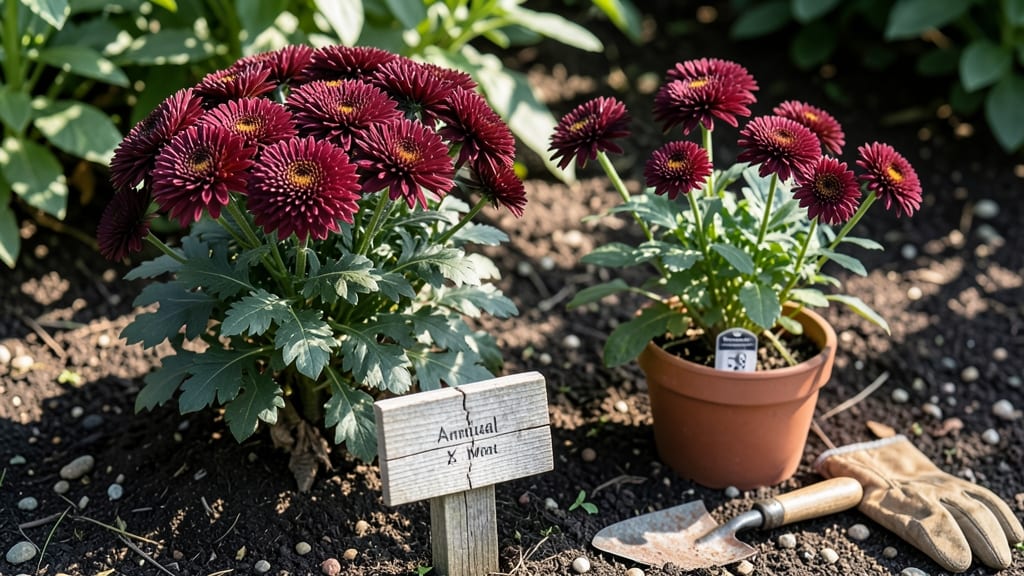
Mums (chrysanthemums) are perennials in their native climates but often treated as annuals in colder regions because they die back after frost. With proper winter care, they can regrow yearly, though some varieties struggle in harsh winters.
Whether mums behave as annuals or perennials depends entirely on your climate. In warmer zones (USDA 8-10), these plants naturally return each year, thriving as hardy perennials. 🌿 However, when temperatures drop below 20°F, the roots often fail to survive, forcing gardeners in colder areas to replant annually.
This explains why nurseries sell mums as seasonal plants—they're simply adapting to local growing conditions.
What many don't realize is that with the right protection—like heavy mulching or container overwintering—you can coax these plants back year after year. The key is understanding each variety's cold tolerance, with some like 'Dynasity' handling frost better than others.
This makes the annual vs. perennial distinction more about care than biology.
💡 In This Article
- Why Mums Act Like Annuals in Cold Climates
- How to Overwinter Mums for Year-Round Blooms
Why mums act like annuals in cold climates
Mums (chrysanthemums) are naturally perennials in their native East Asian climates, where they experience mild winters and consistent moisture. However, their behavior shifts dramatically in colder regions like the northern U.S. and Canada.
The turning point occurs when temperatures drop below 20°F—this triggers a physiological response where the plant's roots and crowns become dormant, but not always survive. Unlike true annuals, which complete their life cycle in one season, mums enter a state of suspended animation, waiting for warmer conditions to regrow.
The key factor is root hardiness, which varies by variety. Most garden-center mums fall into USDA hardiness zones 5-9, meaning they can tolerate brief cold snaps but fail during prolonged freezes.
For example, 'Dynasity' series can handle -15°F with proper care, while standard florist mums (like 'Autumn Carnival') rarely survive below 15°F. This is why gardeners in zone 4 or colder often treat them as annuals—the roots simply don't have the energy reserves to regenerate after severe frost damage.
What happens biologically is fascinating: when frost hits, the plant's cells release protective sugars that act like antifreeze, but this only works down to a certain point. Below 15°F, ice crystals form within the cell walls, rupturing them permanently.
The above-ground foliage may look dead, but the roots might still be alive—this is why you can sometimes coax regrowth in spring with careful watering. The confusion stems from how nurseries sell mums as seasonal plants; they're simply catering to regions where overwintering isn't practical.
Consider this comparison: A true perennial like peonies can handle -30°F because their roots are deeply established and insulated by soil. Mums, however, have shallower root systems designed for their native temperate climates.
Their annual-like behavior is an evolutionary compromise—prioritizing rapid growth and blooming in short seasons over extreme cold survival. This explains why you'll see mums thriving in fall gardens but disappearing by winter in colder zones.
There's also the factor of cultural conditioning. Gardeners in warm climates (zones 8-10) naturally treat mums as perennials because they regrow reliably each year.
But in colder regions, the expectation shifts—people plant them for their fall color, enjoy the blooms, then accept their demise as part of the seasonal cycle. This creates a self-fulfilling prophecy where mums become annuals by default, even though their biology allows for perennial behavior with proper care.
The science of plant dormancy plays a crucial role here. Mums enter a state called "endodormancy" in response to shortening daylight hours and cooling temperatures. This isn't the same as hibernation—it's a genetic program that prevents growth until conditions improve.
However, if the cold persists too long or becomes too severe, the plant's energy reserves deplete, and it fails to break dormancy in spring. This is why timing is everything in overwintering mums—you're essentially racing against the clock to protect them before their biological shutdown becomes permanent.
What most gardeners don't realize is that the annual vs. perennial distinction is more about management than biology. With the right techniques—like heavy mulching or container overwintering—you can extend mum lifespan indefinitely. The key insight is understanding that their "annual" behavior is a climate adaptation, not a fundamental trait.
This makes mums one of the most interesting plants for studying how environment shapes plant behavior! 🌱