
Orchid Care
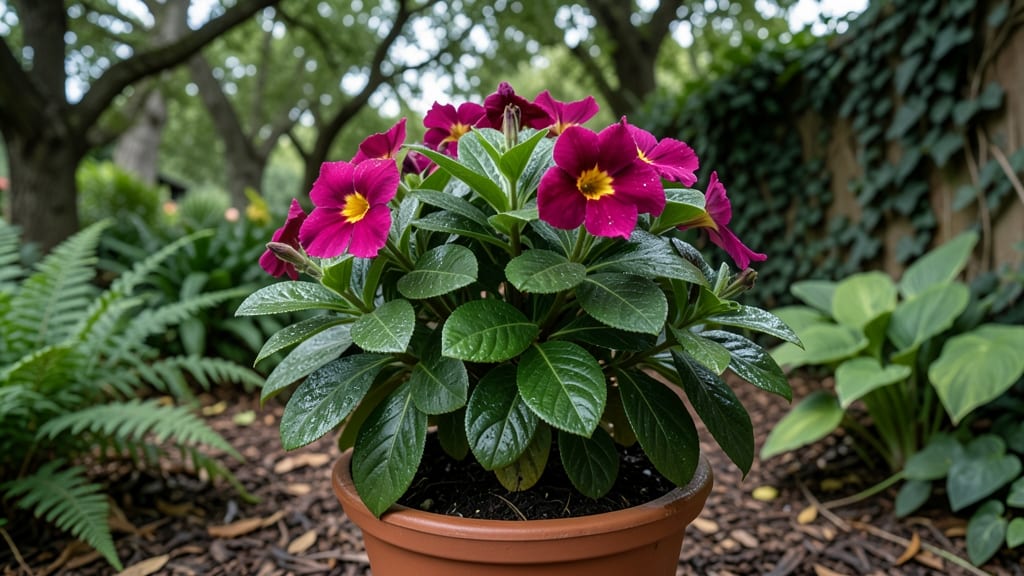
New Guinea impatiens are not true perennials in most climates—they thrive as annuals or tender perennials in frost-free zones (USDA 10-12), dying back in cooler weather but often self-seeding or returning if protected from cold snaps. Their tropical origins demand warmth year-round for survival.
New Guinea impatiens act more like annuals because their tropical roots can't handle frost—even a light freeze will kill them to the ground. 🌱 Unlike hardy perennials that regrow from established roots, these beauties rely on warm temperatures to keep their delicate foliage alive.
In milder climates (zones 10-12), they might survive winters if sheltered, but most gardeners treat them as seasonal plants that self-sow for next year's blooms.
What sets them apart from other impatiens (like the classic Impatiens walleriana) is their heat tolerance—they can handle summer sun better, but that same sensitivity to cold makes them less reliable as perennials.
If you're in a cooler zone, think of them as summer's fleeting stars rather than long-term garden residents.
💡 In This Article
- Why New Guinea Impatiens Die in Cold Weather
- Extending New Guinea Impatiens Season: Overwintering Tips
Why New Guinea impatiens die in cold weather
New Guinea impatiens (Impatiens hawkeri) evolved in the tropical highlands of Papua New Guinea, where temperatures never dip below 50°F and humidity stays consistently high.
Their entire biology is adapted to this environment: thin, delicate stems can't support heavy frost, and their shallow root systems struggle to insulate against cold soil.
When temperatures drop below 32°F, cellular damage occurs within minutes as ice crystals form in their leaves and stems, rupturing cell walls and causing irreversible harm. 🌡️
The real killer isn't just frost—it's the rapid temperature fluctuations that trigger shock responses. Unlike hardy perennials that enter dormancy, New Guinea impatiens lack the physiological mechanisms to survive winter.
Their leaves contain high water content (similar to succulents but without protective wax layers), making them particularly vulnerable to freeze-thaw cycles. Even a light frost at 30°F can cause brown, mushy patches that spread within 24 hours, while severe freezes (25°F) will blacken entire plants overnight.
Comparing them to their cousin, Impatiens walleriana (the classic "busy Lizzie"), highlights the difference: walleriana tolerates 28°F for short periods and can regrow from roots, while New Guinea types have no such resilience.
Their tropical heritage means they prioritize rapid growth and vibrant blooms during warm seasons rather than cold endurance. This is why gardeners in zones 8-9 often see them die back completely each winter, even though they might self-seed prolifically the following spring.
What most gardeners don't realize is how quickly these plants react to cold stress. Within 1-2 hours of temperatures dropping to 40°F, you'll notice leaves curling inward—a survival mechanism to reduce exposure.
By 35°F, photosynthesis shuts down completely, and any damage becomes permanent. The root systems, while fibrous, lack the protective mycorrhizal networks found in true perennials, leaving them exposed to cold soil temperatures.
Interestingly, the most cold-tolerant New Guinea impatiens cultivars (like 'Temptation' or 'Super Elfin') can handle brief exposures to 30°F if dry, but their tolerance comes from drought adaptation rather than frost resistance.
Their leaves develop thicker cuticles, but this is more about conserving moisture than withstanding cold. The bottom line: these plants are summer's tropical interlopers, not winter survivors. 🌿
For gardeners in marginal zones (USDA 9-10), the key is understanding this biological limitation. Instead of fighting nature, work with it: plant them as annuals, protect them from early fall frosts with row covers, and enjoy their vibrant blooms while they last.
Their inability to overwinter reliably is actually what makes them perfect for container growing—you can simply replace them each season without worrying about winter care.