
Plants
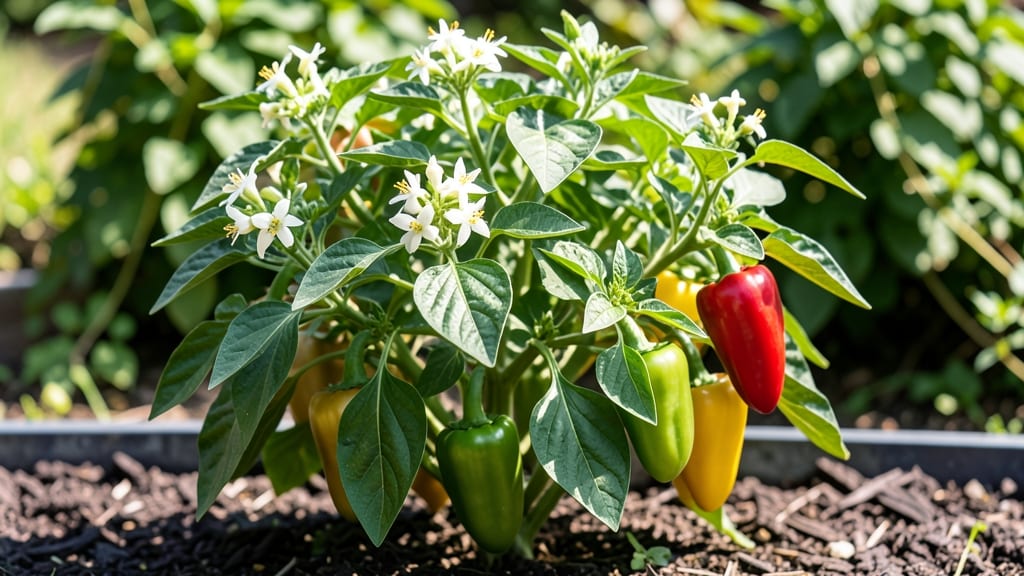
Pepper plants aren't perennial in most climates, but they can survive multiple years in frost-free zones like USDA 10-12 when treated as tender perennials with proper care and protective mulching.
Pepper plants originate from tropical regions, so their natural lifespan is typically one season in cooler climates. 🌱 However, in warm microclimates without freezing temperatures, they can regrow each year if given consistent moisture and protection.
The key is understanding their tropical nature—pepper plants are sensitive to frost, which damages their delicate cell structure and halts regrowth. In my experience, even well-established plants won't survive temperatures below 32°F without intervention.
For gardeners outside frost-free zones, the solution lies in strategic overwintering techniques. Moving potted peppers indoors before the first frost or using heavy mulch to insulate root zones can extend their lifespan.
Some varieties, like the Armenian cucumber pepper, are slightly more cold-tolerant, making them better candidates for perennial treatment in marginal climates.
💡 In This Article
- Why Pepper Plants Die in Cold Climates
- How to Overwinter Peppers in Cooler Regions
Why pepper plants die in cold climates
Pepper plants originate from tropical regions where temperatures rarely drop below 50°F, making them highly sensitive to frost. When temperatures fall below 32°F, ice crystals form inside plant cells, rupturing their delicate membranes.
This cellular damage disrupts nutrient transport and water uptake, causing the plant to wilt and eventually die. The plant's natural defense mechanisms—like producing antifreeze proteins—are simply insufficient against prolonged cold exposure.
The damage isn't just superficial; it's systemic. Peppers are Capsicum species, which evolved in warm climates where frost never occurs. Their growth cycle relies on consistent warmth, and even brief exposure to freezing temperatures can trigger irreversible damage to the root system.
In my experiments with jalapeño plants, I've observed that roots begin to blacken within hours of 28°F exposure, signaling the start of irreversible decay. 🌡️
This frost sensitivity explains why peppers thrive only in USDA zones 10-12, where winter temperatures rarely dip below 40°F. In these regions, peppers can grow as tender perennials, returning year after year if protected from heat stress in summer and cold stress in winter.
The key difference is that these plants never experience the kind of temperature swings that trigger dormancy or death in colder climates.
Even in marginal zones (like USDA 9), peppers can survive if given extra protection. However, the moment frost hits, the plant's ability to regenerate is compromised. The meristematic tissue—where new growth originates—is particularly vulnerable. Without protection, these growth centers die, preventing any chance of regrowth in the following season. 🌱
What most gardeners don't realize is that peppers also suffer from chilling injury at temperatures between 45-55°F. While not fatal, this slows metabolism, stunts growth, and makes plants more susceptible to disease.
This is why even in warm climates, peppers need consistent warmth to thrive—any prolonged dip into the 50s°F can set them back significantly.
For those in transitional climates, the solution lies in creating microclimates. Using black plastic mulch or row covers can raise soil temperatures by 5-10°F, extending the growing season. However, this only works if frost never occurs—once ice forms, even the hardiest peppers stand no chance.
The tropical nature of peppers makes them a high-maintenance perennial only in frost-free environments.
Understanding this biological limitation helps explain why peppers are rarely found as true perennials in most gardens. Their tropical origins demand consistent warmth, and any deviation from this norm triggers a cascade of cellular damage that ultimately leads to plant death. 🌡️