
Plants
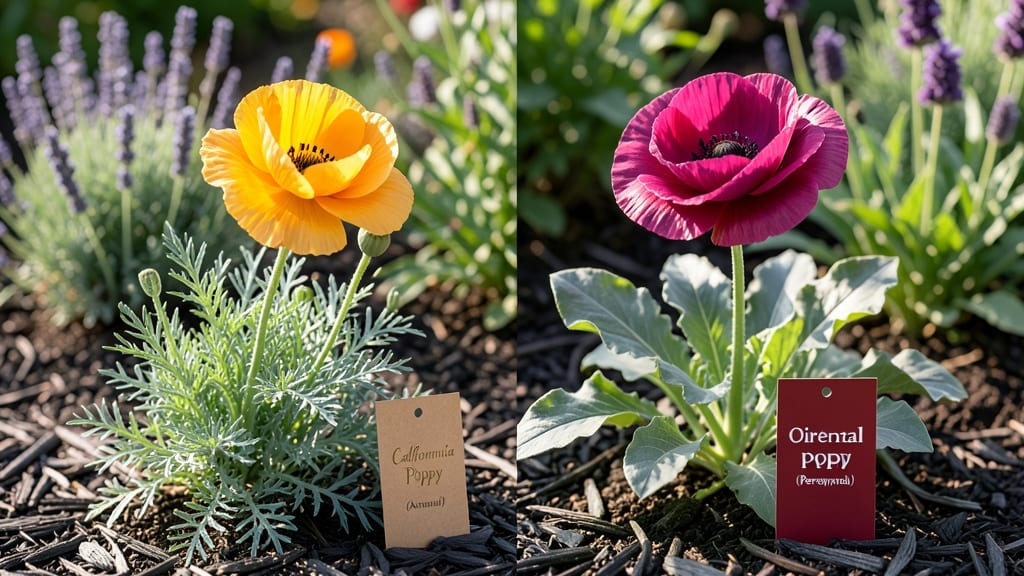
Poppies are not true perennials—they die back after flowering but reseed prolifically, returning year after year in most climates. Some varieties like Iceland poppies act as short-lived perennials, while others behave like annuals.
Most poppies follow a unique life cycle where they bloom, drop seeds, and retreat underground for winter, only to sprout fresh from those seeds the following spring. 🌱 This self-sustaining habit is why they often seem perennial, even though they lack the deep root systems of true perennials like peonies.
The key difference lies in their seed production—poppies invest heavily in creating thousands of tiny seeds that germinate naturally, ensuring their presence year after year without replanting.
For gardeners, this means less maintenance but more strategic planning. Varieties like California poppies thrive in USDA zones 5-10 and reseed aggressively, while Oriental poppies may need winter protection in colder climates.
The secret to long-term success? Let the spent blooms stay on the plant—they're nature's way of guaranteeing next year's show.
💡 In This Article
- Why Poppies Appear Annual but Return Year After Year
- Best Poppy Varieties for Long-Term Garden Presence
Why poppies appear annual but return year after year
Poppies exhibit what botanists call a "short-lived perennial" or "biennial" life cycle, which explains why they seem to return annually without replanting. Unlike true perennials like peonies, which develop deep, woody root systems that survive winter, poppies rely on a fibrous root system and a clever seed strategy.
When the plant completes its flowering cycle—typically in 60-90 days—it produces 10,000-20,000 tiny seeds per plant, each containing a hard, protective coating that resists immediate germination.
The real magic happens during winter. These seeds undergo a process called cold stratification, where exposure to cold temperatures (35-40°F for 4-6 weeks) breaks their dormancy, mimicking natural conditions. This is why poppies often bloom in early spring—the seeds timed their awakening perfectly.
The fibrous root system, while not woody like peonies, allows the plant to store enough energy to regrow quickly once temperatures rise, creating the illusion of perennial behavior.
What most gardeners miss is the taproot system's role. While not as deep as true perennials, poppy roots can extend 12-18 inches downward, anchoring the plant and storing carbohydrates.
This energy reserve lets the plant regenerate from the same root base for 2-3 years before declining, especially in varieties like Oriental poppies. The key difference from annuals? Their ability to produce multiple generations from a single planting through self-seeding, rather than needing yearly replanting.
Consider this comparison: Annual poppies like California poppies (Eschscholzia californica) complete their entire life cycle in one season, but their seeds create a "seed bank" in the soil that germinates over multiple years.
True perennials like peonies, however, rely on their persistent root crowns to survive winter. Poppies bridge this gap through their seed-based regeneration system, which is why they're often called "self-sowing perennials." 🌱
Light plays a crucial role too. Poppy seeds require bright sunlight (6+ hours daily) to germinate, which is why they often appear in sunny garden edges or meadows. The seeds' tiny size (0.1-0.2 inches) means they can disperse easily via wind or water, creating dense colonies.
This natural propagation explains why poppies can dominate a garden bed within 2-3 years without any human intervention.
For gardeners working with poppies, understanding this cycle means embracing their "messy" nature. Deadheading (removing spent blooms) can reduce reseeding, but leaving seed heads on the plant ensures next year's display. The trade-off? You might end up with poppies in places you didn't plant them—but that's part of their charm!
This biological strategy has made poppies one of the most resilient and adaptable garden plants across USDA zones 3-10.