
Vegetables
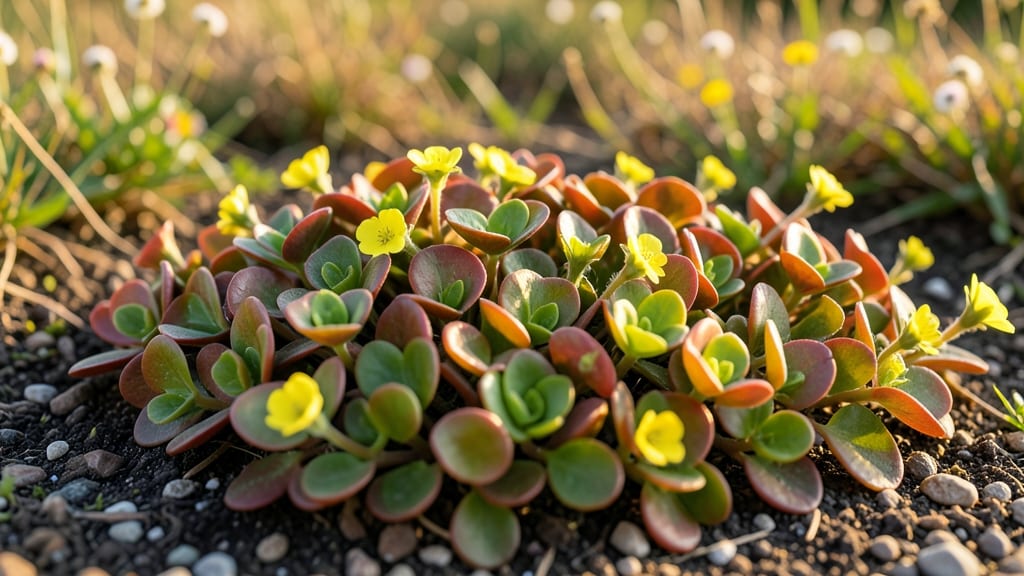
Purslane isn't a true perennial—it acts like a warm-season annual that dies back in winter but self-seeds prolifically when spring warmth returns. This cycle often makes it seem like it's coming back year after year.
Purslane's survival strategy lies in its deep taproot system, which stores energy to fuel rapid regrowth when temperatures hit 50°F or above. 🌱 Unlike true perennials that regenerate from the same rootstock, purslane relies on seeds dropped during its growing season—sometimes thousands per plant!
This explains why patches appear lush one year and sparse the next, depending on winter conditions and seed viability.
What's fascinating is how this "annual" behavior actually benefits gardeners. Since purslane thrives in heat and drought, its self-seeding habit means you often get free, low-maintenance greens appearing exactly when other crops struggle.
The key to maximizing this is understanding its two-phase life cycle: the visible summer growth and the hidden winter seed bank waiting for warmth to activate.
💡 In This Article
- Why Purslane’s Dieback Cycle Tricks Gardeners
- How to Grow Purslane Like a Perennial
Why purslane’s dieback cycle tricks gardeners
Purslane's winter dormancy works through a clever biological adaptation called thermoperiodism, where its growth responds directly to temperature shifts.
Unlike true perennials that rely on underground rhizomes or tubers, purslane stores energy in its deep taproot system—which can extend 12-18 inches below soil—allowing it to survive brief cold snaps.
When nighttime temperatures drop below 40°F for extended periods, the plant's metabolic processes slow dramatically, causing the above-ground foliage to yellow and die back. This isn't true death, though—it's a survival mechanism that conserves resources until warmth returns.
The real magic happens in spring when soil temperatures reach 50-55°F, triggering two simultaneous processes: root regrowth and seed germination. Purslane plants often produce 500-1,000 seeds per square foot during their growing season, creating a dense seed bank that can remain viable for 3-5 years in the soil.
When combined with the residual root energy, this creates the illusion of perennial regrowth. 🌱 What gardeners mistake for perennial persistence is actually the rapid emergence of new seedlings from this seed bank, sometimes within just 7-10 days of consistent warm weather.
This survival strategy makes purslane particularly well-adapted to Mediterranean and desert climates where winter rains create moist conditions followed by sudden heat. The plant's ability to "reset" each season through seeds gives it a reproductive advantage—new plants are genetically diverse and can colonize new areas more effectively than clonal perennials.
In contrast, true perennials like asparagus or rhubarb rely on the same root system year after year, making them vulnerable to disease buildup in the soil.
There's a fascinating chemical component to this cycle too. Purslane produces betalains—natural pigments that protect its cells from cold damage—while simultaneously storing omega-3 fatty acids in its roots. These compounds act like antifreeze, allowing the plant to remain metabolically active at temperatures where most annuals would perish.
The result? A plant that appears to "come back" each year without the genetic commitment of true perennial species.
What this means for gardeners is that purslane's apparent perennial behavior is actually a sophisticated survival strategy that combines seed banking with root energy storage.
The plant's ability to "cheat" the perennial definition through seed proliferation explains why it often dominates disturbed soils and why gardeners in warm climates can find it popping up year after year without any intentional planting. 💫 The key insight is that this isn't true perennialism—it's nature's way of creating a self-sustaining annual system with perennial-like persistence.