
Vegetables
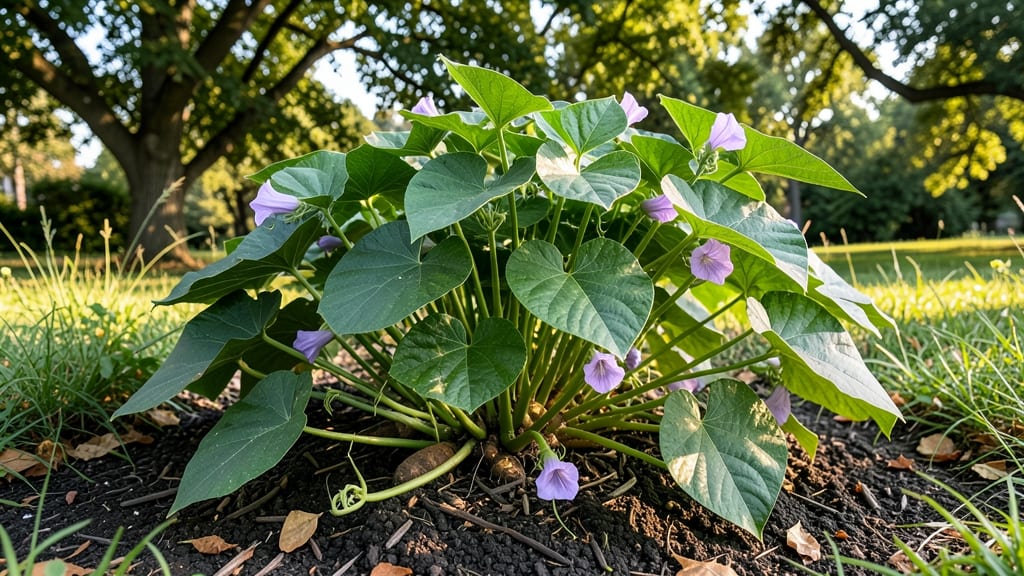
Sweet potatoes aren’t true perennials—they die back after harvest in most climates. Yet, their tubers and vines can regrow naturally each season in warm regions when stored properly, making them act like perennials.
This behavior comes down to their natural survival instincts. 🌱 Unlike true perennials that regrow from the same root system, sweet potatoes rely on stored tubers to sprout new plants.
In frost-free zones, these tubers can overwinter in the ground or be carefully stored, then replanted in spring to produce fresh vines. The key difference? True perennials regrow from the same plant structure, while sweet potatoes restart from dormant tubers—almost like a natural cloning process.
For gardeners in cooler climates, this means you can still enjoy sweet potatoes year after year by saving a few healthy tubers from your harvest. Just store them in a cool, dark place (like a root cellar) until spring planting.
The trade-off? They won’t survive freezing temperatures like true perennials, which is why they’re classified as annuals in most gardening guides.
💡 In This Article
- Why Sweet Potatoes Act Like Perennials in Warm Climates
- How to Encourage Sweet Potato Regrowth for Next Year’s Harvest
Why sweet potatoes act like perennials in warm climates
Sweet potatoes exhibit perennial-like behavior because of their unique tuber storage system. Unlike true perennials that regrow from the same root crown, sweet potatoes rely on dormant tubers to survive between seasons.
These tubers contain stored starches and nutrients that allow them to remain viable for months when conditions are right. In frost-free zones (USDA zones 9-11), tubers naturally overwinter in the ground at depths of 6-12 inches, where soil temperatures stay above 40°F—the critical threshold for tuber survival.
The magic happens through a process called tuber dormancy. When temperatures drop below 50°F, sweet potato tubers enter a low-metabolic state, conserving energy while maintaining just enough activity to prevent complete desiccation. This dormancy period can last 3-6 months, during which the tubers remain alive but inactive.
What makes this remarkable is their ability to sprout new shoots when temperatures rise again—often by late winter or early spring—creating the illusion of perennial regrowth. 🌱
Here's where climate plays the decisive role: In colder regions where temperatures fall below 32°F, tubers freeze and die, forcing gardeners to treat them as annuals. But in warm climates, the tubers' natural survival mechanisms kick in.
The key difference lies in their cold tolerance threshold: while true perennials can withstand -10°F to -20°F, sweet potatoes begin suffering damage at 40°F and die at 32°F. This explains why they thrive as "perennials" in Florida but must be replanted annually in New York.
Another fascinating aspect is their vine system. Sweet potato vines are actually modified stems that can regenerate from even small tuber fragments. When you leave a few tubers in the ground during winter, they may produce new vines by spring—sometimes even before you replant them intentionally.
This natural propagation method is why many gardeners in warm regions find sweet potatoes "coming back" year after year without conscious effort.
The biological classification gets tricky because sweet potatoes are technically hemi-cryptophytes—plants that survive adverse conditions through underground storage organs rather than true perennial root systems. This places them between true perennials and annuals.
Their ability to regrow makes them more like geophytes (plants that survive through underground storage), similar to onions or garlic, rather than classic perennials like asparagus or rhubarb.
Consider this comparison: A true perennial like asparagus sends up new shoots from its crown each spring, while sweet potatoes restart from dormant tubers—almost like a natural seed bank.
The difference becomes clear when you try to divide a sweet potato plant: you're not propagating the same plant, but rather restarting growth from stored energy reserves. This is why botanists classify them as annuals, despite their perennial-like behavior in warm climates. 💫