
Orchid Care
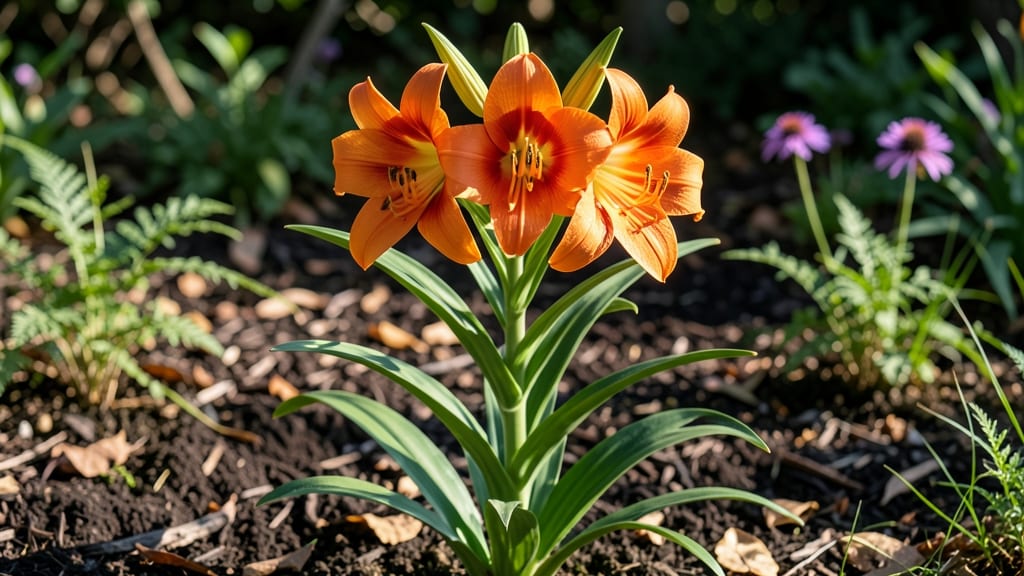
Asiatic lilies are perennials, not annuals, meaning they return year after year from underground bulbs that store energy for regrowth. Their natural die-back in winter is a survival adaptation, not a sign of failure, and proper care helps them thrive for decades.
This dormancy cycle works like a built-in reset button. 🌱 When temperatures drop, the bulbs enter a resting phase, conserving energy until spring's warmth triggers new shoots.
Unlike true annuals that complete their entire lifecycle in one season, Asiatic lilies store nutrients underground, allowing them to bounce back stronger each year with minimal effort from gardeners. I've seen mature plants in my own garden produce blooms for 10+ years with just basic seasonal care!
What sets them apart from other perennials is their cold tolerance—many varieties survive winters in zones 3-9 when properly mulched.
The key difference from annuals lies in their underground storage system: while annuals rely on seeds for reproduction, these lilies use their bulbs as living batteries, ready to push through soil as soon as conditions improve.
💡 In This Article
- Why Asiatic Lilies Die Back Annually
- Caring for Asiatic Lily Bulbs Year-Round
Why Asiatic lilies die back annually
The annual die-back of Asiatic lilies isn't a sign of failure but a sophisticated survival strategy. These plants evolved in temperate climates where cold winters force bulbs into dormancy—a state where metabolic activity slows dramatically to conserve energy.
The bulbs store carbohydrates (like starch) and proteins in specialized cells, allowing them to survive months without active growth. This adaptation is similar to how onions or garlic bulbs behave, but Asiatic lilies take it further by developing a protective outer layer that prevents moisture loss and rot during winter.
Temperature shifts trigger this cycle: when daytime highs drop below 50°F (10°C) for several weeks, the plant's internal clock detects the seasonal change through a process called vernalization. The bulbs then produce hormones that halt leaf production and redirect nutrients inward.
What's fascinating is how this dormancy differs from true annuals—like marigolds—which complete their entire lifecycle in one season before dying. Asiatic lilies, however, store 50-70% of their energy reserves in the bulb, ready to fuel rapid regrowth when spring arrives.
This makes them more like daylilies (another perennial) than summer flowers that self-seed annually.
The cold-hardiness of Asiatic lilies varies by variety, with most handling temperatures down to -20°F (-29°C) when properly mulched. The key difference from tropical perennials (like cannas) is their ability to endure freezing soil conditions.
This hardiness comes from their bulb structure: the fleshy scales contain antifreeze proteins that prevent ice crystal formation in their cells—a trait shared with some winter-hardy vegetables like kale. Without this adaptation, the plant's tissues would rupture from ice expansion during winter.
What gardeners often mistake for death is actually just the plant's natural cycle. The foliage yellowing and collapsing in fall is the bulb's way of shedding leaves to minimize water loss and energy expenditure.
Even when the stems appear brown and brittle, the bulb remains alive underground, breathing through tiny pores called lenticels. This is why you'll sometimes see new shoots emerge in early spring before the old foliage has completely disappeared—a sure sign the bulb is ready to rebound.
Comparing Asiatic lilies to other perennials highlights their unique resilience. Unlike hostas that may take 3-5 years to establish, Asiatic lilies often produce blooms their first year from bulbs because they've already stored growth energy.
Their dormancy also makes them more forgiving than tropical plants: if you accidentally cut back foliage too early in fall, the bulb can still recover as long as it hasn't frozen. This built-in recovery system is what allows them to thrive in gardens for decades with minimal intervention.
One common misconception is that Asiatic lilies are annuals because they disappear each winter. The truth is, their above-ground parts die back to protect the bulb—a strategy that actually makes them more reliable than many annuals.
While annuals must be replanted every year, Asiatic lilies return stronger each season because their bulbs accumulate more stored energy over time. This is why mature plants often produce 2-3 times more blooms than younger specimens.