
Orchid Care
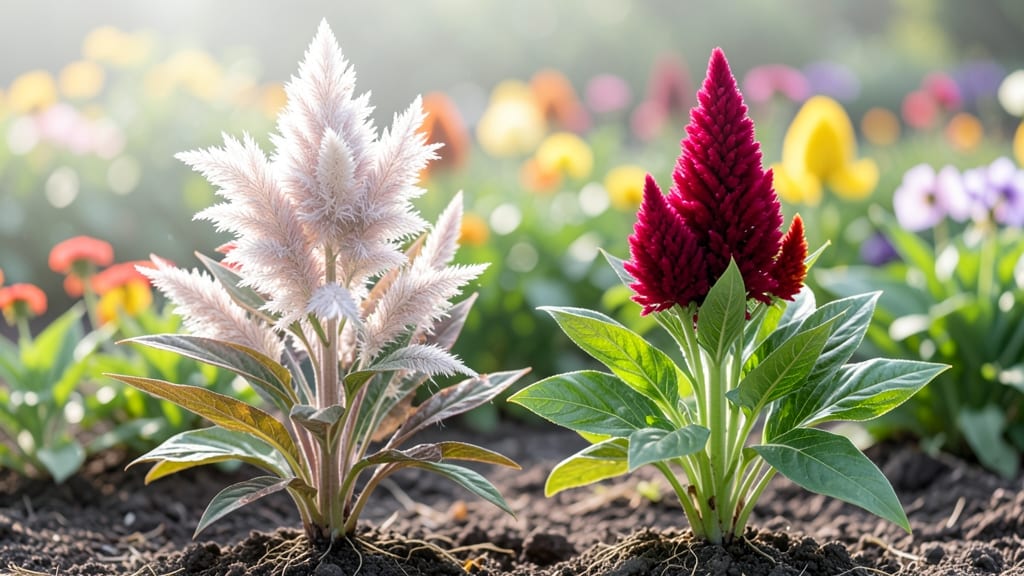
Whether celosia act as annuals or perennials depends entirely on your climate—most gardeners treat them as annuals because they die back in frost (below 30°F), but in frost-free zones (USDA 10-12), they regrow from roots each spring.
Celosia's behavior shifts dramatically with temperature. In colder regions, the plant's delicate stems and leaves freeze solid, but the roots often survive just beneath the soil surface. This is why gardeners in USDA zones 1-9 typically replant each year—they're treating the plant's annual cycle, not its true potential.
The key difference lies in root hardiness: while the above-ground foliage is frost-sensitive, the roots can endure mild winters if protected properly.
For those in zones 10-11, celosia's perennial nature becomes apparent—after winter dormancy, new growth emerges from the same root system. The secret to encouraging this behavior lies in proper winter care: heavy mulching (4-6 inches of straw or leaves) and avoiding disturbance to the root zone.
This mimics the plant's natural adaptation to tropical climates where it thrives year-round. 🌱
💡 In This Article
- How Climate Zones Affect Celosia’s Annual vs Perennial Growth
- Extending Celosia’s Life: Winter Care for Perennial-Like Growth
How climate zones affect celosia’s annual vs perennial growth
Celosia's growth cycle fundamentally shifts based on temperature thresholds tied to USDA hardiness zones. The plant's above-ground structure freezes solid when exposed to 28-30°F for more than 24 hours, but its roots often survive if protected.
In zones 1-9, where winter temperatures regularly drop below 20°F, the entire plant dies back—this is why gardeners treat celosia as annuals. The science lies in cellular damage: frost causes ice crystals to form in plant tissues, rupturing cell walls and killing the foliage.
In contrast, USDA zones 10-12 experience mild winters with rare freezes below 32°F. Here, celosia enters dormancy rather than complete death—roots remain viable underground, storing energy in rhizomes (thickened underground stems) that can regenerate new shoots when temperatures rise above 50°F in spring.
This perennial behavior mirrors tropical plants like hibiscus, which also regrow from protected root systems after dry seasons. 🌿
The transition zone (USDA 9-10) offers the most interesting case: gardeners here can push celosia toward perennial behavior with proper winter care. Without protection, the roots may survive but produce weak regrowth.
With 4-6 inches of mulch and frost blankets during cold snaps, you'll see robust returns—proof that celosia's true nature is perennial when given the right conditions.
What most people overlook is the plant's natural adaptation to its native tropical climates. Celosia's ancestors evolved in regions where temperatures rarely drop below 40°F, meaning their survival mechanisms are optimized for mild winters rather than harsh freezes.
This explains why even in zone 9, where occasional frosts occur, celosia often requires extra protection to persist beyond one season.
Consider this comparison: In zone 5, where winters average 15°F, celosia's roots might survive but won't regenerate without human intervention. In zone 11, where winters stay above 45°F, the plant naturally cycles through dormancy and regrowth.
The 10°F difference between these zones creates the annual vs. perennial divide. 🌡️
For gardeners in marginal zones (8-9), the difference comes down to microclimate protection. A south-facing bed with afternoon sun and afternoon mulch application can create a 5°F warmer environment—enough to tip the balance toward perennial behavior.
This is why some gardeners in zone 8 successfully overwinter celosia while others don't: it's not just about the zone number, but the specific growing conditions.
The key takeaway is that celosia's growth habit isn't fixed—it's a spectrum determined by winter severity and root protection. Understanding this helps gardeners make informed decisions about whether to treat their plants as annuals or invest in winter care to encourage perennial behavior.
With the right approach, even gardeners in zone 7 can coax their celosia to return year after year. 🌱