
Flowers
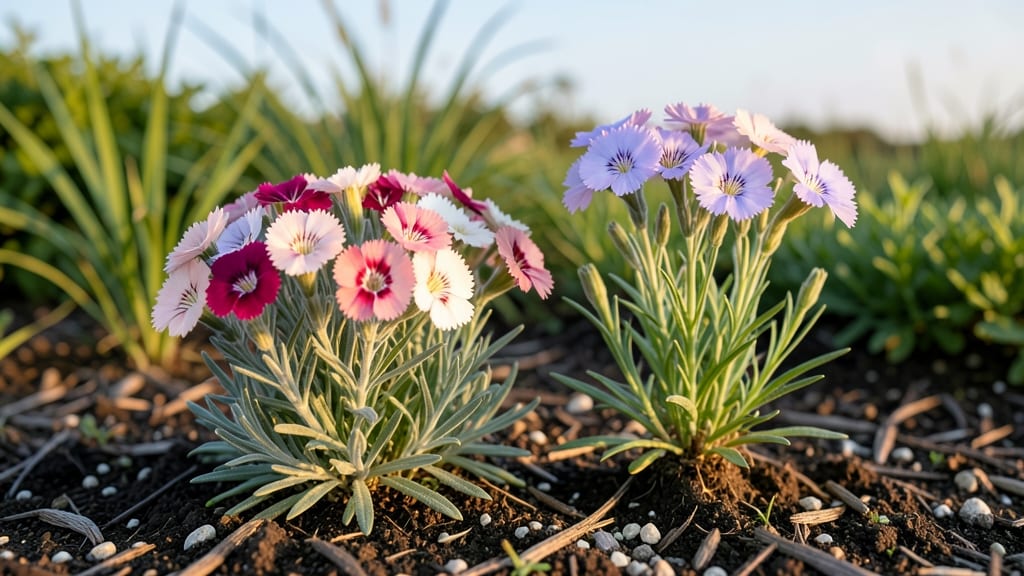
Whether dianthus flowers grow as annuals or perennials depends entirely on the variety and your local climate zone, with most cold-hardy types thriving year-round in zones 4-9 while tender varieties act as annuals in colder regions or suffer winter dieback.
This distinction matters because dianthus plants have different survival strategies: hardy perennials like Dianthus barbatus (sweet william) store energy in their roots to regrow each spring, while tender annuals like Dianthus caryophyllus (carnation) complete their entire lifecycle in one season. 🌱 The key factor is winter temperatures—if your zone drops below 20°F, even perennial types may not survive without protection.
I've seen gardeners in zone 5 successfully overwinter dianthus by adding thick mulch, which can push marginal varieties into perennial behavior.
For gardeners in warmer zones (7-10), most dianthus varieties naturally return yearly, but even these can behave differently based on summer heat. Dianthus chinensis, for example, often acts as a short-lived perennial in mild winters but may bolt or decline after just two years in hot climates.
The solution? Rotate plantings or choose heat-tolerant hybrids that balance both perennial tendencies and seasonal resilience.
💡 In This Article
- How Cold Zones Determine Dianthus Lifespan
- Best Dianthus Varieties for Annual vs Perennial Gardening
How cold zones determine dianthus lifespan
The USDA Plant Hardiness Zone Map serves as the primary guide for predicting whether your dianthus will behave as an annual or perennial.
This system divides North America into 13 zones based on average annual minimum winter temperatures, with zone 3 experiencing the coldest winters (-40°F) and zone 12 the warmest (50°F+). For dianthus, the critical threshold lies between zones 4-9, where most cold-hardy varieties can overwinter successfully.
Below zone 4, even perennial dianthus often die back to the ground, forcing gardeners to treat them as annuals unless they provide winter protection like mulch blankets or cloche covers.
What makes dianthus unique is their root system's ability to survive winter dormancy when temperatures remain above -10°F. The roots of hardy varieties like Dianthus barbatus contain high concentrations of antifreeze proteins that prevent ice crystal formation in their cells—a survival mechanism shared with cold-hardy shrubs.
However, when winter temperatures drop below -15°F for extended periods, these proteins become overwhelmed, leading to cell death and plant mortality. This explains why dianthus in zone 5 may survive winters but struggle in zone 3 without protection.
The timing of frost also plays a crucial role in determining whether dianthus will return. Early frosts in fall (28-32°F) can trigger dormancy in perennial varieties, while late frosts in spring (30-35°F) often kill tender new growth.
In zones 6-9, where winters are mild, dianthus typically remain evergreen or semi-evergreen, continuing photosynthesis at reduced rates. This explains why Dianthus chinensis often acts as a short-lived perennial in these zones—it can survive winter but may decline after 2-3 years due to accumulated stress.
Gardeners in transitional zones (4-5) often use strategic planting techniques to extend dianthus lifespan. For example, planting in south-facing beds where winter sun can penetrate provides 5-10°F of additional warmth compared to north-facing areas.
Another trick is to plant dianthus near stone borders or brick walls, which absorb daytime heat and radiate it slowly at night—a phenomenon called thermal mass that can raise soil temperatures by 3-5°F during critical winter nights.
Understanding these cold zone dynamics helps explain why some dianthus varieties act as annuals in colder climates but perennialize in warmer ones. For instance, Dianthus caryophyllus (carnation) is typically grown as an annual in zone 4 but can overwinter in zone 7 with minimal protection.
This flexibility makes dianthus an excellent choice for microclimate gardening, where small environmental differences create opportunities for extending perennial growth beyond official zone boundaries.
Consider these key factors when evaluating dianthus hardiness in your region:
- Minimum winter temperature: -10°F is the critical threshold for root survival
- Frost timing: Early fall dormancy vs late spring regrowth windows
- Soil insulation: Organic mulch adds 5-8°F of protection
- Microclimates: South-facing beds can push zone limits by 1-2 zones
What most gardeners don't realize is that dianthus often exhibits a hybrid growth pattern—acting as a perennial in mild winters but suffering dieback in harsh ones. This explains why some varieties may return for 2-3 years before finally succumbing, even in zones where they're technically classified as perennials. 🌡️