
Flowers
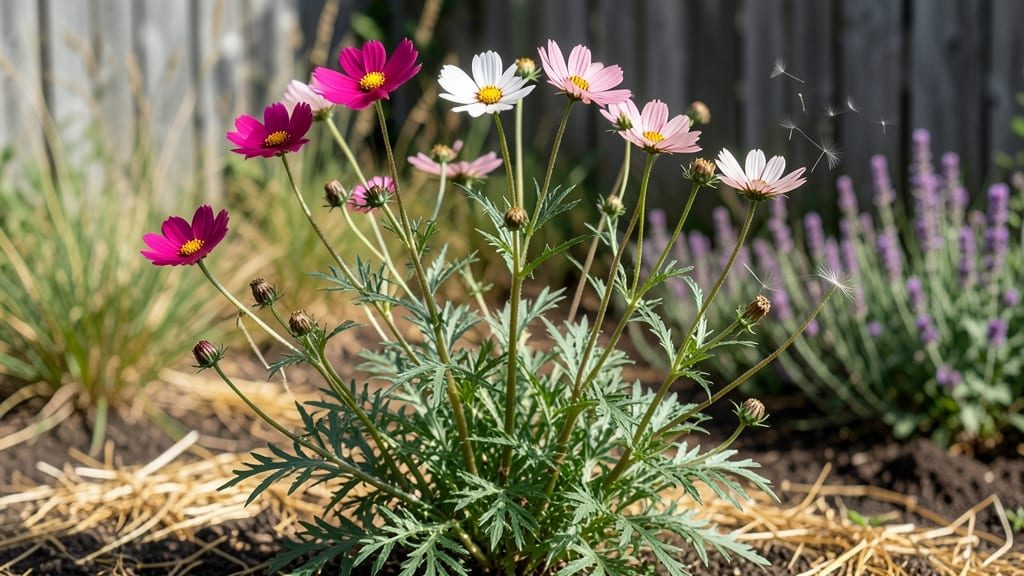
Cosmos flowers are perennial plants in USDA zones 9-11, where their roots survive winter to produce fresh foliage and blooms each spring. In colder regions, they die back to the ground annually but return through self-sowing seeds, creating a natural renewal cycle that requires almost no gardener intervention.
This hardy annual-perennial hybrid thrives on adaptability—its roots in warm climates store energy for regrowth, while colder-zone plants rely on prolific seed production to maintain presence. 🌱 The key difference? Zones 9-11 get true perennial behavior with winter dormancy, while northern gardeners enjoy "perennial-like" performance through aggressive reseeding.
I've seen cosmos pop up reliably for 5+ years in zone 6 gardens simply by leaving spent stalks in place!
For gardeners in transitional zones (7-8), a light mulch layer in late fall can extend root survival, while deadheading spent blooms redirects energy toward seed production.
The plant's drought tolerance and fast growth make it perfect for "plant-once, enjoy-forever" scenarios—just don't expect the same vigorous spring returns as true perennials in warmer areas.
💡 In This Article
- Understanding Cosmos Flower’s Perennial Growth Zones
- Year-Round Cosmos Care: Overwintering and Self-Seeding Tips
Understanding cosmos flower’s perennial growth zones
The cosmos flower's perennial behavior hinges on its root system and frost tolerance thresholds. In USDA zones 9-11, where winter temperatures rarely drop below 20°F, cosmos develop a robust taproot system that stores carbohydrates during dormancy.
These roots contain specialized cells that act like natural antifreeze, preventing cellular damage down to 15°F for short durations. This biological adaptation allows the plant to remain dormant yet alive through mild winters, ready to burst into growth when temperatures rise above 50°F in spring.
In colder climates (zones 3-8), the above-ground stems die back completely when exposed to sustained 28°F or lower, but the root system typically survives until 10°F. What makes cosmos unique is their secondary survival strategy: prolific seed production.
A single mature cosmos plant can release 500-1,000 seeds per season, which remain viable in the soil for 2-3 years. This self-seeding mechanism creates a continuous cycle where new plants emerge each spring from seeds dropped the previous year, mimicking perennial behavior without true root survival.
The transition between these growth patterns occurs in zones 7-8, where gardeners often see a hybrid behavior. Here, some roots may survive light frosts (25-28°F), while others die back completely. The plants then rely on both root regrowth and seed germination to maintain presence.
This dual strategy explains why cosmos can appear "perennial" in colder gardens—you're actually seeing a combination of root survival and aggressive reseeding working together. 🌱
What most gardeners don't realize is that cosmos flowers actually require cold exposure to trigger seed germination. This process, called vernalization, occurs when seeds experience temperatures between 32-41°F for 2-4 weeks.
Without this cold period, seeds may remain dormant indefinitely. This biological quirk means that even in warm climates, cosmos seeds need winter's chill to break dormancy and ensure reliable spring germination.
Consider these key factors when evaluating perennial potential in your climate:
- Root depth: Cosmos roots typically grow 12-18 inches deep, allowing them to access moisture and nutrients beyond the frost line in many regions
- Frost sensitivity: Leaves burn at 25°F, but roots can tolerate 10°F for brief periods in zones 7-8
- Seed viability: Seeds maintain 90% germination for 2 years when kept dry and cool
- Growth speed: Cosmos reach flowering height (2-4 feet) in just 60-75 days from seed
The visual difference between true perennial behavior and self-seeding becomes apparent in late summer. In zones 9-11, you'll see established plants with fresh blooms emerging from the same root system, while in colder zones, new seedlings will appear around existing dead stalks.
This distinction helps explain why some gardeners in zone 5 report "perennial" cosmos—what they're actually seeing is a dense population of seedlings from previous years' seeds. ✨