
Pests and Diseases
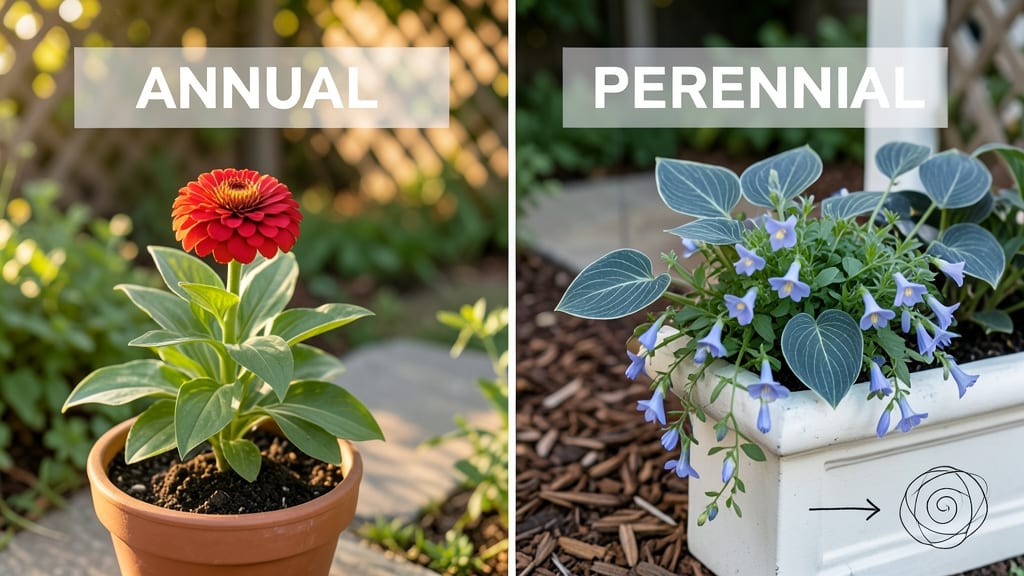
Annuals and perennials define plant lifespans by their growth cycles: annuals thrive, bloom, and complete their lifecycle in one season, while perennials return year after year from underground roots, creating lasting garden structure.
Understanding these differences transforms how you plan your garden.
Annuals like marigolds or zinnias deliver instant color but require replanting each spring, while perennials such as lavender or coneflowers establish themselves over time, rewarding you with minimal effort. 🌱 The key lies in matching each plant's natural habits to your gardening goals—whether you crave seasonal variety or low-maintenance beauty that comes back stronger every year.
For example, I always plant annuals like petunias in spring for summer-long blooms, knowing I'll need to replace them in fall. Meanwhile, my hosta perennials stay put, spreading happily in the shade with almost no attention. This balance gives me both seasonal excitement and reliable structure throughout the year.
Seasonal timing is everything: annuals need direct sowing or transplanting at the right moment for optimal growth, while perennials often benefit from early spring division or fall planting to establish strong root systems before winter.
The right approach makes all the difference between a fleeting display and a garden that thrives season after season.
💡 In This Article
- Biological Lifespan Differences Between Annuals and Perennials
- Practical Gardening Strategies for Annuals vs Perennials
Biological lifespan differences between annuals and perennials
Annuals follow a rapid, single-season lifecycle designed for maximum reproduction before their brief existence ends. Their entire growth cycle—from seed germination to flowering, seed production, and death—typically occurs within 90-180 days, depending on the species. This accelerated timeline is driven by genetic programming that prioritizes seed dispersal over longevity.
For example, sunflowers complete their lifecycle in about 120 days, while fast-growing annuals like radishes mature in just 25-30 days. The tradeoff is striking: annuals invest all their energy into one explosive growth spurt rather than conserving resources for multiple seasons.
Perennials, on the other hand, employ sophisticated underground storage systems to survive seasonal challenges. These include rhizomes (like in iris), tubers (such as dahlias), and bulbs (including tulips), which store nutrients and energy during dormancy.
The key mechanism is their ability to photosynthesize and store carbohydrates in these structures during the growing season, then draw on these reserves when above-ground growth halts.
In cold climates, perennials enter a state of dormancy where metabolic activity slows dramatically—some species can reduce their respiration rates by up to 90%—to conserve energy until favorable conditions return. This adaptation explains why perennials like peonies can live for 50 years or more with minimal care.
The genetic differences between these groups are fascinating. Annuals typically have shorter chromosomes and simpler genetic structures optimized for quick reproduction, while perennials often exhibit more complex genomes that allow for cellular repair and regeneration.
For instance, the APETALA1 gene in annuals promotes rapid flowering, whereas perennials like roses have modified versions that delay flowering until the plant is established.
This genetic programming directly influences their growth habits—annuals focus on vertical growth and seed production, while perennials allocate energy to both above-ground growth and below-ground storage.
Environmental factors play a crucial role in determining whether a plant behaves as an annual or perennial. Some species, like sweet peas, are annuals in cold climates but can act as short-lived perennials in warmer regions where they don't experience true winter dormancy.
This flexibility demonstrates how temperature and daylight hours interact with plant genetics to shape lifespans. In my own garden, I've noticed that even biennials (plants that take two years to complete their lifecycle) often behave like annuals in regions with mild winters, skipping the second-year flowering stage entirely. 🌿
Another critical difference lies in their reproductive strategies. Annuals rely on prolific seed production to ensure species survival, often producing thousands of seeds in a single season.
Perennials, meanwhile, prioritize vegetative reproduction through runners, offsets, or division, which allows them to spread and establish new plants without the energy cost of seed production every year.
This explains why perennials like asparagus can dominate a garden space over decades while annuals like cosmos self-seed aggressively but don't persist beyond their first growing season.
Understanding these biological mechanisms helps explain why some plants thrive in specific climates. For example, desert annuals like desert marigolds have adapted to complete their lifecycle during the brief rainy season, while temperate perennials like hostas have evolved to store energy through long, cold winters.
The same principles apply to tropical regions where perennials might grow continuously year-round without the need for dormancy. This biological diversity is what makes gardening such a dynamic practice—each plant has evolved unique strategies to survive and reproduce in its native environment.