
Flowers
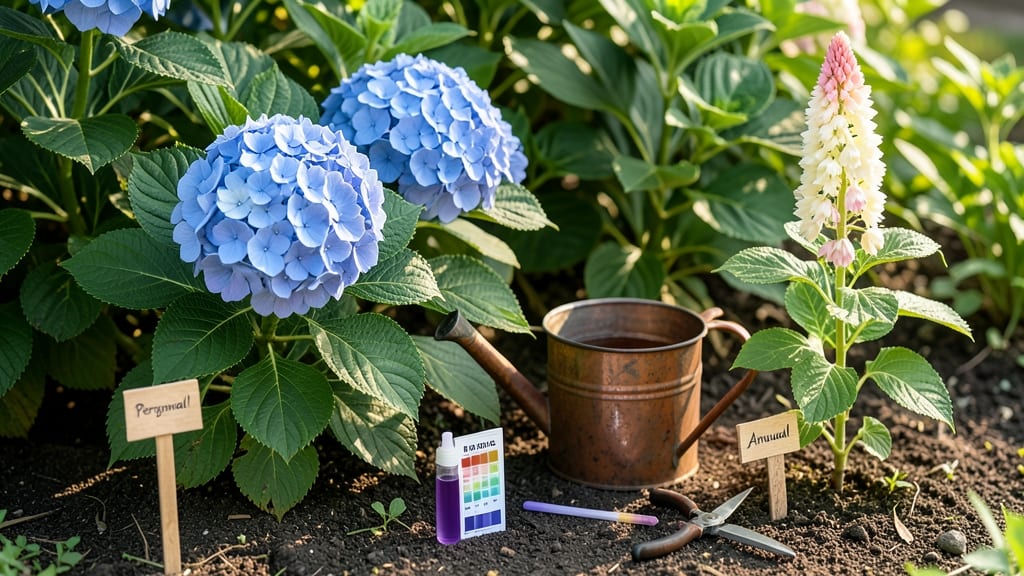
Most hydrangeas are perennials that regrow each year with proper winter care, but tropical varieties act as annuals, dying back when frost hits. Hardy types flourish in zones 5-9 with protective mulch, while warm-climate favorites need annual replanting in zones 10+.
Understanding whether your hydrangea is a perennial or annual depends on its native climate and hardiness zone. 🌱 The big difference lies in their root systems—perennials develop deep, frost-resistant roots that survive winter dormancy, while annuals (like Hydrangea macrophylla tropical varieties) lack this resilience.
This means perennials reward patience with years of blooms, while annuals offer seasonal color but require spring replanting. For example, the classic bigleaf hydrangea thrives in cooler zones, while mimosa hydrangeas (annual in cold climates) need warm summers to flourish.
Your care approach changes dramatically based on this distinction. Perennials need late-winter pruning and thick mulch to protect roots, while annuals benefit from spring planting after the last frost date.
I've found that container-grown annuals give gardeners in cold zones extra flexibility—they can bring potted plants indoors before winter or replace them each spring with fresh specimens.
💡 In This Article
- Why Most Hydrangeas Are Perennials (And When They Become Annuals)
- Care Checklist: Reviving Perennial Hydrangeas vs. Growing Annual Varieties
Why most hydrangeas are perennials (and when they become annuals)
The botanical distinction between perennial and annual hydrangeas comes down to their native environments and root development. Hardy perennials like Hydrangea macrophylla (bigleaf) and Hydrangea paniculata (panicle) grow deep, woody root systems that store energy and withstand temperatures down to -10°F to -20°F.
These roots act like natural insulation, allowing the plant to enter dormancy during winter while preserving enough strength to regrow in spring. Think of it like a hydrangea's built-in survival kit—similar to how deciduous trees shed leaves to conserve energy.
Annual varieties, particularly tropical hydrangeas like Hydrangea macrophylla 'Limelight' or Hydrangea arborescens 'Annabelle' in colder climates, lack this hardiness. Their roots are shallower and more delicate, unable to tolerate freezing temperatures.
When frost hits 28°F or lower, these plants' cells rupture from ice crystal formation, killing the entire plant above and below ground. 🌡️ This is why they're classified as annuals in zones 5-9—they complete their life cycle in one season, much like summer annuals such as marigolds or zinnias.
The cold hardiness zone system explains this perfectly. Perennial hydrangeas thrive in zones 5-9 because their roots can survive winter's chill, while annual varieties need the warmth of zones 10-12 to persist.
For example, a Hydrangea macrophylla in zone 6 might lose its leaves but regrow from its protected roots, while the same plant in zone 3 would perish entirely. This zone-based behavior is why gardeners in colder regions often treat tropical hydrangeas as annuals, replanting them each spring.
Root structure plays a critical role in this survival strategy. Perennial hydrangeas develop lignotubers—thickened root bases that house dormant buds capable of regenerating the entire plant. These lignotubers can remain viable for years, even if the above-ground growth dies back.
Annual varieties lack this adaptation, making them far more vulnerable to seasonal temperature swings. 🌱 The difference is akin to comparing a well-insulated house (perennial) to a temporary tent (annual) during winter storms.
What most gardeners don't realize is how soil composition affects this hardiness. Sandy soils drain quickly, accelerating root damage during freeze-thaw cycles, while loamy soils provide better insulation.
This is why perennial hydrangeas often need 3-4 inches of mulch in winter—it mimics the protective layer of leaves and organic matter found in their native woodland habitats. Annual varieties, meanwhile, benefit from being planted in containers, which can be moved to sheltered locations or greenhouses before frost arrives.
Consider the Hydrangea quercifolia (oakleaf hydrangea) as a perfect example of a hardy perennial. Its roots can endure -20°F temperatures, and its exfoliating bark provides additional insulation.
In contrast, a Hydrangea macrophylla 'Nikko Blue' grown in zone 5 will die back completely each winter but regrows vigorously from its protected root crown in spring. This resilience makes perennials the clear choice for most gardeners seeking long-term beauty.