
Orchid Care
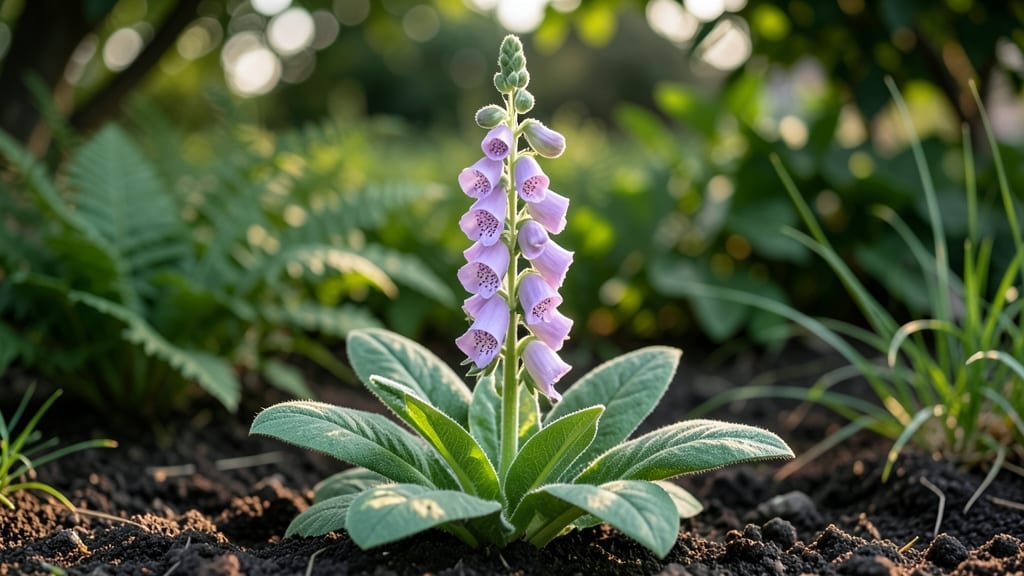
Whether digitalis is perennial or annual depends on your climate: it thrives as a perennial in frost-free zones (USDA 9+) but dies back in colder regions, requiring annual replanting or winter protection to survive.
Digitalis adapts its growth cycle based on temperature—its roots can survive mild winters, but the foliage succumbs to frost. 🌱 In colder zones (4-8), gardeners often treat it as an annual, replanting seeds each spring for fresh blooms.
The key difference lies in its hardiness: while the roots may persist underground, the above-ground parts need protection or replanting to return the following year.
For those in transitional zones, mulching heavily in fall and choosing cold-hardy varieties can extend its perennial status. The plant's natural dormancy during winter months actually helps it conserve energy, making it more resilient when given proper care.
💡 In This Article
- How Digitalis Survives Winter in Different Climates
- Best Practices for Growing Digitalis as a Perennial or Annual
How digitalis survives winter in different climates
Digitalis, also known as foxglove, has evolved a clever survival strategy that explains why it behaves differently across climates. In USDA zones 9+, where winter temperatures rarely drop below 20°F, digitalis naturally thrives as a perennial.
Its deep root system—capable of extending 12-18 inches underground—stores enough energy to regenerate foliage each spring. The roots themselves can tolerate brief cold snaps down to 10°F, though prolonged exposure weakens them over time.
The plant's cold tolerance hinges on its ability to enter dormancy. During winter, digitalis redirects nutrients to its roots while shedding above-ground growth, which freezes and dies back. This isn't true hibernation—more like strategic retreat.
In milder winters (zones 7-8), the roots often survive intact, allowing the plant to resprout within 4-6 weeks of spring's first warm spells. However, when temperatures plummet below -5°F for extended periods, even the roots struggle, forcing gardeners to replant annually.
What makes digitalis particularly fascinating is its seed dormancy mechanism. When grown as an annual in colder zones, the plant produces 10,000-20,000 seeds per stalk—a survival tactic to ensure genetic continuity. These seeds remain viable in soil for 2-3 years, germinating when conditions become favorable.
This explains why digitalis often "volunteers" in garden beds year after year, even when intentionally replanted. The trade-off? While perennials develop stronger root systems over time, annual replanting guarantees fresher, more vigorous blooms each season.
Soil composition plays a hidden role in this survival story. Digitalis prefers well-draining, slightly alkaline soil (pH 6.5-7.5) that insulates roots better than heavy clay. In colder regions, gardeners can mimic its natural habitat by amending soil with 20-30% compost, which improves moisture retention and temperature regulation.
The plant's waxy leaf coating also helps shed frost, though it's no match for prolonged sub-zero conditions without protection.
Here's the science behind its adaptability: digitalis contains cardiac glycosides that slow down metabolic processes during cold stress—a primitive form of "cold acclimation." This chemical adaptation reduces water loss and cellular damage, allowing roots to persist longer.
However, when temperatures drop below -10°F, these protective compounds fail, and the plant's survival hinges entirely on human intervention (like mulching) or replanting.
Consider this comparison: in zone 9, a single digitalis plant might live 3-5 years with minimal care, while in zone 5, the same plant would require annual replanting to maintain its showy 3-5 foot height and bell-shaped flowers.
The difference isn't just about temperature—it's about how quickly the plant can recover from winter stress. In frost-free zones, recovery takes 2-3 weeks; in colder areas, it may never happen without intervention.