
Flowers
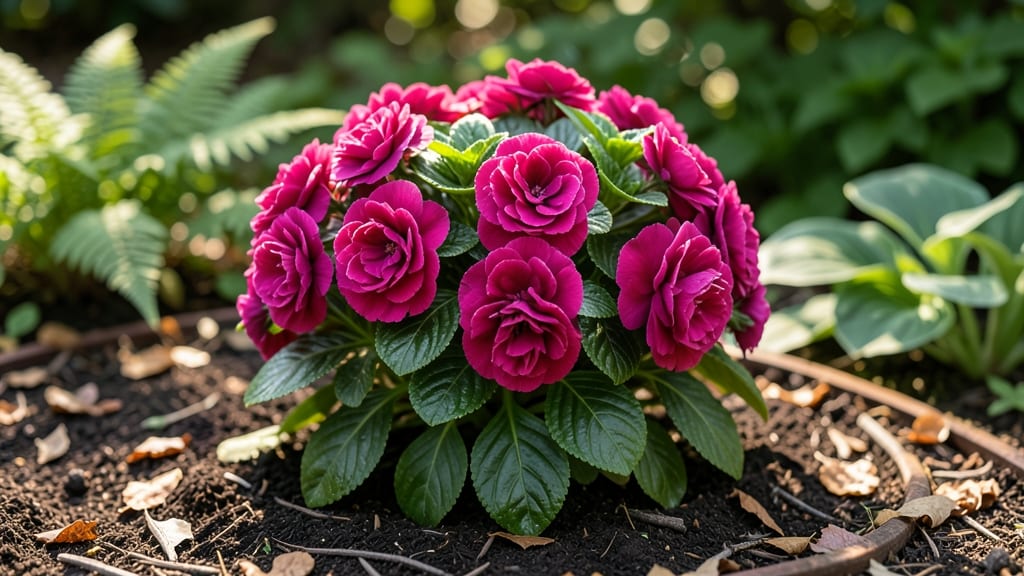
Double impatiens function as annuals in most gardens because their delicate stems and shallow roots can't withstand freezing temperatures, though they often reseed aggressively in warmer climates, mimicking a perennial's persistence. Their winter survival hinges entirely on local frost patterns.
These plants thrive as seasonal stars because their tropical origins make them extremely sensitive to cold—even light frosts will kill the foliage. 🌱 The good news? Their seeds often germinate naturally the following spring, creating dense clusters that fool many gardeners into thinking they're perennials.
In frost-free zones like USDA hardiness zones 9-11, double impatiens can indeed behave like perennials, spreading year after year without replanting.
What sets them apart from true perennials is their inability to regrow from established roots after winter. Unlike hostas or ferns that send up new shoots from dormant rhizomes, double impatiens must start fresh each season.
This makes them perfect for temporary color bursts in shady spots, but requires careful planning if you want continuous blooms.
💡 In This Article
- Why Double Impatiens Die Back Every Winter
- How to Extend Double Impatiens’ Season Like a Perennial
Why double impatiens die back every winter
Double impatiens originate from tropical regions where temperatures rarely drop below 50°F, making their stems and foliage highly susceptible to frost damage. Even a light freeze (28-32°F) will cause the delicate, fleshy stems to blacken and collapse within hours.
The plant's shallow root system—typically only 6-12 inches deep—provides minimal insulation against cold soil temperatures, which further accelerates cell death. Unlike hardy perennials like hostas, which store energy in thick rhizomes, double impatiens lack this survival mechanism.
Their classification as annuals stems from this biological limitation: without protective measures, the entire above-ground structure perishes when temperatures dip.
What's fascinating is how their growth habit mimics perennials during the growing season—they produce 18-24-inch stems with vibrant blooms in shades of pink, red, and white, creating dense mounds that can outcompete weeds. However, this vigor is entirely seasonal, as the plant has no dormant phase like true perennials.
Comparing double impatiens to shade-loving perennials reveals key differences in cold tolerance. Ferns, for example, can survive -10°F with proper mulching, while hostas endure 0°F in ideal conditions. Double impatiens, by contrast, begin showing frost damage at 35°F, with complete dieback guaranteed below 25°F.
Their tropical heritage explains this sensitivity—they've evolved to prioritize rapid growth and reproduction during warm seasons rather than cold endurance.
What most gardeners overlook is the plant's seed production strategy. When stems die back, the plant redirects energy to seed pods that form along the stems. These seeds remain viable in the soil for 2-3 years, germinating when temperatures rise above 60°F.
This self-seeding behavior creates the illusion of perennial growth, as new plants emerge each spring without human intervention. In frost-free zones, this cycle continues uninterrupted, explaining why they appear perennial in warm climates.
The root system plays a crucial role in this winter vulnerability. Double impatiens develop fibrous roots that spread horizontally rather than deeply, making them susceptible to temperature fluctuations at the soil surface.
During winter, these roots can survive brief cold snaps if protected by organic matter, but they lack the insulating properties of deeper, woody root systems found in true perennials. This shallow architecture is ideal for their fast-growing, short-lived strategy but becomes a liability in cold climates.
Understanding this biology helps explain why gardeners in colder regions must treat them as annuals while those in mild climates can enjoy perennial-like behavior.
The key difference lies in whether the plant's natural seed cycle can outpace winter's severity—something that works perfectly in zones 9-11 but fails completely in zones 4-7 without intervention. 🌿