
Flowers
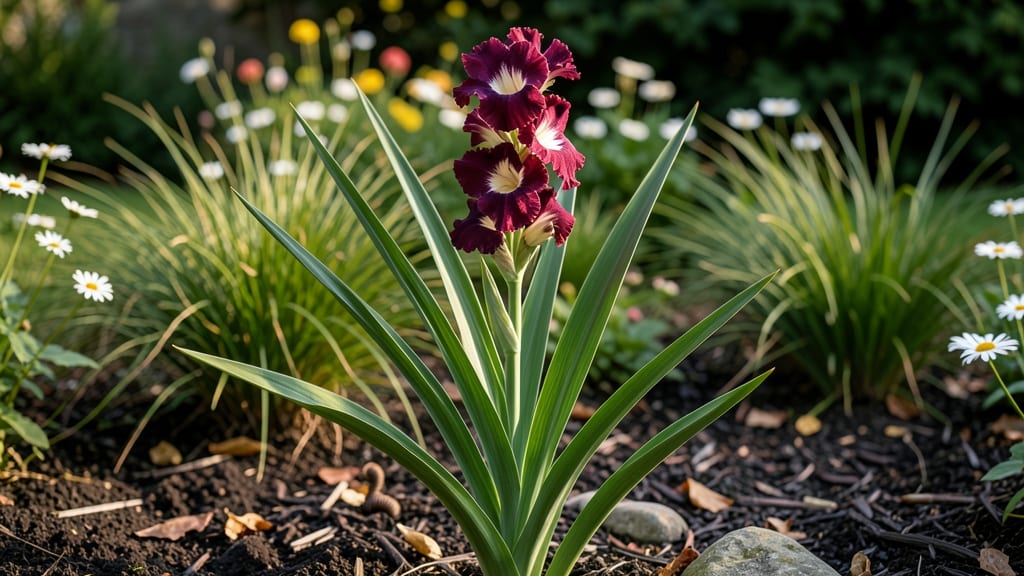
Gladioli are perennial plants in frost-free zones but often treated as annuals in colder regions because their underground corms freeze and die in winter. Their lifespan classification depends entirely on climate and growing conditions.
This distinction comes down to their corms—those bulb-like storage organs that store energy for regrowth.
In warm climates like USDA zones 8-11, gladioli naturally return year after year, blooming dramatically each season. 🌱 But when temperatures drop below 20°F, the corms become vulnerable, which is why gardeners in colder areas dig them up and store them indoors until spring.
Even with proper care, some varieties struggle to survive winters, making them practical annuals despite their botanical perennial nature.
What’s interesting is how this classification affects your gardening approach. In mild climates, you can leave them in the ground year-round with minimal effort, while colder regions require more hands-on winter prep.
I’ve found that choosing cold-hardy varieties like ‘Green Star’ gives you a better chance of overwintering success, but even then, you’ll need to protect them with thick mulch or row covers during frost events.
💡 In This Article
- Gladiolus Botanical Classification: Perennial or Annual?
- Cold-Resilience Tips for Overwintering Gladioli
Gladiolus botanical classification: perennial or annual?
The botanical truth is that gladioli (Gladiolus spp.) are perennials by nature, but their behavior shifts dramatically based on climate. Their underground corms—thickened, bulb-like stems—store nutrients and energy for regrowth.
In frost-free zones like USDA zones 8-11, these corms naturally survive winter dormancy, allowing the plant to emerge year after year. The key mechanism is their ability to enter a dormant state when temperatures drop, conserving energy until spring warmth triggers regrowth. 🌱
However, when winter temperatures dip below 20°F, the corms become vulnerable to frost damage. The cell membranes within the corm rupture at freezing temperatures, causing irreversible damage.
This is why gardeners in colder regions (USDA zones 7 and below) must treat gladioli as annuals—they simply can't survive the winter outdoors. Even in marginally hardy zones, the corms may only partially survive, leading to weak or stunted growth the following season.
What makes this classification fascinating is how the plant's life cycle adapts. In their native habitats across southern Africa and the Mediterranean, gladioli evolved to thrive in warm, dry conditions where frost is rare.
Their corms developed to withstand seasonal drought but weren't designed to handle freezing temperatures. This evolutionary mismatch explains why they flourish as perennials in mild climates but struggle elsewhere. 🌡️
The distinction between perennial and annual behavior also depends on the specific variety. Some modern hybrids, like 'Green Star', have shown better cold tolerance than older varieties, but none can reliably survive winters in zones colder than 7 without intervention.
Even with protective measures, the corms often lose vigor over time, which is why many gardeners opt to replant new corms each year rather than attempt overwintering.
Here's what's happening biologically: During dormancy, the corm's metabolic activity slows dramatically, but it still requires some moisture to prevent desiccation. In cold climates, this balance becomes impossible to maintain outdoors. The corm's protective layers can't insulate against prolonged freezing, and even a single hard frost can be fatal.
This is why proper storage techniques—like curing corms at 70-80°F for 2 weeks before storing in a cool, dry place—are critical for extending their lifespan in colder regions. ✨
The botanical classification also affects how gladioli reproduce. In perennial growing conditions, they spread through offsets—small corms that form around the parent corm. These offsets can be separated and replanted to create new plants.
In annual growing conditions, this natural propagation is lost, which is why gardeners must purchase new corms each season. This reproductive difference further reinforces why climate plays such a pivotal role in determining whether gladioli behave as perennials or annuals in your garden. 🌿
Understanding this botanical duality helps explain why gladioli are such popular garden plants—they offer dramatic, long-stemmed blooms that thrive with minimal care in the right conditions.
But their sensitivity to cold also makes them a perfect example of how climate dictates plant behavior, turning a botanical perennial into a practical annual with just a few degrees of temperature difference. 🌡️