
Flowers
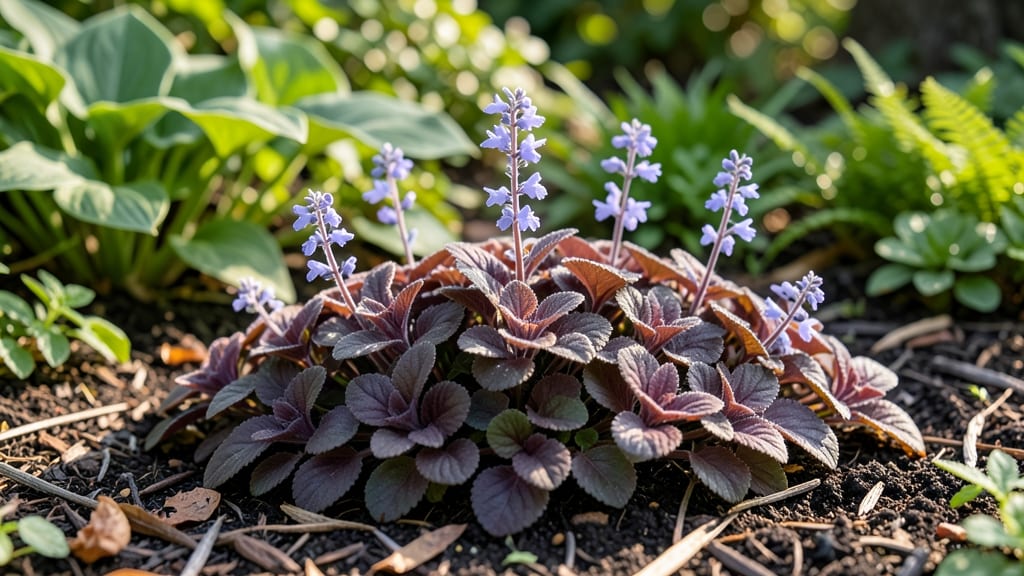
Yes, ajuga is a perennial plant that thrives by dying back to the ground in winter but regenerates each spring from its robust root system, making it a reliable choice for long-term garden coverage.
Ajuga's secret to survival lies in its underground rhizomes, which store energy during winter dormancy. 🌱 Unlike annuals that complete their life cycle in one season, ajuga's roots remain dormant but alive, ready to burst back when temperatures rise.
This dieback-and-regrowth pattern is why it's classified as a true perennial—it returns stronger every year, often spreading wider with each growing season.
What makes ajuga particularly resilient is its adaptability across USDA hardiness zones 3-9. Varieties like Ajuga reptans and Ajuga chia handle cold snaps beautifully, though a light mulch layer in zone 3 can give them extra protection.
The key to maximizing its lifespan is proper winter care—avoiding heavy foot traffic on frozen ground and ensuring good drainage to prevent root rot.
💡 In This Article
- Ajuga’s Unique Dieback and Regrowth Cycle
- Best Ajuga Varieties for Cold-Hardy Perennial Growth
Ajuga’s unique dieback and regrowth cycle
Ajuga survives winter through a specialized underground network of rhizomes—thick, horizontal roots that store carbohydrates and nutrients like a natural battery. 🌱 These rhizomes can extend up to 12 inches deep and spread horizontally, creating a dense root system that remains alive even when above-ground foliage browns and appears dead.
This dormancy isn't true death; it's a strategic energy-conservation mode triggered by shortening daylight and dropping temperatures below 40°F.
The regrowth mechanism begins when soil temperatures reach 50°F in spring, signaling the rhizomes to send up new shoots.
What's fascinating is how ajuga's roots prioritize energy storage—studies show they allocate up to 70% of their photosynthetic gains to root reserves during summer, ensuring they have enough fuel to reboot growth.
This contrasts sharply with annuals, which complete their entire life cycle in one season and must rely on seeds for regeneration.
This dieback-and-regrowth pattern gives ajuga a competitive edge in perennial classification. Unlike true perennials that maintain some foliage year-round (like hostas), ajuga's complete above-ground dormancy makes it appear dead—yet its roots remain metabolically active, ready to respond to environmental cues.
The result? A plant that returns 2-3 weeks earlier than many spring ephemerals, often forming a lush green carpet before most competitors.
What most gardeners don't realize is how this cycle actually strengthens ajuga over time. Each year's rhizome system expands by 10-15%, creating a thicker root network that improves drought tolerance.
The trade-off? Ajuga's winter dieback means it can't handle heavy foot traffic on frozen ground—its brittle stems break easily, but the roots remain unharmed beneath the surface.
For comparison, consider how ajuga's strategy differs from other ground covers: Creeping thyme maintains evergreen foliage year-round, while lamium keeps some basal leaves.
Ajuga's complete dormancy makes it ideal for areas where winter interest isn't the priority, but spring emergence is critical—think under deciduous trees where early sunlight is abundant before canopy leaf-out.
This unique biology explains why ajuga thrives in USDA zones 3-9 without special winter protection in most regions. The rhizomes' insulating effect from surrounding soil acts like nature's mulch, preventing freeze-thaw damage that could affect shallower-rooted plants. 🌿 The only exception?
Zone 3 gardeners may want to add 2-3 inches of straw mulch after the ground freezes to prevent extreme temperature fluctuations.