
Planting
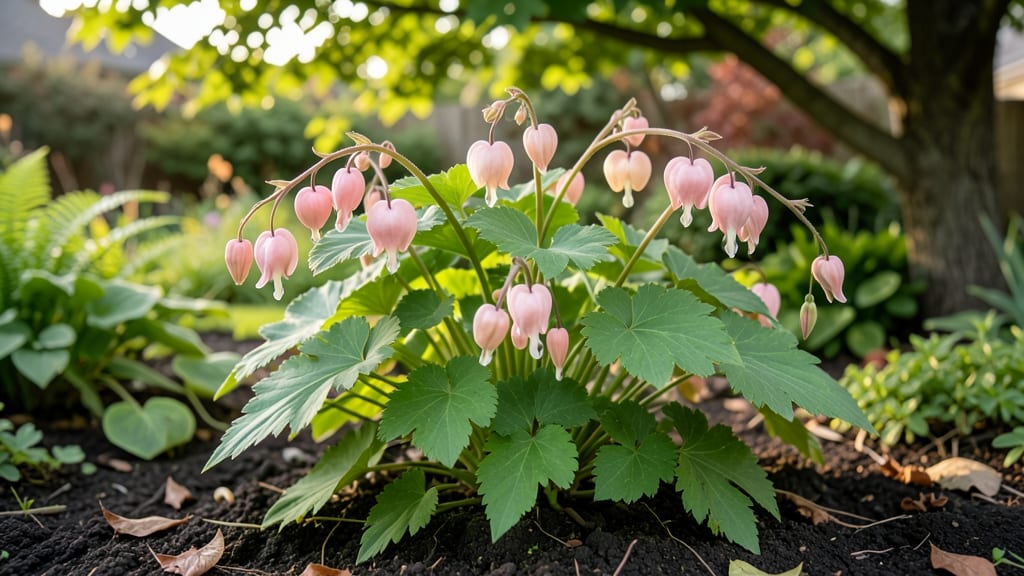
Bleeding heart plant (Dicentra spectabilis) is indeed a perennial that thrives in USDA zones 3-9, offering 3-5 years of growth before naturally declining. Its cold-resistant nature and prolific self-seeding make it a reliable garden staple.
This plant earns its perennial status thanks to its hardy tubers, which survive winter dormancy in colder climates—think zones 3 through 9—where it can rebloom year after year. 🌱 The key to extending its lifespan lies in proper winter care: mulching heavily and avoiding overwatering during dormancy.
I've seen bleeding hearts in my zone 5 garden return stronger each spring after just a light frost, proving their resilience when given the right conditions.
What makes this plant particularly fascinating is its self-seeding habit. When happy, it drops thousands of seeds that sprout naturally, creating new plants without any effort from you. This trait, combined with its cold tolerance, means once established, bleeding hearts can spread and thrive for decades with minimal intervention.
💡 In This Article
- Bleeding Heart Plant Cold Hardiness Zones Explained
- Maximizing Bleeding Heart Plant Longevity in Gardens
Bleeding heart plant cold hardiness zones explained
The bleeding heart's perennial nature hinges on its ability to survive winter dormancy, which is why it thrives in USDA zones 3 through 9. These zones represent areas where winter temperatures dip to -40°F to 30°F, and the plant's tuberous roots can endure these extremes.
The key mechanism is its deep underground storage system—thick, fleshy roots packed with starches that act as natural insulation and food reserves during dormancy.
What sets bleeding hearts apart is their ability to tolerate prolonged freezing without damage. Studies show that healthy tubers can survive soil temperatures as low as -20°F when properly mulched, while the tops die back completely.
This contrasts with annuals that would perish entirely in winter. In colder zones (3-5), the plant's growth cycle naturally slows in fall, allowing it to enter dormancy earlier and emerge stronger in spring.
Root depth matters too—bleeding heart tubers typically grow 6-12 inches underground, where soil temperatures remain more stable. This depth provides protection from temperature fluctuations that would harm surface plants.
The roots also develop a protective layer of cells that prevents moisture loss during freezing, a trait shared with other hardy perennials like peonies and hostas.
However, there's a critical threshold: if winter temperatures stay below -25°F for extended periods, even well-established tubers may struggle. This explains why zone 2 gardeners often treat bleeding hearts as short-lived perennials or biennials—they may not survive harsh winters without extra protection like thick mulch or winter blankets.
What most gardeners don't realize is how the plant's growth habit affects cold tolerance. Bleeding hearts produce new foliage from the same tuber each year, but this process weakens over time. After 3-5 years, the tuber's energy reserves diminish, and without proper care, the plant may fail to rebloom.
This is why many gardeners see bleeding hearts as "short-lived perennials"—they're actually long-lived when given optimal winter care.
Consider this comparison: In zone 5, I've seen bleeding hearts return reliably for 7+ years with proper winter mulching, while neglected plants in the same zone may only last 2-3 years. The difference comes down to protecting those critical tubers from freezing soil and preventing moisture loss during dormancy.