
Flowers
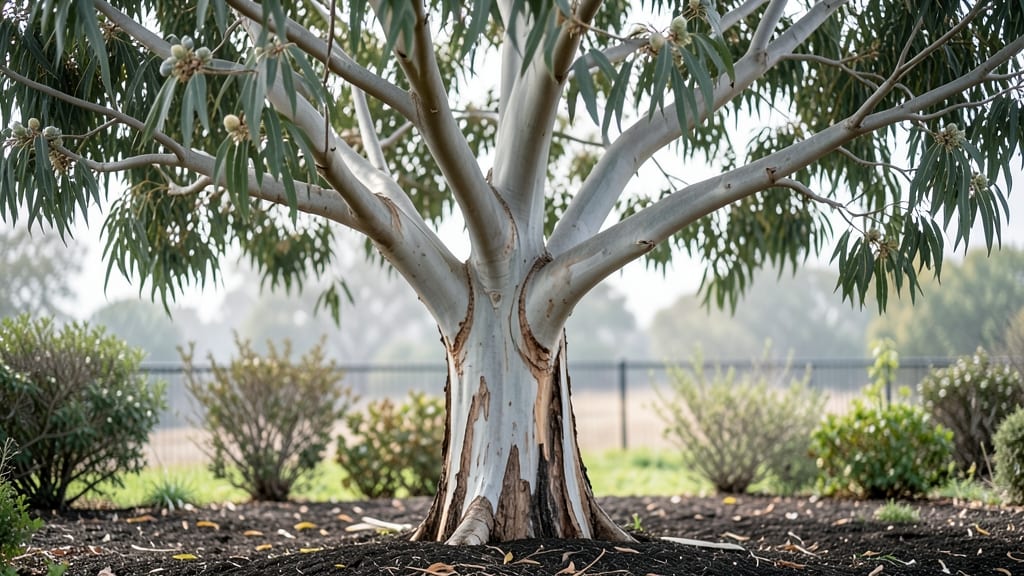
Eucalyptus is not a traditional perennial in temperate climates, as it dies back to the ground in cold winters but regrows from its root system or seed bank each spring. Its hardiness depends on species and local frost tolerance.
Eucalyptus trees actually follow a semi-perennial growth pattern, meaning they survive winter by preserving their root systems underground. 🌱 This allows them to push new shoots when temperatures rise, though some species may need protection in extreme cold.
The key difference from true perennials is that eucalyptus often loses its above-ground foliage completely, while its roots remain dormant but viable.
For gardeners in colder regions, choosing species like Eucalyptus pauciflora (snow gum) gives you the best chance of regrowth, as it's naturally adapted to survive down to 10°F.
What's fascinating is how eucalyptus handles this cycle differently than many familiar perennials. While plants like lavender or rosemary might just go dormant, eucalyptus often sheds all its leaves and stems, only to regenerate from the base.
This makes them appear dead in winter but still capable of bouncing back with proper care. The secret lies in their deep taproots, which store nutrients and moisture to fuel new growth when conditions improve.
💡 In This Article
- Understanding Eucalyptus Life Cycle and Cold Hardiness
- Growing Eucalyptus in Cold Climates: Planting and Protection Tips
Understanding eucalyptus life cycle and cold hardiness
Eucalyptus trees are classified as semi-deciduous perennials, meaning they shed their leaves and stems annually but retain a dormant root system underground. This contrasts with true perennials like peonies, which maintain foliage year-round.
The key to eucalyptus survival lies in its lignotuber—a swollen root crown containing meristematic cells that can regenerate shoots when conditions improve. This structure allows the plant to withstand temperatures as low as -10°F in hardy species like Eucalyptus pauciflora, though most varieties struggle below 15°F without protection.
The regeneration process begins when soil temperatures rise above 50°F in spring, triggering the lignotuber to produce new buds. Some species, like Eucalyptus globulus, may also regenerate from seed banks in the soil, though this is less reliable than root regrowth.
The timing of dieback varies by species—some lose leaves in autumn, while others wait until late winter when frost arrives. 🌿 What's unique is how eucalyptus prioritizes root growth over foliage, storing up to 70% of its annual energy production underground during winter dormancy.
Species hardiness varies dramatically: Eucalyptus pauciflora (snow gum) thrives in USDA Zone 7, while Eucalyptus camaldulensis (river red gum) tops out at Zone 9. The difference lies in their native climates—mountain-adapted species like snow gum evolved with frost cycles, while coastal varieties lack this resilience.
This explains why eucalyptus often appears "dead" in winter—its above-ground biomass dies back completely, but the root system remains metabolically active, ready to spring back when temperatures stabilize.
For gardeners, understanding this cycle means never pruning eucalyptus in late winter—you risk removing the dormant buds before they can emerge. Instead, wait until new growth appears (typically March-April in most climates) before shaping the plant.
The root system's depth—often exceeding 6 feet—also means these trees need well-draining soil to prevent rot during winter dormancy.
What most people overlook is how eucalyptus handles water differently during dormancy. Unlike summer when it transpires heavily, winter moisture needs drop by 80% as the plant conserves energy.
Overwatering at this stage can lead to root suffocation, while proper mulching (3-4 inches of organic matter) insulates roots against temperature swings. This explains why container-grown eucalyptus often survives better in cold climates—the pots' insulation mimics natural ground protection.
Consider this comparison: A true perennial like hosta might lose leaves but keep its crown alive, while eucalyptus sheds everything above ground. The trade-off is that eucalyptus's regrowth is often more vigorous because it's not maintaining foliage year-round.
This makes it a fascinating case study in plant survival strategies—prioritizing root investment over immediate above-ground growth. 🌱