
Flowers
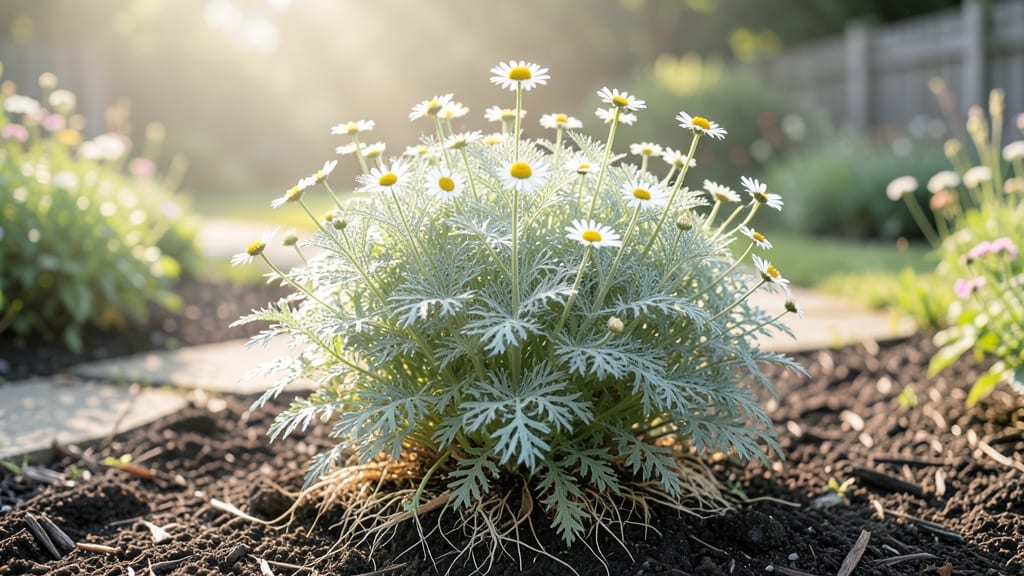
German chamomile isn't a true perennial—it acts like an annual or biennial, dying after flowering. While it thrives in hardiness zones 3-9, it self-seeds aggressively, creating fresh growth yearly.
This plant's life cycle might fool you into thinking it's a perennial because it often returns year after year through self-seeding rather than regrowing from the same root system. 🌱 The key difference lies in its taproot structure—once it flowers and sets seed, the original plant typically dies back completely, but those seeds sprout anew in the next growing season.
This natural regeneration process creates the illusion of perennial behavior, especially in mild climates where conditions remain favorable for germination.
What makes German chamomile particularly adaptable is its ability to thrive across a wide range of temperatures, from the cold hardiness of zone 3 to the warmth of zone 9.
This hardiness, combined with its prolific seed production, explains why many gardeners observe what appears to be perennial growth patterns without realizing the plant undergoes complete dieback each season. The secret to maintaining a steady supply lies in allowing the seeds to mature and fall naturally into the soil.
💡 In This Article
- German Chamomile’s Life Cycle and Dieback Patterns
- How to Extend German Chamomile’s Seasonal Growth
German chamomile’s life cycle and dieback patterns
German chamomile (Matricaria chamomilla) confuses many gardeners because its growth pattern mimics perennials, though it's technically an annual or short-lived biennial. The key lies in its taproot system—unlike true perennials that regrow from a persistent crown, German chamomile develops a single, deep taproot that stores nutrients.
When the plant flowers (typically in its first year), it allocates energy to seed production rather than root survival, causing the entire plant to die back after flowering. This explains why it disappears after blooming but often returns through seeds the following spring.
The plant's self-seeding mechanism is what creates the "perennial illusion." When mature seeds (about 0.1-0.2 grams each) drop to the soil, they germinate under favorable conditions—usually within 7-14 days—producing new plants that look like continuous growth.
In zones 3-9, where winter temperatures rarely drop below -30°F, seeds often survive dormancy in the soil, ready to sprout when spring arrives.
This adaptability is why German chamomile thrives in both cold climates (like Minnesota) and warmer regions (such as California), where it can complete multiple life cycles in a single season.
Seasonal growth habits further explain its behavior. German chamomile follows a bolting pattern: it grows rapidly in cool weather (ideal soil temps: 50-70°Fphotoperiod (day length) and temperature cues, ensuring seeds mature before the plant collapses—nature's way of guaranteeing the next generation's survival.
Cold plays a critical role in its dormancy. While German chamomile can handle frost, prolonged exposure to temperatures below -20°F may kill seeds in the soil, reducing next year's growth.
In milder climates, seeds can remain viable for 2-3 years, while in colder regions, they may need stratification (a cold period) to break dormancy. This explains why some gardeners see patchy regrowth—seeds that didn't receive proper chilling or were buried too deeply may fail to germinate.
The plant's hardiness zones (3-9) reflect this balance between cold tolerance and seed viability.
What sets German chamomile apart from true perennials is its lack of persistent underground structures. Perennials like lavender or peonies regrow from rhizomes or crowns, while German chamomile relies entirely on seeds. This makes it behave like a volunteer plant—one that resows itself naturally. The trade-off?
While it may not return in the exact same spot, its prolific seeding (often 10,000+ seeds per plant) ensures a steady supply year after year, provided soil conditions remain favorable.
This self-sustaining cycle is why many gardeners assume it's a perennial without realizing the plant's entire life cycle resets annually.
To observe this firsthand, try planting German chamomile in a controlled bed. Mark where you sow seeds, then watch as the first plants flower and die back. If you leave the seeds undisturbed, you'll likely see new shoots emerging in the same area the following spring—proof of its self-seeding prowess.
The illusion of perennial growth is a clever survival strategy, ensuring the species persists even when individual plants don't. 🌱