
Flowers
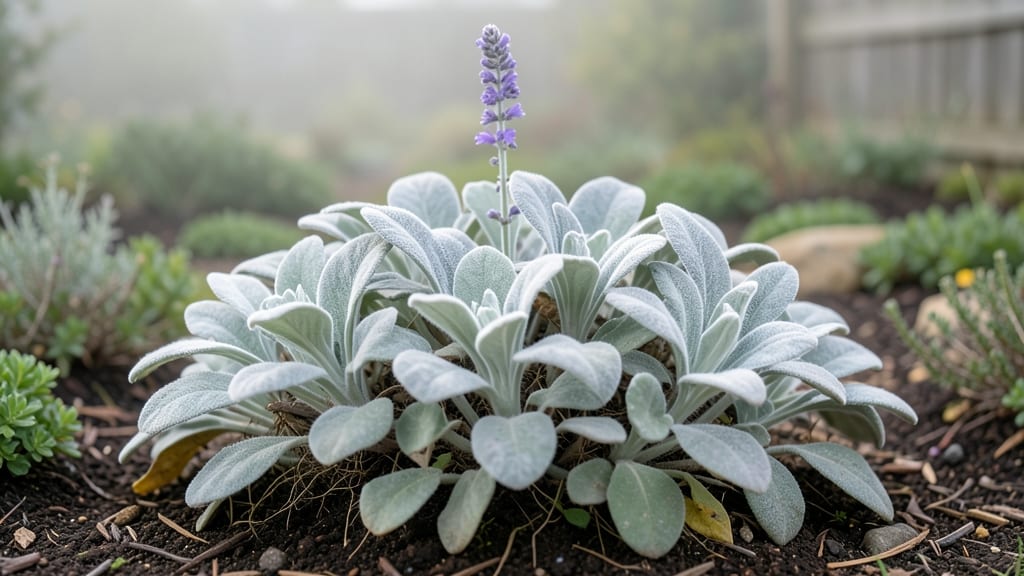
Is lamb's ear a perennial or an annual? It's a perennial plant that returns year after year, growing from deep roots and spreading through stolons while surviving winter in most climates with minimal care.
This woolly-leaved beauty thrives because its deep root system stores nutrients, allowing it to regrow each spring even after winter dormancy. 🌱 Unlike annuals that complete their lifecycle in one season, lamb's ear produces new foliage annually from the same root base, making it a low-maintenance garden staple.
Its hardiness spans USDA zones 3-9, proving it can handle cold snaps that would kill most annuals.
The key difference lies in its growth strategy: while annuals focus on rapid flowering and seed production, lamb's ear invests energy in root development and stolons (horizontal stems) that create new plants.
This perennial nature means you'll enjoy its soft, fuzzy leaves for years with just occasional pruning and proper soil conditions.
💡 In This Article
- Lamb’s Ear Growth Habits: How Its Perennial Nature Works
- Caring for Lamb’s Ear as a Perennial Plant
Lamb’s ear growth habits: how its perennial nature works
Lamb's ear (Stachys byzantina) thrives as a perennial thanks to its deep, fibrous root system that extends 12-18 inches below soil level. These roots store carbohydrates during dormancy, fueling rapid regrowth when temperatures rise above 50°F in spring.
Unlike annuals that rely on seed germination each year, lamb's ear's roots act like a built-in energy reserve, allowing it to bounce back from winter's chill—even in USDA zones 3-9 where temperatures can drop below -25°F.
The plant's stolon propagation system sets it apart from annuals. Stolons are horizontal stems that creep along the soil surface, forming new root nodes every 4-6 inches. Each node can develop into an independent plant, creating a slow-spreading ground cover.
This vegetative reproduction ensures the plant expands its territory each season without relying on seeds, a hallmark of perennial behavior. 🌱 Compare this to annuals like marigolds, which must complete their entire lifecycle—growing, flowering, and seeding—in just one growing season.
Seasonal dormancy is where lamb's ear's perennial advantage shines. In winter, the above-ground foliage dies back completely, but the roots remain active below the frost line. This dormancy isn't true hibernation—roots continue slow metabolic processes to maintain viability.
When spring arrives, new shoots emerge from the crown, often within 2-3 weeks of consistent soil temperatures above 45°F. Annuals, by contrast, have no such survival mechanism and must start from scratch each year.
What makes this perennial so resilient is its cold hardiness combined with drought tolerance. While annuals typically require consistent moisture and warm conditions, lamb's ear can survive brief droughts thanks to its deep roots accessing groundwater.
Its fuzzy leaves also reduce water loss through transpiration, a clever adaptation that lets it thrive in xeric (dry) conditions where many perennials would struggle. This dual hardiness explains why it's often recommended for rock gardens and slopes where other plants would fail.
Consider the botanical contrast: Annuals like zinnias invest all their energy into rapid growth and reproduction within one season, while lamb's ear allocates resources to root development and stolon production—strategies that pay dividends over multiple years.
This fundamental difference in growth strategy is why lamb's ear not only returns each year but often becomes more vigorous with age, forming dense mats that suppress weeds naturally. 🌿
The plant's clumping growth habit further distinguishes it from annuals. While annuals spread randomly through seeds, lamb's ear maintains a neat, contained form that gardeners can easily manage.
Its stolons grow outward at a moderate pace (6-12 inches per year), allowing you to control its spread through simple pruning techniques. This predictable growth pattern is another perennial advantage—unlike annuals that may self-seed uncontrollably, lamb's ear gives you consistent, manageable coverage.