
Flowers
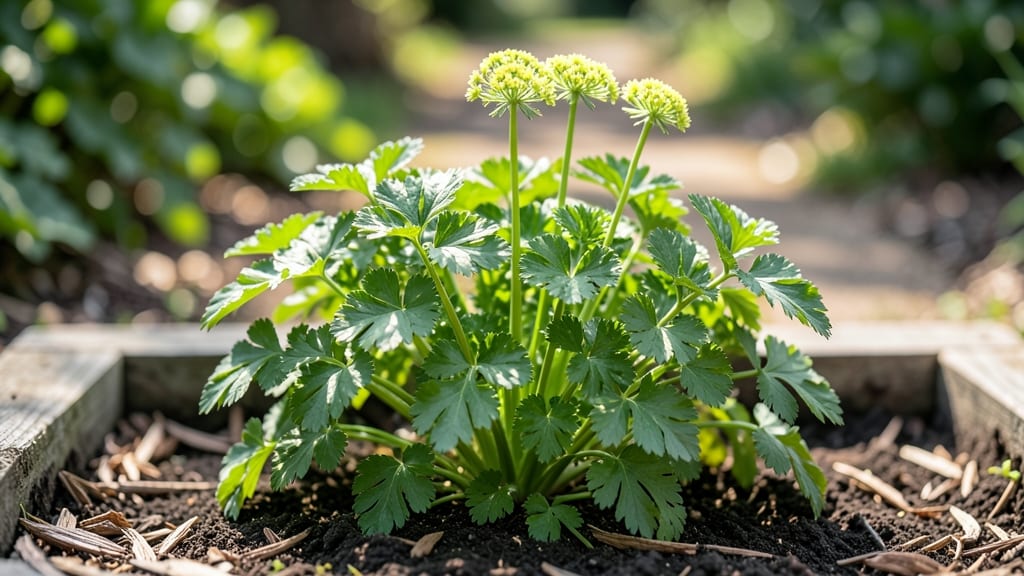
Parsley is not a true perennial—it's a biennial herb that thrives for two years, though cold-hardy varieties in zones 3-10 can sometimes regrow from roots with proper winter care. Its second-year growth focuses on seed production before dying back.
While parsley isn't classified as a true perennial, it can act like one in milder climates. 🌱 The key lies in its root system—when protected with mulch or moved to containers, hardy varieties like 'Moss Curled' can survive winter and regrow in spring.
This explains why many gardeners mistakenly assume parsley is perennial, especially when it returns after cold weather. For best results, harvest seeds in the second year to collect new plants for future seasons.
Understanding this distinction helps explain why parsley often bolts (goes to seed) in its second year—it's following its natural biennial lifecycle. The confusion arises because some varieties persist through winter, creating the illusion of perennial behavior when they actually rely on root survival rather than continuous regrowth.
💡 In This Article
- Parsley’s Life Cycle: Biennial vs Perennial Behavior Explained
- How to Extend Parsley’s Lifespan in Your Garden
Parsley’s life cycle: biennial vs perennial behavior explained
Parsley's classification as a biennial means it follows a two-year growth cycle rather than the continuous regrowth of true perennials. In its first year, it focuses on building a robust taproot system that can reach 12-18 inches deep, storing nutrients for the next phase.
This root structure allows it to survive mild winters in zones 3-10 when protected, creating the illusion of perennial behavior. 🌱 The key difference from perennials like thyme or oregano is that parsley dedicates its second year entirely to flowering and seed production before dying back, completing its lifecycle.
The confusion arises because parsley's root system can persist through winter in cold-hardy varieties like 'Italian Flat-Leaf' or 'Moss Curled'. These roots remain dormant but viable, capable of regrowing when temperatures rise above 40°F in spring.
This survival mechanism explains why gardeners often see parsley return year after year—it's not true perennial regrowth but rather the plant's ability to restart from its root crown. The seed production phase is particularly aggressive, with plants developing 100-200 seeds per umbel that can germinate in subsequent seasons.
What most gardeners don't realize is how parsley's biennial nature affects its flavor and texture. First-year leaves are tender and sweet, ideal for fresh use, while second-year leaves become more bitter as the plant shifts energy to seed production.
This flavor shift explains why commercial parsley is typically harvested in its first year. The plant's natural lifecycle also means it will eventually bolt (go to seed) even in favorable conditions, typically between 60-90 days of growth in the second year. 🌿
Temperature plays a crucial role in this lifecycle. Parsley seeds germinate best at 60-70°F and can tolerate light frosts once established, but prolonged exposure below 20°F will kill the plant completely. This cold sensitivity explains why parsley struggles in colder climates unless given winter protection.
The plant's ability to survive winter depends on how well it's insulated—mulch depths of 3-4 inches can raise soil temperatures by 5-10°F, making the difference between survival and death during freeze-thaw cycles.
Botanically, parsley belongs to the Apiaceae family (alongside carrots and celery), which explains its deep root system adapted for nutrient storage. True perennials in this family, like lovage, continue growing year after year because their root systems remain active.
Parsley's roots, while capable of overwintering, follow a different strategy—prioritizing seed production over continuous growth. This fundamental difference in reproductive strategy is what truly distinguishes parsley from perennial herbs. 🌱
Understanding this lifecycle helps explain why parsley often appears perennial in home gardens. When you provide winter protection, you're essentially extending the root's viability until it can restart growth in spring. However, without this protection, parsley will complete its biennial cycle and die back completely after seeding.
This is why many gardeners find parsley returns year after year—it's not the same plant persisting but rather new growth from seeds or surviving roots.