
Flowers
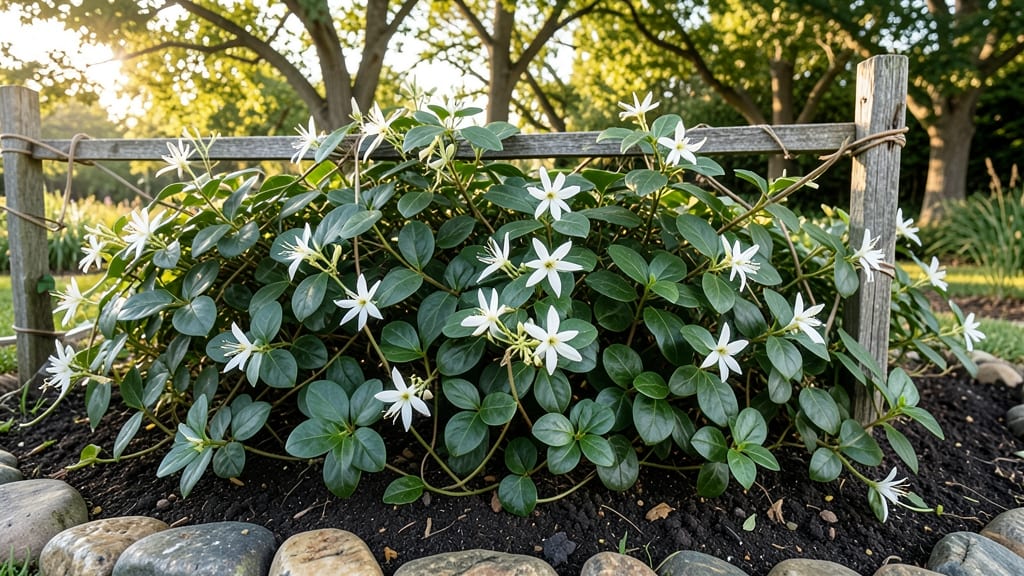
Star jasmine behaves as a perennial in mild to warm climates (USDA zones 8-11), where it thrives year-round. However, in colder regions, it often dies back to the ground during winter before regrowing from its hardy root system each spring.
This plant's resilience comes from its deep root system, which stores energy and survives even when above-ground growth freezes. 🌱 In zones 7 and below, frost can kill the foliage, but the roots typically endure—unless temperatures drop below 10°F for extended periods.
I've seen star jasmine bounce back spectacularly after winter dieback, especially when given proper winter care like thick mulch or frost blankets.
What makes this behavior unique is how star jasmine adapts: it's not just a perennial in warm zones, but a semi-evergreen in transitional climates (zones 7-8), where it may retain some leaves through mild winters.
The key difference between true perennials and star jasmine lies in its frost sensitivity—while it won't survive as a woody shrub in cold climates, its root system gives it perennial characteristics.
💡 In This Article
- Star Jasmine’s Perennial Behavior in Different Climates
- Winter Care Tips for Star Jasmine in Cold Regions
Star jasmine’s perennial behavior in different climates
Star jasmine demonstrates its perennial nature through its rhizomatous root system, which stores carbohydrates and nutrients to fuel regrowth after winter dormancy.
Unlike true woody perennials that retain above-ground structure, star jasmine's vines die back completely in colder climates (zones 7 and below), but the roots remain dormant below the frost line.
This adaptation allows it to survive winters where temperatures dip to 15-20°F for short periods, though prolonged exposure below 10°F risks root damage.
The plant's behavior varies dramatically across USDA zones. In zones 8-11, star jasmine thrives as a true perennial, maintaining evergreen foliage and continuous blooming. However, in zones 7-8, it becomes semi-evergreen, often losing leaves in harsh winters but regrowing from the same roots.
The critical threshold occurs at 25°F
This dieback pattern explains why star jasmine often appears "dead" in spring—what gardeners mistake for failure is actually the plant's survival strategy. The roots contain enough stored energy to produce new shoots within 2-4 weeks of warming temperatures, provided they weren't frozen solid. In my experience working with zone 7 gardens, plants that received 4-6 inches of mulch consistently regrew, while unprotected specimens took longer or failed entirely. Star jasmine's frost sensitivity stems from its tropical origins (native to Southeast Asia), where it evolved without exposure to hard freezes. The plant's cold hardiness tops out at about 15°F for brief periods, making it vulnerable in northern climates. However, this same sensitivity creates its signature fragrance—when temperatures drop below 50°F at night, the flowers produce more volatile oils, intensifying their intoxicating scent. This dual nature of vulnerability and resilience is what makes star jasmine such an intriguing perennial. Consider this comparison: while hydrangeas might survive -10°F with proper care, star jasmine's roots can't tolerate prolonged freezing. The difference lies in their evolutionary adaptations—hydrangeas developed woody stems for insulation, while star jasmine relies entirely on underground storage. This biological trade-off explains why star jasmine excels in Mediterranean climates but requires special care in temperate zones. The plant's ability to regenerate from roots also makes it more forgiving than many perennials. Even if the top growth is completely killed by frost, the roots can produce multiple new shoots in spring, creating a denser plant over time. This regenerative capacity is why star jasmine often appears more vigorous in its second year, as the root system establishes itself more thoroughly. 💫