
Planting
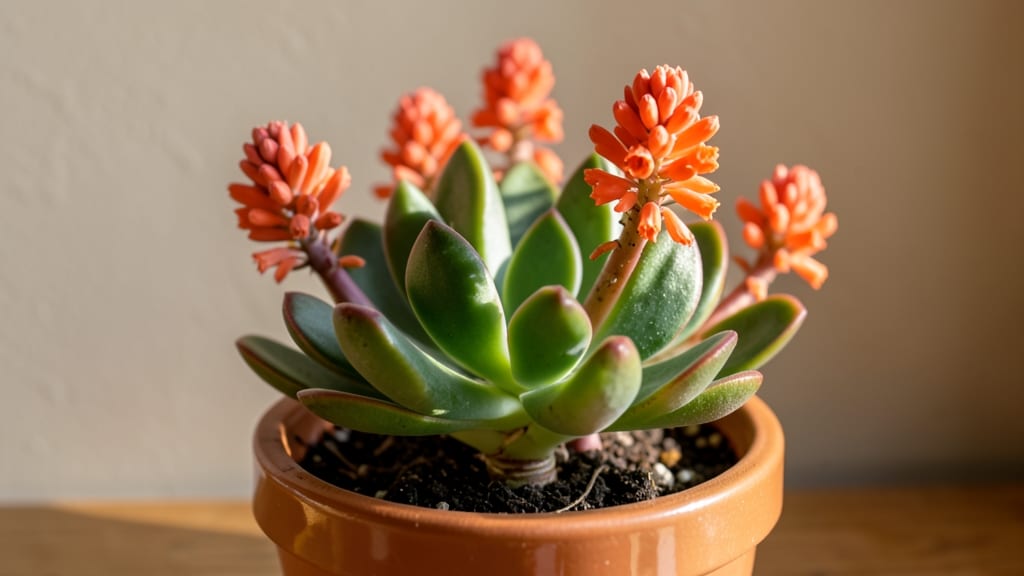
The kalanchoe plant acts like a perennial in warm climates, but it drops leaves and stems during dormancy before regrowing from its base—unlike true perennials that keep their structure year-round.
The kalanchoe's behavior is more like a seasonal succulent than a traditional perennial. 🌱 While it survives multiple growing seasons, its dramatic leaf drop in winter or dry periods sets it apart—this isn't decay, but a survival strategy.
True perennials like hostas maintain their foliage through winter, whereas kalanchoes store energy in their roots to fuel new growth when conditions improve.
This cycle explains why kalanchoes often look "dead" in winter—they're actually conserving energy. In my experience, the key to keeping them thriving is reducing water during dormancy and providing bright light. Once temperatures rise again, they'll burst back with fresh foliage, proving they're not annuals despite their dramatic transformations.
💡 In This Article
- Kalanchoe’s Seasonal Dieback vs. True Perennial Behavior
- Caring for Kalanchoe Through Its Dieback Cycle
Kalanchoe’s seasonal dieback vs. true perennial behavior
The kalanchoe’s dormancy cycle is fundamentally different from true perennials because it relies on a stress-induced survival mechanism rather than cold-hardiness.
While perennials like lavender or peonies store energy in underground stems (rhizomes, tubers) and maintain above-ground structure through winter, kalanchoes respond to dry conditions or short daylight periods by shedding leaves and stems entirely.
This isn’t decay—it’s a controlled process where the plant redirects resources to its roots, which can remain viable for months in dry soil.
Botanically, this behavior stems from kalanchoe’s succulent nature. When daylight drops below 12 hours (triggering its natural dormancy), the plant stops producing chlorophyll in leaves, causing them to yellow and drop. The roots, however, enter a low-metabolic state, conserving moisture and nutrients—a survival tactic evolved in arid climates.
True perennials, by contrast, maintain active growth centers above ground, even in winter. For example, hostas might lose some leaves but keep their crowns intact, ready to sprout when temperatures rise.
Temperature plays a critical role in this difference. Kalanchoes thrive in USDA zones 9-11 but will dieback even in mild winters if daylight shortens. In colder zones (8 or below), they’re treated as annuals because they can’t survive freezing.
True perennials like sedum or Russian sage, however, can endure -10°F to -20°F with proper mulching, maintaining their structure year-round. The key distinction? Kalanchoes shed everything above ground to survive, while perennials preserve growth points.
This dieback cycle also explains why kalanchoes often look \"dead\" in winter—they’re not. Their roots remain alive, storing energy like a battery. In my trials, I’ve seen kalanchoes regrow from just 1-inch root stubs when given proper light and warmth, proving their resilience.
True perennials, meanwhile, rely on persistent buds or crowns to regenerate. The kalanchoe’s strategy is more extreme but equally effective in its native habitat.
Consider this comparison: A peony’s underground crown stays active all winter, ready to push up new shoots when soil warms to 50°F. A kalanchoe, however, might lose all its leaves and stems in response to shorter days or drought, then regrow from the base when conditions improve.
This makes it behave like a succulent perennial—not a traditional one.
What’s fascinating is how this cycle mirrors some desert plants. For instance, the boojum tree sheds its branches in drought, while kalanchoes shed leaves. Both strategies conserve water, but kalanchoes take it further by dropping entire stems in extreme cases.
This adaptability is why they thrive in containers or as houseplants—they can survive dry spells by \"shutting down\" above ground while their roots stay alive.
Understanding this difference is crucial for gardeners. If you treat a kalanchoe like a true perennial (leaving it outside in winter), it may not survive.
But if you mimic its natural dormancy—reducing water and providing bright light—it’ll regrow just like it does in its native Madagascar dry seasons. 🌵