
Flowers
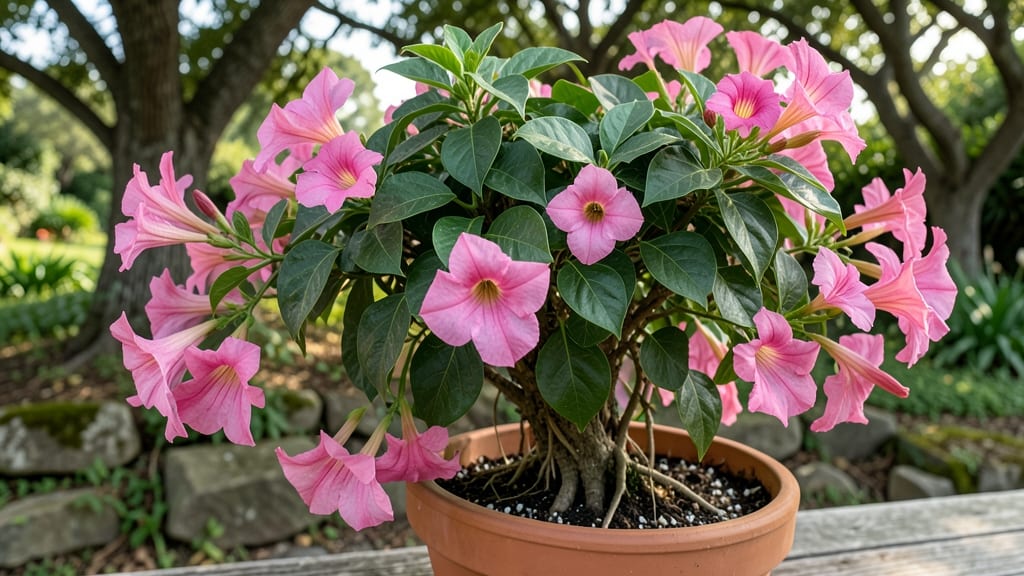
Mandevilla flowers act as annuals in colder climates but are actually perennials in warm zones, where they regrow from roots each spring once temperatures consistently stay above 40°F.
This tropical beauty's behavior comes down to its native habitat—think Florida or California, where winter freezes never happen. 🌿 When temperatures dip below 40°F, the plant's above-ground growth shuts down completely, but the roots often survive underground.
That's why gardeners in colder zones must treat them like annuals unless they take protective measures. The confusion stems from how dramatically mandevillas respond to cold: one frost, and the entire plant collapses, leaving beginners wondering if they've killed it permanently.
What's fascinating is how resilient these roots can be. Even after a full winter dormancy, they'll often burst back to life with just a few weeks of warm weather and proper care.
This makes mandevilla one of those "tricky" plants that rewards patience—if you're willing to adapt your growing approach based on your climate zone.
💡 In This Article
- Why Mandevilla Flowers Die Back in Winter
- How to Overwinter Mandevilla for Year-Round Growth
Why mandevilla flowers die back in winter
The mandevilla's winter dormancy is a survival mechanism rooted in its tropical origins. Native to South America, this plant evolved in climates where temperatures rarely drop below 50°F.
When exposed to prolonged cold below 40°F, its cells begin to freeze, causing the leaves and stems to blacken and fall off within 24-48 hours. This rapid dieback isn't a sign of death—it's a protective shutdown to preserve energy in the roots.
The plant's root system contains specialized cells that can remain viable even when above-ground growth dies. These roots store starches and nutrients, allowing them to regenerate new growth once temperatures rise.
In warm climates like USDA Zones 9-11, this cycle happens naturally each year, with mandevillas blooming again by spring. The confusion arises because in colder zones, gardeners often assume the entire plant is dead when only the roots survive.
What makes this particularly interesting is the plant's sensitivity to frost. Unlike hardy perennials that can tolerate -10°F temperatures, mandevilla's roots begin to suffer damage below 28°F. This explains why even a single hard frost can kill the plant completely in colder regions.
The tropical nature of mandevilla means it lacks the cold-hardiness adaptations found in temperate plants like roses or peonies.
Here's how the process works scientifically: Cold temperatures trigger the production of abscisic acid, a plant hormone that signals dormancy. This hormone causes the plant to close stomata (pores) and stop photosynthesis, conserving energy.
Meanwhile, the roots enter a state of reduced metabolic activity, similar to how animals hibernate. 🌱 This dormancy can last months, with roots sometimes surviving buried in the ground for 6-8 months before conditions become favorable again.
The key difference between annual and perennial behavior comes down to root survival. In warm climates, the roots regenerate reliably each year. In colder climates, gardeners must actively protect these roots through overwintering techniques, which is why mandevilla behaves like an annual unless proper care is taken.
This dual nature makes it a fascinating case study in plant adaptation to climate.