
Flowers
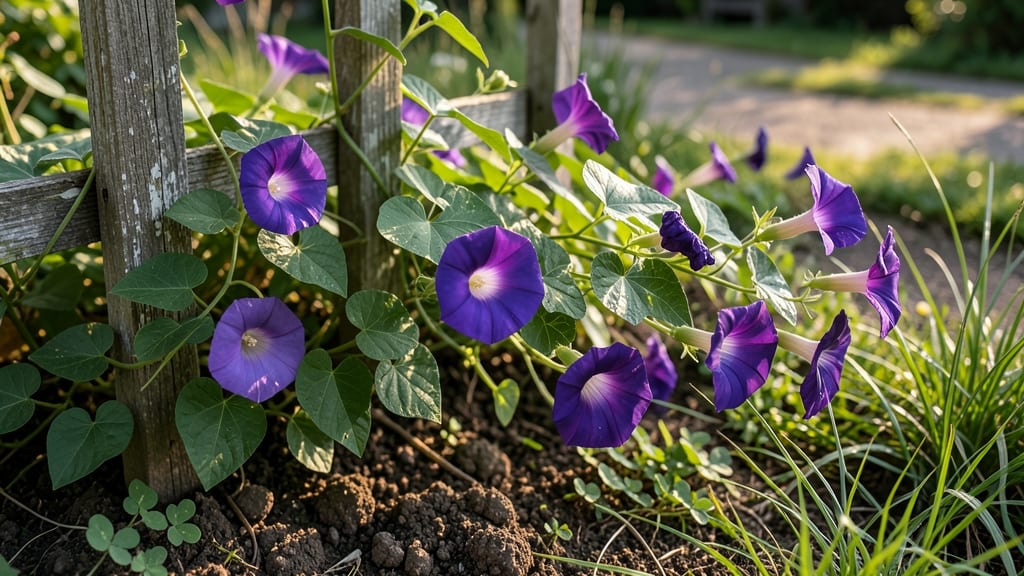
Morning glory flowers are annuals in most climates, completing their life cycle in one growing season, though some tropical varieties may behave as perennials in frost-free zones. Their rapid growth and self-seeding habits often extend their presence beyond a single year in gardens.
Deciding whether morning glories are annuals or perennials depends entirely on your climate. 🌱 In cooler regions, these vines thrive for just one season before frost kills them back to the ground, but in warm tropical areas, certain varieties can persist year-round.
The key difference lies in their sensitivity to cold—most morning glories simply can't survive freezing temperatures, which is why gardeners in northern zones treat them as annuals. However, their ability to self-seed means they often pop up again the following spring without any effort from you!
What's interesting is how their growth habits play into this classification. Morning glories grow incredibly fast—sometimes shooting up 10 feet in a single season—and their seeds scatter easily, creating natural volunteers.
This self-sustaining behavior is why they feel like perennials even when they're technically annuals. If you're in a mild-winter area, you might even see them return year after year without replanting!
💡 In This Article
- Why Morning Glory Classifies as Annuals in Most Gardens
- Tips for Extending Morning Glory’s Seasonal Presence
Why morning glory classifies as annuals in most gardens
The primary reason morning glories are classified as annuals in most regions comes down to their extreme frost intolerance. These vines originate from tropical and subtropical climates where temperatures rarely drop below 40°F (4°C).
When exposed to freezing conditions, their tender stems and leaves quickly succumb to frost damage, halting growth and eventually killing the plant. This sensitivity is hardwired into their biology—morning glories lack the cold-hardiness mechanisms found in true perennials, like woody stems or deep root systems that can survive winter dormancy.
Botanically, morning glories complete their life cycle in 90-120 days from seed germination to seed production. Their rapid growth—sometimes 6-12 inches per week—allows them to mature quickly before cooler weather arrives. The seeds they produce are remarkably resilient, capable of lying dormant for years until conditions are favorable.
This strategy ensures the species survives even when individual plants don't make it through winter. 🌱 What's fascinating is how their flowering triggers coincide with warm seasons: most varieties bloom within 6-8 weeks of planting, producing those iconic trumpet-shaped flowers that only last 1-2 days each but appear in rapid succession.
The classification also depends on your USDA hardiness zone. In zones 3-7 (where winter temperatures drop below 20°F (-7°C)), morning glories will die back completely each year.
However, in zones 8-11, where winters are mild or non-existent, some varieties like Ipomoea quamoclit (cypress vine) or Ipomoea nil (Japanese morning glory) may persist as perennials. The difference comes down to whether the plant can survive the coldest months—most morning glories simply can't handle sustained freezing.
There's also a genetic component to their annual behavior. Most cultivated morning glories are self-pollinating annuals, meaning they produce seeds that will germinate the following spring if conditions allow. This contrasts with true perennials that regrow from the same root system year after year.
The trade-off is that morning glories prioritize rapid reproduction over longevity, which explains why they grow so aggressively during their single growing season. 🌿 Their ability to spread through self-seeding is what often makes them feel perennial in gardens, even when botanically they're not.
Interestingly, some morning glory species exhibit biennial tendencies in marginal climates. For example, Ipomoea purpurea (common morning glory) might survive a mild winter in zone 7b and produce flowers the following year from the same root base, blurring the annual/perennial line.
This is why gardeners in transitional zones sometimes see them behave unpredictably—what appears to be a perennial might actually be a biennial or a particularly resilient annual.
One key mechanism at play is their thermoperiodism—the way they respond to temperature changes. Morning glories detect day length and temperature shifts to trigger flowering. When nights grow cooler (a sign of approaching winter), their growth slows dramatically, and they shift resources toward seed production.
This physiological response ensures they complete their life cycle before frost arrives, even if it means sacrificing the plant's long-term survival. 🌡️