
Flowers
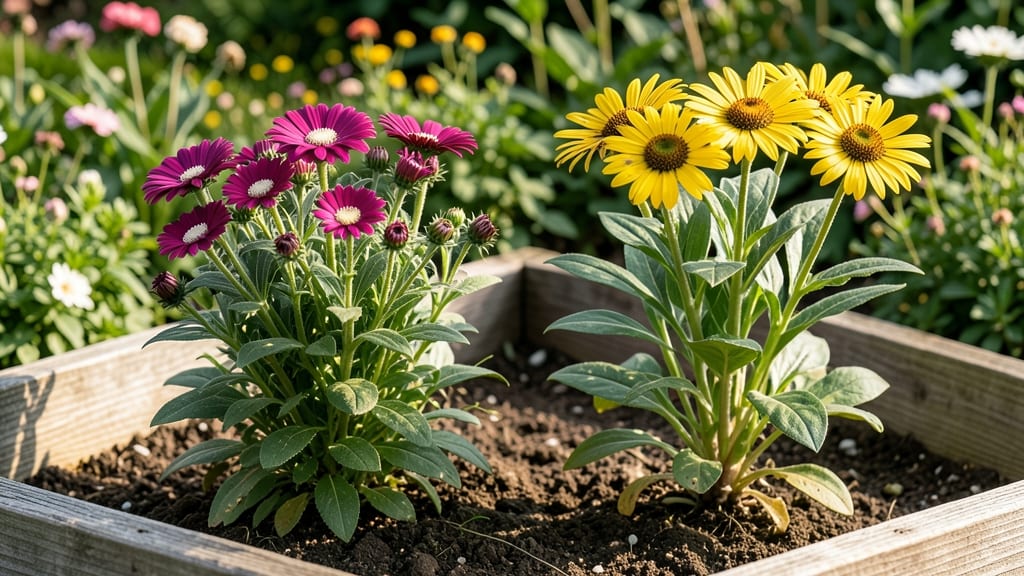
Deciding whether osteospermum is annual or perennial depends on your climate: it thrives as a tender perennial in USDA zones 8-11 but behaves like an annual in colder regions, dying back with frost and needing replanting each spring.
This distinction comes down to frost sensitivity—osteospermum's roots can survive mild winters in warmer zones, allowing it to regrow each season. 🌱 In colder areas, however, the plant's foliage and stems freeze back completely, forcing gardeners to replant from seeds or cuttings annually.
The key difference lies in how each climate zone handles winter dormancy, with zones 8-11 offering just enough protection for the roots to persist.
What's interesting is how this affects your gardening strategy. In marginal zones (like zone 7), you can sometimes extend the plant's life by using heavy mulch or growing it in containers that you can move indoors during cold snaps.
This approach turns an annual into a semi-perennial, giving you more blooms without replanting every year.
💡 In This Article
- Climate Zones Where Osteospermum Thrives as a Perennial
- How to Extend Osteospermum’s Life Cycle in Cold Regions
Climate zones where osteospermum thrives as a perennial
Osteospermum's ability to behave as a perennial hinges on its tender nature—it can't tolerate freezing temperatures below 25°F (-4°C). In USDA zones 8-11, where winter lows typically stay above this threshold, the plant's roots remain dormant but alive beneath the soil.
This is because the root system contains specialized cells that store carbohydrates and water, allowing it to regenerate new growth when temperatures rise again in spring. Think of it like a dormant bulb—just without the protective outer layers.
The key difference lies in how frost affects the plant. In zones 8-11, frost might damage the foliage, but the roots often survive because they're insulated by 6-12 inches of soil.
For comparison, hardy perennials like black-eyed Susan (Rudbeckia) can handle -20°F (-29°C) with ease, while osteospermum's roots simply can't withstand prolonged freezing. The plant's native habitat in South Africa (where it grows in Mediterranean climates) explains this sensitivity—it evolved in regions with mild winters and hot, dry summers.
What gardeners in zones 8-11 often notice is how osteospermum's regrowth pattern differs from true perennials. After frost, the plant may appear dead at the surface, but new shoots emerge from the roots in 3-6 weeks once daytime temperatures consistently stay above 50°F (10°C).
This delayed regrowth is a survival adaptation—waiting for stable warmth ensures the plant has enough energy to produce flowers rather than just foliage. 🌱
In contrast, colder zones (7 and below) experience frost that penetrates deeper, killing the roots entirely. This is why gardeners in these areas must replant each spring. The plant's dieback cycle is triggered by temperatures below 32°F (0°C), causing cellular damage that halts photosynthesis.
Without protective measures, the entire plant—roots and all—will succumb to winter's chill, making it behave like an annual.
One fascinating aspect is how osteospermum's growth habit changes based on climate. In perennial zones, it often grows as a semi-woody shrub at the base, while in annual zones, it remains herbaceous. This structural difference is another clue to its perennial potential—woody stems are more resilient to seasonal stress.
For gardeners pushing the limits in zone 7, this woody base can sometimes survive with heavy mulch, creating a semi-perennial version of the plant.
The bottom line? Osteospermum's perennial status is a climate privilege—it rewards gardeners in warm zones with reliable regrowth but demands annual replanting elsewhere. Understanding this helps explain why so many gardeners treat it as an annual by default, even when it technically could persist in milder winters. 💛