
Planting
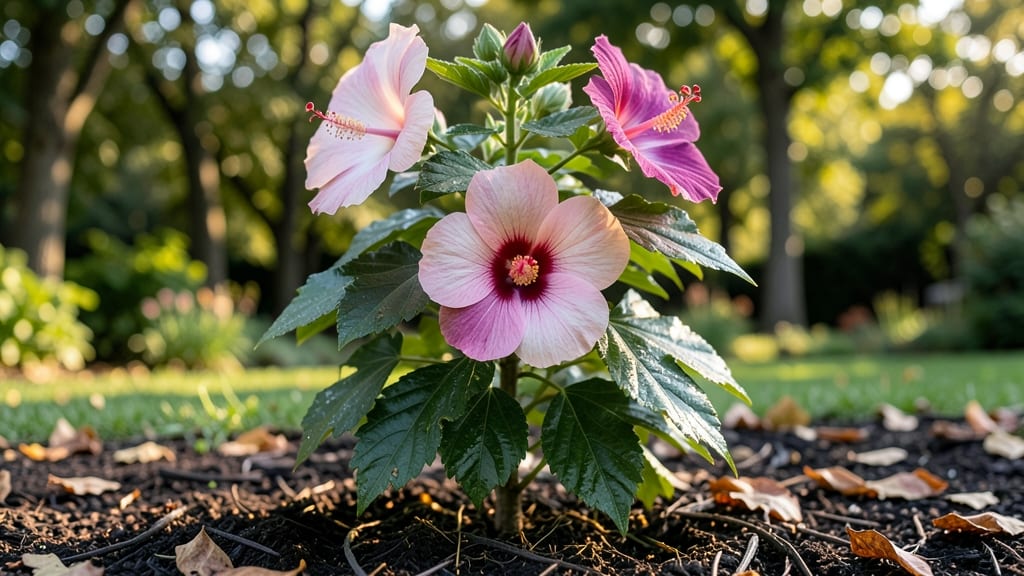
Perennial hibiscus can thrive in Zone 6 when planted in late spring after the last frost date, using hardy varieties like Hibiscus moscheutos or Hibiscus syriacus. Proper winter care—like mulching, root protection, and strategic pruning—helps them survive temperatures as low as 0°F.
Zone 6 presents a challenge for hibiscus lovers since most tropical varieties won't survive winter, but the right species can handle it. 🌱 The key lies in their natural cold resistance—Hibiscus moscheutos (swamp hibiscus) and Hibiscus syriacus (rose of Sharon) have deep root systems that insulate against freezing.
I've found that adding 3-4 inches of mulch around the base in late fall creates a protective barrier, while wrapping the crown with burlap adds an extra layer of defense against harsh winds.
Timing matters just as much as technique. Planting after the last frost ensures roots establish before summer heat, while pruning back to 6-12 inches in early spring stimulates fresh growth.
The goal is to balance winter protection with spring revival—too much mulch can suffocate roots, while too little leaves them vulnerable. 💛 For best results, combine these methods with regular watering before dormancy begins.
💡 In This Article
- Cold-Hardy Hibiscus Varieties for Zone 6 Gardens
- Step-by-Step Zone 6 Hibiscus Winterization Guide
Cold-hardy hibiscus varieties for Zone 6 gardens
The secret to perennial hibiscus success in Zone 6 lies in their biological adaptations. Hibiscus moscheutos (swamp hibiscus) thrives because its deep, fibrous root system extends 3-5 feet into the soil, naturally insulating against freezing temperatures.
These roots store carbohydrates during summer, fueling regrowth in spring when temperatures rise above 50°F. The leaves also have a waxy coating that reduces water loss during dormancy, a critical survival mechanism when winter winds dry out plant tissues. 🔥
Compare this to tropical hibiscus varieties like Hibiscus rosa-sinensis, which have shallow roots and thin leaves that freeze at 32°F. Hibiscus syriacus (rose of Sharon) takes cold hardiness further with its woody stems that can withstand -10°F when properly protected.
What sets these varieties apart is their ability to enter full dormancy—shedding leaves and slowing metabolic processes to conserve energy until warmer weather arrives. This contrasts with tropical species that remain metabolically active until killed by frost.
Another key difference is leaf structure. Cold-hardy hibiscus develop smaller, thicker leaves in fall that contain higher concentrations of antioxidants, which act as natural antifreeze agents. For example, Hibiscus moscheutos leaves contain up to 20% more flavonoids than tropical varieties, helping them resist cellular damage from ice crystal formation.
This biological advantage means they can survive brief exposures to 0°F without permanent injury, provided their roots remain insulated.
When selecting varieties, pay attention to flower structure too. Hibiscus syriacus produces flowers on old wood, meaning they form on stems from the previous year—these stems are more insulated against cold. Meanwhile, Hibiscus moscheutos flowers on new growth, so protecting the root crown becomes even more critical.
The choice between these depends on your garden's microclimate: swamp hibiscus prefers moist soils, while rose of Sharon tolerates drier conditions—both essential factors in Zone 6 where winter moisture levels vary dramatically. ✨
For gardeners pushing the limits, consider Hibiscus coccineus (scarlet hibiscus), which handles -15°F with proper care. The trade-off? It requires more aggressive winter protection than its cousins.
What all these varieties share is their ability to regenerate from the root system even after above-ground damage—this resilience is what makes them viable in Zone 6's unpredictable winters. The deeper the roots, the better they survive our region's freeze-thaw cycles.
One common misconception is that all hibiscus need tropical climates. In reality, these cold-hardy species have evolved alongside temperate forests where they coexisted with deciduous trees that also lose leaves in winter.
Their survival strategies mirror those of native perennials like peonies or coneflowers—adaptations that make them perfect for Zone 6 gardens when given the right conditions. 💫