
Flowers
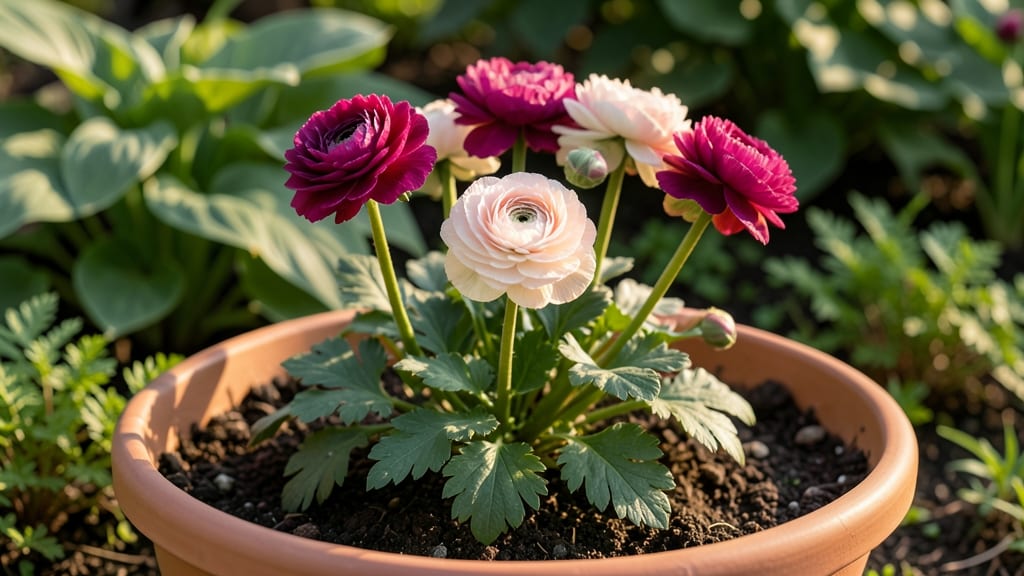
Ranunculus plants act as perennials in mild climates but die back annually in colder regions, regrowing from tubers each spring. Their longevity hinges on winter resilience and proper dormancy care.
Whether you're in a frost-free zone or face harsh winters, understanding ranunculus's growth habits is key. 🌱 These plants store energy in underground tubers during dormancy, allowing them to bounce back each spring.
In warmer climates (USDA zones 8-10), they naturally persist year-round, while colder regions require protective measures like mulching or indoor overwintering to preserve those vital tubers. The difference comes down to how well you support their natural survival mechanisms.
For gardeners in colder areas, proper tuber care can turn what seems like an annual into a multi-year performer. With the right soil prep and seasonal adjustments, you can extend their blooming cycles significantly—sometimes even for several years.
The secret lies in mimicking their native Mediterranean conditions where they thrive as true perennials.
💡 In This Article
- Ranunculus Life Cycle: Tubers and Seasonal Dieback Explained
- How to Extend Ranunculus Blooms Year-Round with Proper Care
Ranunculus life cycle: tubers and seasonal dieback explained
Ranunculus plants rely on specialized underground tubers to survive seasonal changes, a survival strategy they share with other bulb-like perennials like dahlias. These tubers act as biological batteries, storing carbohydrates, proteins, and essential nutrients produced during the growing season.
When temperatures drop below 40°F, the plant's foliage yellows and dies back—a natural process called senescence—while the tuber remains dormant underground, conserving energy for next year's growth.
The tuber's structure is fascinating: it's actually a modified stem with a dense, fleshy texture that resembles a small potato. Inside, you'll find multiple "eyes" or growth nodes where new shoots emerge in spring. In warmer climates (USDA zones 8-10), these tubers can remain active year-round, producing continuous blooms.
However, in colder regions (USDA zones 5-7), the tubers enter a deeper dormancy phase triggered by shorter daylight and lower temperatures, which explains why they appear to die back annually.
What most gardeners don't realize is that the tuber's survival rate depends on its moisture content during dormancy. If stored too dry (below 10% moisture), the tuber can shrivel and lose viability. Conversely, excessive moisture (above 20% moisture) promotes rot.
The ideal storage environment mimics the Mediterranean climate where ranunculus originated—cool (40-50°F), dark, and with just enough moisture to prevent desiccation. This delicate balance explains why proper overwintering care can transform an annual into a multi-year performer.
Here's the biological mechanism at work: when temperatures rise in spring, the tuber's growth hormones (like gibberellins) activate, breaking dormancy. The stored starches convert to sugars that fuel new shoot development.
In colder climates, this process can take 8-12 weeks from planting to first bloom, while in mild climates, it may occur in just 6-8 weeks. The key difference lies in how quickly the tuber can rehydrate and resume metabolic activity after winter.
Consider this comparison: in zone 9, a ranunculus tuber might produce blooms for 3-5 years with proper care, while in zone 6, it typically lasts 1-2 years without intervention. The variance comes down to how well you can replicate the plant's natural growing conditions.
In colder zones, gardeners must extend the growing season by starting tubers indoors 8-10 weeks before last frost, giving them a head start on the spring warmth they'd naturally experience in warmer climates.
The tuber's lifespan also depends on its size at harvest. Larger tubers (about 2-3 inches in diameter) contain more stored energy and can sustain multiple growing seasons, while smaller tubers may only produce one strong bloom cycle.
This is why professional growers often select and save the largest, healthiest tubers for replanting each year—a practice that can extend the plant's garden life by 30-50% compared to random replanting.
Understanding this life cycle reveals why ranunculus often appears annual in colder climates: it's not that the plant dies, but that its natural perennial behavior is interrupted by winter conditions.
With the right care—particularly protecting those vital tubers—you can unlock its true perennial potential and enjoy those delicate, layered blooms year after year. 🌸