
Flowers
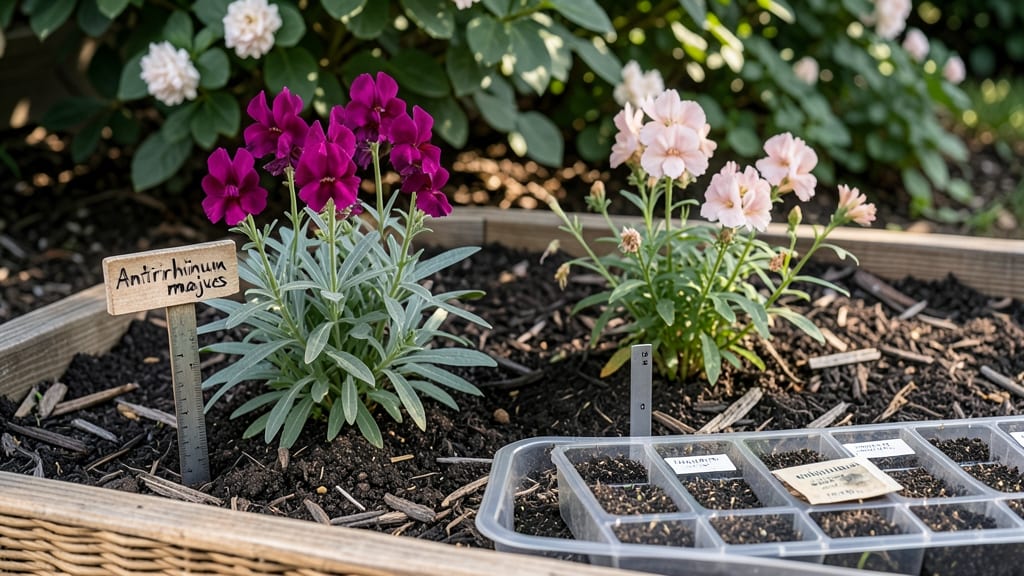
Determining whether snapdragons are perennial or annual depends on your climate: they act as annuals in cold regions but can return as perennials in mild winters, with their foliage dying back but roots often surviving in frost-free zones.
Snapdragons follow a biennial growth pattern, meaning they complete their life cycle in two years under ideal conditions. 🌱 In colder climates (USDA zones 4-7), they typically behave like annuals, flowering and dying within a single season.
However, in warmer regions (zones 8-10), their hardy roots often persist through winter, allowing them to regrow and flower again the following year. This explains why gardeners in milder areas sometimes see snapdragons return year after year, while those in colder zones must replant annually.
What makes this fascinating is how their dieback cycle works—they'll appear dead in winter but can bounce back with proper care. This adaptability is why snapdragons remain a favorite among gardeners: they offer both the convenience of annuals and the sustainability of perennials, depending on where you live.
💡 In This Article
- How Snapdragon Growth Cycles Differ by Climate
- Extending Snapdragon Lifespan with Winter Care
How snapdragon growth cycles differ by climate
Snapdragons follow a biennial lifecycle that reveals their true nature as plants that thrive over two years—but only when conditions are right. In their first year, they focus on building a robust root system and developing a low-growing rosette of leaves, storing energy for future growth.
This stage looks like slow, leafy growth rather than the dramatic blooms gardeners love. The key transition happens when temperatures drop: in colder climates (USDA zones 4-7), the entire plant dies back, acting like an annual.
What changes in warmer zones (8-10) is the plant's ability to enter dormancy rather than die completely. Their roots, which can extend 12-18 inches deep, develop a protective layer that survives 20-30°F temperatures.
This is why snapdragons in Southern California or Mediterranean climates often return year after year—their roots stay alive, ready to regrow when spring arrives. The foliage may look crispy and brown, but those roots are the secret to perennial behavior.
The flowering stage only occurs in the second year (or subsequent years in mild climates) when the plant has enough stored energy. This is why you'll see snapdragons bloom profusely in their second season—up to 100-150 flowers per plant—before potentially dying back again.
The height difference is striking too: first-year plants stay under 12 inches, while mature plants can reach 3-4 feet when flowering.
Here's where climate becomes critical: in USDA zone 7 (the borderline), snapdragons might survive winter but with reduced vigor. The chilling requirement (40-50 days below 40°F) triggers dormancy, but if winters are too mild, the plant may not fully rest, leading to weak regrowth.
This is why gardeners in these zones often use mulch blankets to simulate colder conditions and protect roots.
What's fascinating is how snapdragons adapt to altitude changes too. At higher elevations (even in warm zones), cooler nights can push them toward annual behavior, while valley floors with warmer microclimates encourage perennial growth.
This adaptability is why snapdragons thrive in both container gardens (where roots can be moved indoors) and permanent garden beds in frost-free areas.
The real test of a snapdragon's perennial potential comes in late winter, when gardeners watch for the first green shoots pushing through mulch. If you see new growth before March 15 in your region, those roots survived—and you've got a perennial on your hands.
In colder zones, this never happens, which is why replanting becomes an annual ritual there.