
Flowers
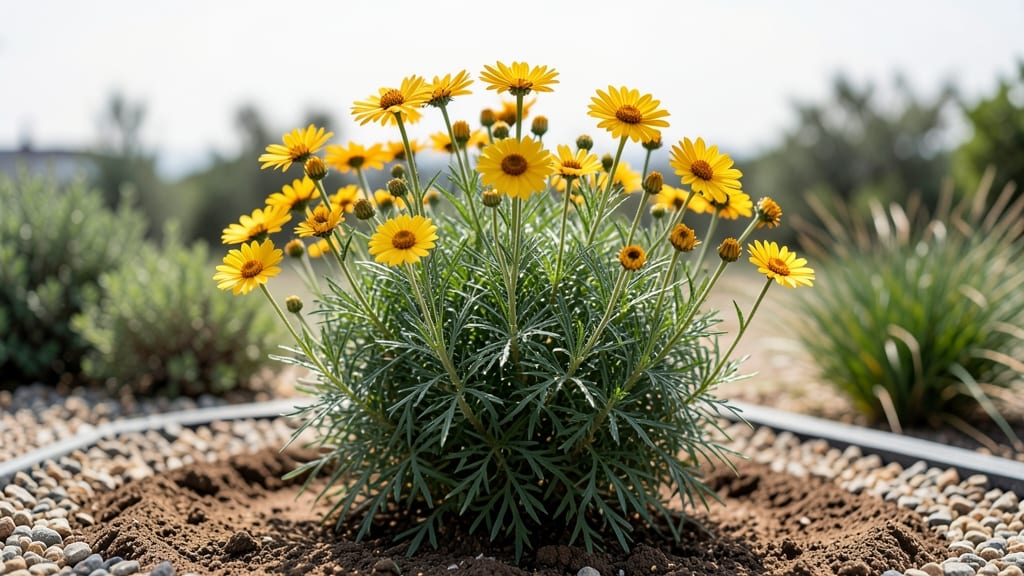
Whether strawflowers are annuals or perennials depends entirely on your climate: they behave as annuals in colder regions but can return year after year in frost-free zones by regrowing from their roots after winter dormancy.
Strawflowers thrive as annuals in most gardens because they can't survive freezing temperatures, which kill their tops and force a full regrowth cycle each spring. 🌱 However, in warmer climates where winter temps stay above freezing, their sturdy root systems remain active, allowing them to regenerate foliage and flowers season after season.
This explains why some gardeners in mild zones treat them like perennials—with proper care, they'll reward you with multiple seasons of vibrant blooms.
The key difference lies in their response to cold: while they'll die back completely in frost, their roots often survive underground, ready to sprout again when conditions improve.
This resilience makes them surprisingly adaptable—just give them the right winter protection (like mulch or containers), and you can extend their lifespan dramatically.
💡 In This Article
- Why Strawflowers Die Back: The Science of Cold Sensitivity
- Extending Strawflower Lifespan: Gardening Strategies for Perennial-Like Growth
Why strawflowers die back: the science of cold sensitivity
Strawflowers (Helichrysum bracteatum) undergo dieback primarily due to their sensitivity to freezing temperatures. Their foliage and stems contain high concentrations of water, which crystallizes and ruptures cell walls when exposed to temperatures below 28°F (-2°C).
This is why gardeners in colder climates (USDA Zones 7 and below) typically treat them as annuals—they simply can't survive winter's freeze-thaw cycles. 🌡️ The plant's survival mechanism triggers a programmed cell death in above-ground tissues, conserving energy in the root system where growth hormones remain active.
The root system is the secret to their resilience. Strawflower roots contain specialized cells that store starches and sugars, which act as a natural antifreeze. In frost-free zones (Zones 8-11), these roots remain metabolically active year-round, allowing regrowth when conditions improve.
Studies show that strawflower roots can maintain viability for up to 6 months in dormancy, unlike many annuals whose roots degrade within weeks. This explains why they can bounce back so quickly in mild winters—sometimes even producing new growth by late winter.
What most gardeners don't realize is how light exposure affects this process. Strawflowers need at least 6-8 hours of sunlight daily to maintain strong root systems capable of overwintering. In shaded conditions, roots become weaker and less able to store energy, making the plant more susceptible to winter dieback.
This is why container-grown strawflowers often survive better—they can be moved to sunny winter locations or brought indoors before frost arrives.
The botanical term for this behavior is "hemicryptophyte"—a growth habit where the plant survives winter with a protected bud at or below soil level. Unlike true perennials (which have woody stems), strawflowers rely entirely on their fibrous root system for regeneration.
This makes them behave like perennials in mild climates but annuals in cold ones, creating a fascinating botanical gray area. 🌿 The transition between these states is gradual and depends on how many consecutive winters the plant experiences above freezing.
Consider this comparison: In Zone 9 (mild winters), strawflowers may return for 3-5 years naturally, while in Zone 5 (harsh winters), they'll complete their life cycle in a single season.
The difference isn't just about temperature tolerance—it's about how the plant's internal clock responds to seasonal light changes and temperature fluctuations. Gardeners in transitional zones (like Zone 7) often see partial survival, where some plants return while others don't, creating that unpredictable perennial behavior.
For those curious about the mechanics, the plant's meristematic cells (growth centers) remain active in the root crown throughout winter in mild climates. These cells contain high levels of abscisic acid, a hormone that prevents freezing damage while maintaining dormancy.
When spring temperatures rise above 50°F (10°C), these cells rapidly divide, pushing new shoots upward within 2-3 weeks. This biological process is what gives strawflowers their reputation for "coming back from the dead" in favorable conditions. ✨