
Flowers
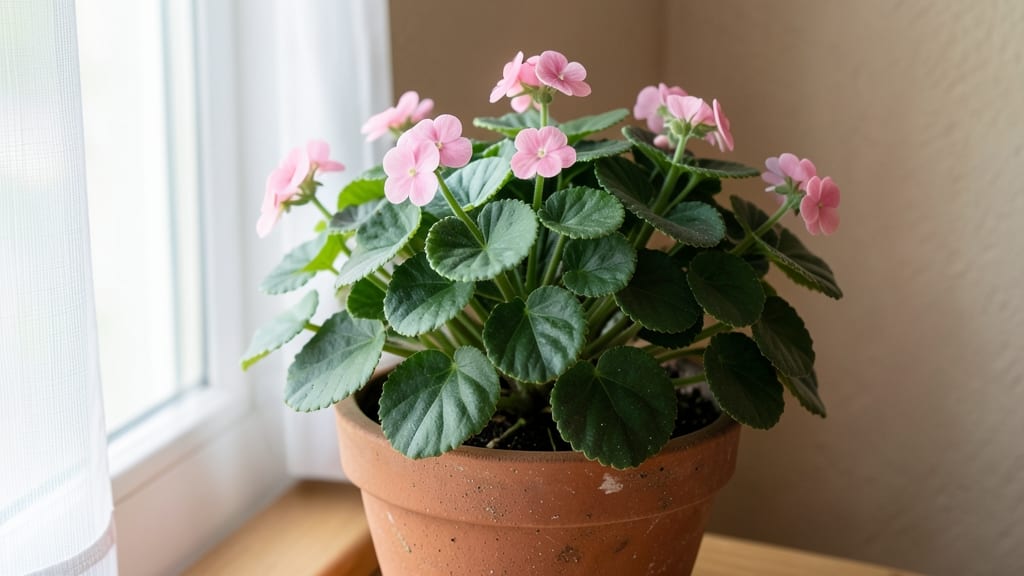
Wax begonia behaves like an annual in colder climates because its tender stems and leaves die back when temperatures drop below 50°F, though its tuberous roots can survive winters in frost-free zones, making it technically a perennial with seasonal dormancy.
This plant's true nature reveals itself through its underground storage system. 🌱 Unlike true annuals that complete their entire life cycle in one season, wax begonias store energy in their thick, potato-like tubers during dormancy.
In warmer regions where winter temperatures stay above 50°F, these tubers remain active underground, ready to sprout new growth when spring arrives.
The key difference lies in the foliage—while the above-ground parts may wither in colder areas, the tuber's resilience keeps the plant's genetic line alive for multiple growing seasons.
Gardeners in colder zones often treat wax begonias as annuals simply because they don't see the regrowth each year. However, with proper tuber storage techniques—like digging them up before frost and keeping them in a cool, dry place—they can reliably return for 5-10 years or more.
This dual nature makes wax begonias one of the most adaptable plants for gardeners who want perennial benefits without the year-round maintenance.
💡 In This Article
- How Wax Begonia’s Tuberous Roots Determine Its Lifespan Type
- Year-Round Care for Wax Begonia Tubers in Different Climates
How wax begonia’s tuberous roots determine its lifespan type
Wax begonia's lifespan hinges on its specialized tuberous roots, which function like a natural storage battery. These thick, fleshy roots—often resembling small potatoes—store carbohydrates and nutrients produced during the growing season.
When temperatures dip below 50°F, the plant's above-ground foliage and stems senesce (age and die back) as a survival mechanism, but the tuber remains dormant yet viable. This process is called seasonal dormancy, where the plant conserves energy until favorable conditions return.
The tuber's survival strategy is rooted in its cellular structure. Unlike true annuals that lack storage organs, wax begonia tubers contain specialized parenchyma cells packed with starch granules. These cells can remain metabolically inactive for months while maintaining 90-95% moisture retention, preventing desiccation.
In frost-free zones (USDA zones 9-11), tubers continue growing underground, producing new shoots when temperatures rise above 60°F—a clear indicator of its perennial nature.
What makes this fascinating is the tuber's ability to regenerate entire plants from just a 1-inch piece. Each tuber contains multiple growth nodes called eyes, similar to potato tubers.
When properly stored at 50-60°F with 50-70% humidity, these eyes remain viable for years, allowing the plant to "rebirth" itself season after season. This regenerative capacity is why wax begonias can persist for decades in ideal conditions, despite their annual-like behavior in colder climates.
The temperature threshold of 50°F isn't arbitrary—it's the point where cellular membranes begin to stiffen due to cold-induced lipid phase transitions. Below this temperature, the plant's metabolic processes slow dramatically, but the tuber's protective layers (rich in suberin wax) prevent freezing damage.
In contrast, true annuals lack this protective storage mechanism and complete their entire lifecycle in one growing season without dormancy.
Consider this comparison: In Zone 5 (where winters drop below -15°F), wax begonias appear annual because gardeners typically don't protect the tubers. However, in Zone 10 (where winters stay above 30°F), the same plant behaves as a perennial, producing foliage year-round.
This adaptability makes wax begonia a botanical chameleon, shifting its growth pattern based on environmental cues rather than genetic constraints.
The tuber's dormancy isn't just about survival—it's a calculated energy conservation strategy. Studies show that wax begonia tubers can lose up to 30% of their weight during dormancy while maintaining viability.
This weight loss occurs through controlled respiration, where the tuber metabolizes stored starches at a minimal rate to sustain basic cellular functions. When spring arrives, the tuber's enzymes reactivate, converting starch back into sugars that fuel rapid regrowth.
This biological duality explains why wax begonias are often misclassified. Gardeners in colder regions may assume they're annuals because they don't see regrowth, while those in warmer climates observe perennial behavior.
The truth lies in the tuber's remarkable ability to bridge these apparent contradictions through seasonal adaptation—a perfect example of how plants evolve survival strategies tailored to their environment.