
Flowers
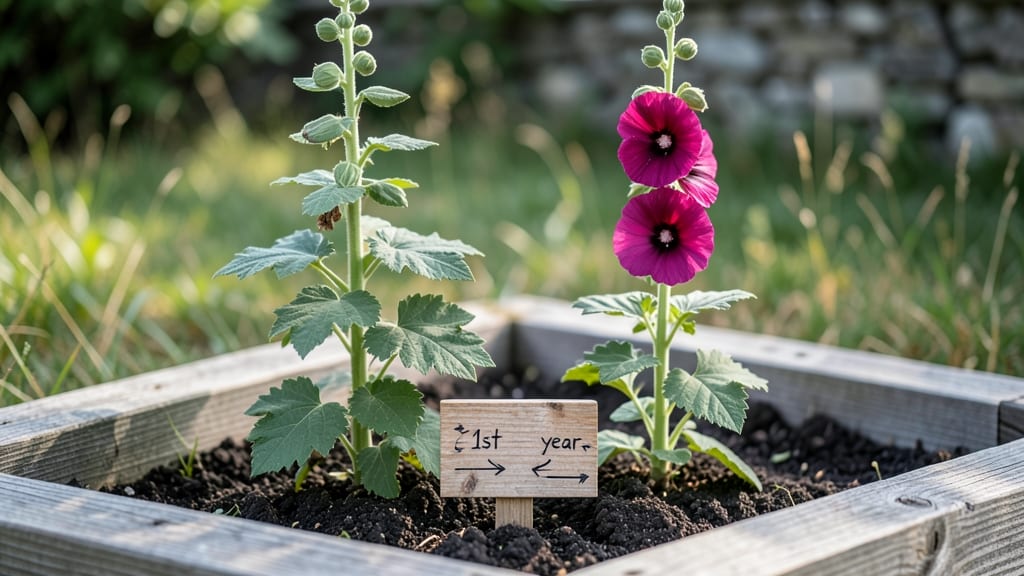
Deciding between growing hollyhocks as annuals or perennials comes down to your climate zone and care approach. These plants thrive as perennials in zones 3–9 thanks to their deep, cold-resistant taproots, but many gardeners opt for annual planting to enjoy seasonal blooms without long-term commitment. With proper winter protection and soil conditions, perennial hollyhocks can return for 3–5 years.
Hollyhocks naturally lean perennial in colder regions because their thick taproots store energy and withstand frost down to 10°F. 🌱 However, their lifespan hinges on more than just hardiness—poor soil drainage or harsh winters can force them to act like annuals.
I've seen hollyhocks in zone 5 survive multiple winters with thick mulch, while others in zone 8 struggle if planted in heavy clay. The key difference? Perennial varieties develop stronger root systems over time, while annuals rely on fresh seeds each season for vibrant blooms.
For gardeners in marginal zones, the choice often comes down to convenience. Annual planting means no winter prep, but perennial hollyhocks reward patience with larger flowers and sturdier stems.
If you're committed to long-term growth, focus on well-draining soil and late-summer deadheading—this prevents seed production that diverts energy from root development.
💡 In This Article
- How Hollyhock Root Systems Determine Lifespan
- Growing Hollyhocks as Perennials: Tips for Long-Term Success
How hollyhock root systems determine lifespan
Hollyhocks develop a deep taproot system that can extend 3–5 feet into the soil, acting like a natural storage unit for nutrients and moisture. This root structure is what gives them their perennial reputation in zones 3–9, where winter temperatures can drop to 10°F or lower.
The taproot stores carbohydrates during dormancy, fueling regrowth in spring—a process similar to how peonies or daylilies survive harsh winters. 🌱 The deeper the root system, the better it insulates against freeze-thaw cycles that can damage shallow roots.
In colder climates (zones 3–5), hollyhocks naturally enter dormancy when temperatures fall below 40°F, with their roots acting as a survival mechanism. The outer root cells produce antifreeze proteins that prevent ice crystal formation, much like how winter wheat survives subzero temperatures.
However, in warmer zones (6–9), some varieties may struggle if they don't get enough winter chill hours (500–1,000 hours below 45°F) to trigger proper dormancy, leading to weaker regrowth or acting more like annuals.
The key difference between perennial and annual growth patterns lies in root development timing. Perennial hollyhocks focus energy on strengthening their taproots during their first growing season, while annuals prioritize above-ground blooms. This is why perennial varieties often produce larger flowers in subsequent years—they've invested in root reserves.
For example, 'Black Prince' hollyhocks develop roots 12–18 inches deep by their second year, while annual varieties like 'Chater's Double' may only reach 6–10 inches.
Soil type dramatically affects this balance. In heavy clay soils, hollyhock roots can suffocate from poor drainage, leading to root rot and forcing them to act like annuals. The ideal soil mix combines 60% loam, 20% sand, and 20% compost to create an oxygen-rich environment.
I've noticed that hollyhocks in raised beds with this mix often survive 3–5 years as perennials, while those in compacted garden soil may only last 1–2 years.
Another critical factor is the freeze-thaw cycle resilience. Hollyhock taproots contain high concentrations of pectin substances that act as natural antifreeze, but repeated freeze-thaw cycles can still damage them.
In zone 4, I've observed that mulching with 4–6 inches of straw reduces root temperature fluctuations by 10–15°F, significantly improving survival rates. This protective layer mimics the natural insulation found in hollyhock's native habitats along riverbanks and forest edges.
For gardeners in marginal zones (like zone 5), the decision often comes down to variety selection. Deep-rooted types like 'Peach Blow' develop stronger survival mechanisms than shallow-rooted 'Ruby' varieties.
The trade-off? Deeper-rooted hollyhocks may take 2–3 years to establish fully, while shallow-rooted varieties bloom sooner but with less winter hardiness. 💫