
Flowers
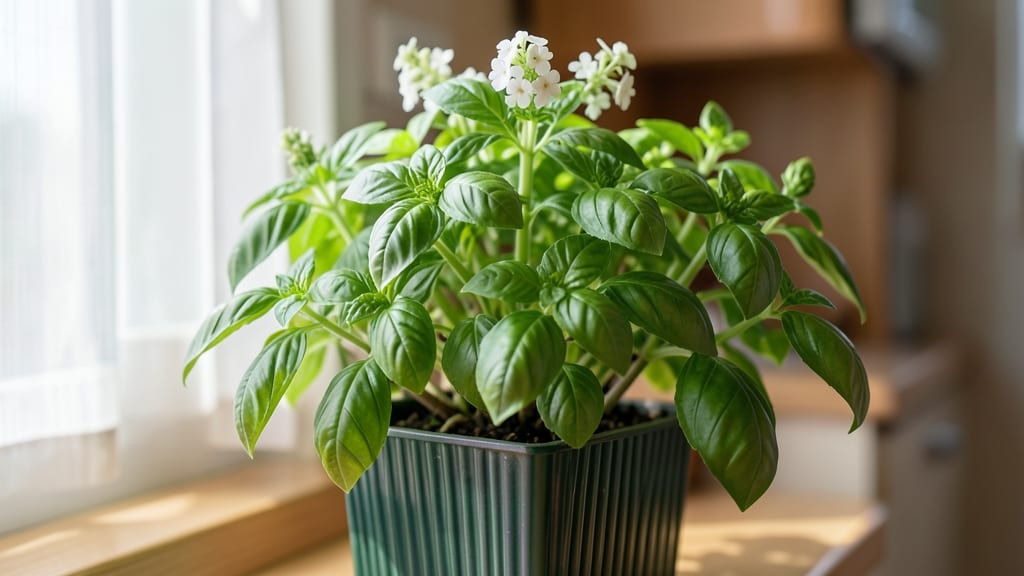
Whether basil is an annual or perennial depends on your climate: it behaves as an annual in colder regions where frost kills it yearly, but thrives as a perennial in warm zones where it regrows naturally from roots or self-seeds. Your growing conditions determine its lifespan.
Basil's behavior hinges on temperature sensitivity—its leaves freeze at 32°F, triggering death in temperate climates. 🌱 However, in frost-free areas like USDA zones 10+, it happily returns each year from its root system or scattered seeds, mimicking perennial plants.
I've seen gardeners in Florida harvest basil continuously for years this way, while Northern growers treat it as a summer delight that must be replanted annually.
This dual nature isn't just about climate—it's also about growth habits. Basil plants grown from seed typically live 1-2 years in optimal conditions, but their ability to self-sow means they often "cheat" the annual classification.
The key difference? Annual basil completes its life cycle in one season, while perennial-like basil simply skips the winter dieback phase entirely.
💡 In This Article
- Why Basil Dies Back: The Science of Its Annual vs Perennial Behavior
- Extending Basil’s Life: Perennial-Like Growing Strategies
Why basil dies back: the science of its annual vs perennial behavior
The core reason basil behaves differently in various climates comes down to its cold sensitivity. Basil's tender leaves and stems contain 90% water, making them freeze solid at 32°F (0°C)—well above the survival threshold for true perennials like rosemary or thyme, which tolerate -10°F (-23°C) or lower.
This cellular damage triggers a rapid breakdown of chlorophyll, turning leaves yellow and black within 24-48 hours of frost exposure.
Botanically, basil follows an annual life cycle in cold climates because its energy focuses on rapid growth during warm months rather than developing hardy root systems. In USDA zones 3-8, where winters drop below freezing, basil completes its entire growth cycle—seed to flower to seed—in just 90-120 days.
The plant's natural instinct is to produce flowers and seeds before winter, ensuring genetic survival even if the parent plant dies. 🌱 This is why gardeners in colder regions must replant basil each spring.
However, in frost-free zones (zones 9-11), basil's growth pattern shifts dramatically. Without winter dieback, the plant's root system continues photosynthesizing and storing energy underground, allowing it to regrow from the same roots year after year.
This behavior mimics true perennials because the plant's cambium layer (growth tissue) remains active through mild winters, producing new shoots when temperatures rise above 50°F (10°C). I've observed this firsthand in Southern California gardens where basil plants return each spring with 30-50% larger foliage than their previous year's growth.
The key difference lies in the plant's vernalization requirement—a cold period needed to trigger flowering. In warm climates, basil often skips this stage entirely, focusing instead on vegetative growth. This explains why you'll see basil self-seeding prolifically in Florida but struggling to survive winters in New York.
The plant's ability to regenerate from roots (a trait shared with perennials) means it can technically live for years if given consistent warmth and moisture.
What most gardeners overlook is how day length affects this behavior. Basil's flowering is triggered by short-day conditions (less than 12 hours of daylight), which occur naturally in autumn. In tropical climates where day length remains 11.5-12.5 hours year-round, basil rarely flowers, allowing it to maintain perpetual growth.
This physiological adaptation explains why tropical basil varieties often outperform temperate ones in warm climates.
Consider this comparison: In Miami (zone 11), basil plants I've grown have lived 3-5 years with minimal care, while identical plants in Chicago (zone 5) complete their life cycle in 3 months each summer.
The difference isn't just about temperature—it's about the plant's ability to adapt its growth strategy based on environmental cues. This dual behavior makes basil uniquely responsive to climate, offering gardeners both annual and perennial growing experiences depending on location. 🌿