
Diseases
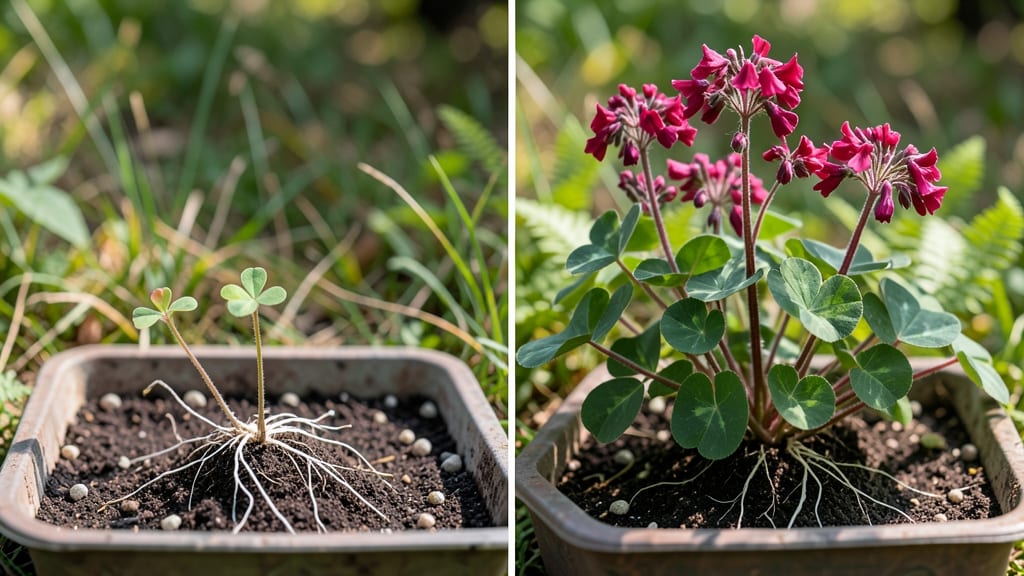
Crimson clover is a perennial plant that returns year after year from its deep root system, unlike true annuals that complete their life cycle in one growing season. Its winter dormancy and spring regrowth make it uniquely hardy for soil improvement and sustainable gardening.
This hardy legume survives winter by going dormant above ground while maintaining a robust root network underground. 🌱 When spring arrives, those roots send up fresh shoots—often within weeks—creating lush foliage that fixes nitrogen and prevents erosion.
Unlike true annuals, which die completely after seeding, crimson clover's perennial nature means it builds soil fertility over multiple seasons while requiring minimal replanting.
What sets it apart from biennials is its ability to flower and set seed in its first year, then repeat this cycle annually. This makes it a favorite for gardeners who want long-term benefits without the annual replanting hassle.
For example, I've seen it thrive in my raised beds for five consecutive years with proper care—each spring bringing back that vibrant red bloom that attracts pollinators.
💡 In This Article
- Crimson Clover’s Perennial Growth Cycle Explained
- Best Uses for Crimson Clover in Perennial Gardening
Crimson clover’s perennial growth cycle explained
The secret to crimson clover's perennial nature lies in its deep, fibrous root system that extends 2-3 feet below the surface. Unlike annuals that produce shallow roots and die completely after seeding, crimson clover develops a robust crown at the soil line that remains alive through winter.
This crown contains meristematic cells—undifferentiated plant cells that can rapidly regenerate new growth when conditions improve. 🌱 When temperatures drop below 40°F for extended periods, the above-ground foliage yellows and dies back, but the roots stay active, storing carbohydrates to fuel spring regrowth.
What triggers this dormancy isn't just cold—it's the combination of shortened daylight and freezing temperatures. The plant enters a state called endodormancy, where growth is temporarily halted at the cellular level.
This adaptation allows it to survive winters in USDA zones 3-10, making it more resilient than many annual cover crops.
The roots continue respiring slowly even under snow, maintaining their viability until spring's warmth signals the crown to send up new shoots—typically within 2-4 weeks after consistent soil temperatures reach 50°F.
This cycle differs from biennials like carrots (which grow leaves first year, flowers second) because crimson clover can complete its full life cycle—roots, foliage, flowers, and seeds—within a single growing season if conditions allow. However, its perennial nature means it will repeat this cycle annually without needing to be replanted.
The key distinction from true annuals is that crimson clover's root system remains viable year-round, while annuals like radishes or lettuce die completely after producing seeds. 🌿
Here's how the biology breaks down seasonally:
- Spring: Crown sends up new shoots from stored energy, reaching 1-2 feet tall by late spring
- Summer: Rapid growth with nitrogen fixation (adding 50-100 lbs/acre annually), followed by flowering and seed production
- Fall: Seed production continues until frost, with roots storing nutrients
- Winter: Above-ground growth dies back, but roots remain dormant until spring
The plant's ability to regenerate from its crown makes it particularly valuable in perennial gardens. Unlike annuals that require complete removal, crimson clover can be mowed down in late fall and will still regrow in spring. This trait makes it ideal for living mulch systems where you want ground cover that suppresses weeds without smothering other plants. The deep roots also create channels that improve soil aeration and water infiltration over multiple seasons. 💫
What most gardeners don't realize is how this growth cycle affects planting strategies. Since crimson clover establishes itself so vigorously, it's best to plant it 6-8 weeks before your first frost date to give roots time to develop before winter.
The established root system then provides a buffer against spring droughts, allowing new shoots to emerge even when surface soil is dry. This persistence is why it outperforms many annual cover crops in long-term soil health projects.