
Flowers
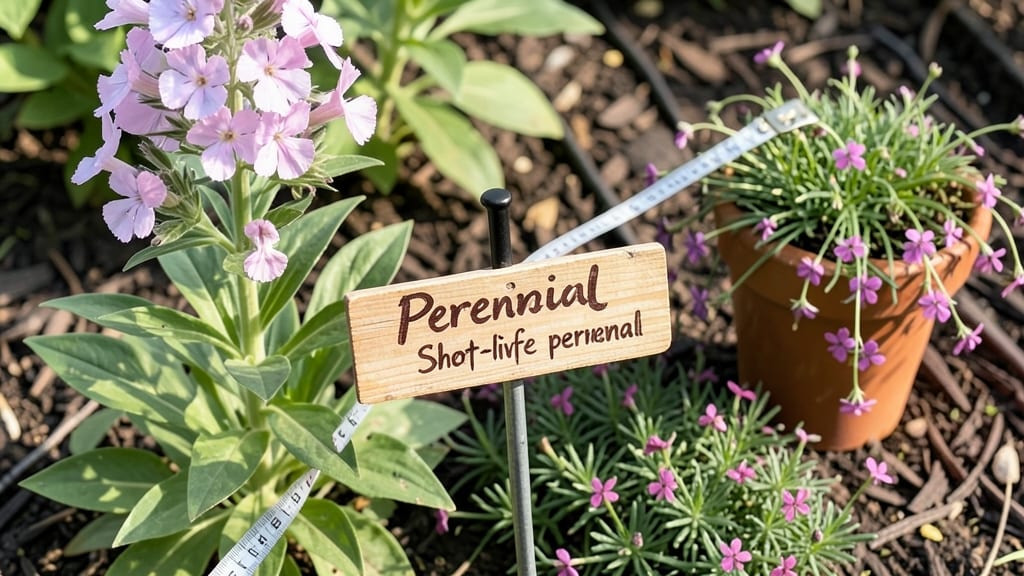
Whether phlox is perennial or annual depends on your climate—most varieties thrive as perennials in moderate zones, while some act as annuals in colder regions. Hardy garden phlox regrows yearly, but tender types like creeping phlox may die back in frost before returning from roots or self-seeding.
Phlox's lifespan hinges on your USDA hardiness zone and the specific variety you choose. 🌱 In zones 3-8, garden phlox (like Phlox paniculata) reliably returns each year, forming sturdy roots that withstand winter.
However, in colder zones (below 3), even hardy phlox may struggle, acting more like annuals unless you provide winter protection. Creeping phlox (Phlox subulata) is particularly sensitive—it often dies back to the ground but revives from its extensive root system when spring arrives.
The key difference lies in their root systems: deep-rooted varieties handle frost better than shallow-rooted ones.
For gardeners in marginal climates, extending phlox's life requires strategic care. Mulching with 3-4 inches of straw or leaves insulates roots from extreme cold, while dividing mature clumps every 2-3 years rejuvenates growth.
In the worst cases, you can propagate phlox from cuttings taken in early summer, giving you a head start for next year's blooms. The right soil prep—well-draining but moisture-retentive—also makes all the difference in helping phlox bounce back after winter dormancy.
💡 In This Article
- Phlox Lifespan Determined by Climate and Species
- Extending Phlox’s Lifespan in Challenging Growing Conditions
Phlox lifespan determined by climate and species
Phlox's classification as a perennial or annual hinges on two critical factors: your USDA hardiness zone and the specific species you're growing. The USDA Plant Hardiness Zone Map divides North America into 13 zones based on average annual minimum temperatures.
Most garden phlox (Phlox paniculata) thrives as a perennial in zones 4-8, where winter temperatures rarely drop below -20°F to -30°F. In these zones, its deep, fibrous root system stores enough energy to regrow each spring.
However, in zones 3 and colder, even this hardy variety may struggle, acting more like an annual unless protected.
The root system itself tells the story of phlox's resilience. Garden phlox develops a 3-4 foot deep taproot system that anchors it through frost, while creeping phlox (Phlox subulata) has a shallow, mat-forming root structure that's more vulnerable to freeze-thaw cycles.
This explains why creeping phlox often dies back to the ground in winter but typically returns from its extensive network of roots when temperatures rise. 🌱 What most gardeners don't realize is that phlox's ability to survive winter depends on both temperature AND snow cover—snow acts as an insulating blanket that can raise soil temperatures by 10-15°F compared to exposed ground.
Species traits create dramatic differences in cold tolerance. Tall garden phlox can handle -25°F with proper mulching, while woodland phlox (Phlox divaricata) thrives in zones 3-8 thanks to its natural shade adaptation.
On the other end, annual phlox varieties like Phlox drummondii (annual phlox) complete their entire lifecycle in one season, producing vibrant blooms before winter kills them—these are the exceptions rather than the rule in phlox gardening.
The key takeaway is that while most phlox are perennials, their performance as such depends entirely on matching the right species to your climate conditions.
Here's what's actually happening at the cellular level during winter dormancy: Phlox plants undergo a process called endodormancy, where growth stops and cells become resistant to freezing. This state is triggered by shortening daylight hours and cooling temperatures.
In hardy varieties, specialized proteins called antifreeze proteins prevent ice crystals from forming within plant cells, which would otherwise rupture membranes. However, in tender varieties, these protective mechanisms are less developed, making them more susceptible to winter damage.
Consider these key factors when selecting phlox for your garden:
- Zone 3-4: Opt for Phlox divaricata (woodland phlox) or heavily mulched Phlox paniculata varieties like 'David' or 'White Delight'
- Zone 5-7: Most phlox varieties thrive, including creeping phlox (Phlox subulata) with proper winter protection
- Zone 8+: All phlox perform well as perennials with minimal winter care
The most cold-hardy phlox varieties can survive temperatures as low as -30°F when properly established, while tender varieties may only tolerate 20°F without protection. This 10°F difference in tolerance explains why phlox behaves differently in northern versus southern climates. 💫