
Orchid Care
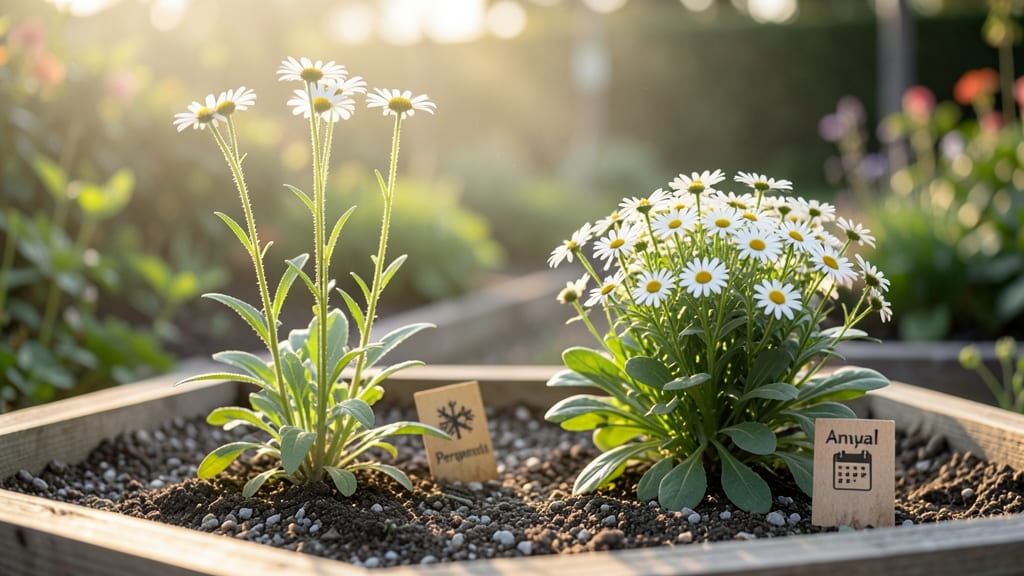
Daisies are perennials in most temperate climates but often grown as annuals in colder regions, as their hardiness varies by species—German chamomile daisies survive winters, while Gerbera daisies die back annually. Proper planting depth and mulching extend their lifespan.
Whether daisies thrive as annuals or perennials depends entirely on their species and your local climate. Perennial daisies like Shasta daisies return year after year in zones 5-9, thanks to deep root systems that store energy for regrowth. 🌱 However, in colder regions (zones 3-4), even hardy varieties may die back to the ground but resprout in spring.
The key difference lies in their ability to withstand freezing temperatures—some varieties simply go dormant, while others need winter protection like thick mulch or row covers.
For gardeners in frost-prone areas, treating daisies as annuals isn't a failure—it's a strategic choice. Many gardeners replant fresh seeds or divisions each spring to ensure vibrant blooms, especially with tropical species like African daisies that simply can't survive winter.
The good news? With proper care—like planting at the right depth and using organic mulch—you can coax even marginal perennials to last longer.
💡 In This Article
- Daisy Species and Their True Lifespan Traits
- How to Grow Daisies as Perennials in Cold Climates
Daisy species and their true lifespan traits
The lifespan of daisies hinges on their species and root structure. Perennial varieties like Shasta daisies develop deep taproots that can reach 2-3 feet underground, storing carbohydrates to fuel regrowth after winter. These roots act like natural batteries, allowing the plant to survive -20°F temperatures in zones 5-9.
In contrast, annual daisies like Gerbera daisies have shallow fibrous roots that can't withstand freezing, so they complete their life cycle in one growing season.
Dormancy behavior differs dramatically between types. Hardy perennials like German chamomile enter a deep dormancy, where metabolic activity slows to nearly zero—similar to how a bear hibernates. Their leaves yellow and die back, but the root crown remains alive beneath the soil.
Tropical daisies, however, lack this adaptation and simply rot in cold soil. 🌱 The key distinction lies in their evolutionary origins: temperate daisies evolved to handle seasonal changes, while tropical varieties didn't.
Hardiness zones play a critical role in determining daisy behavior. A Shasta daisy planted in zone 7 will reliably return each spring, while the same plant in zone 3 might survive only if heavily mulched.
Even within perennial species, some varieties are more cold-tolerant—like the Oxeye daisy (Leucanthemum vulgare), which thrives in zones 3-9, versus the African daisy (Osteospermum), which tops out at zone 8 without winter protection.
Root depth isn't the only factor—leaf structure matters too. Perennial daisies develop thicker, waxier leaves that reduce water loss during dormancy, while annual varieties have thinner leaves that would freeze and crack in winter.
This biological difference explains why you might see daisy foliage emerge from the ground in early spring when annuals would still be seeds.
What most gardeners don't realize is that even "annual" daisies might behave differently in milder winters. A Gerbera daisy might survive a 20°F night in zone 8 but die in a -5°F freeze.
The 30°F threshold often serves as the dividing line between survival and death for marginal species. This is why zone recommendations are so critical when selecting daisies for your climate.
Consider this comparison: A Shasta daisy planted at 12 inches deep with 3 inches of mulch can survive winters in zone 5, while the same planting without mulch might fail. The mulch acts like an insulating blanket, maintaining soil temperatures above freezing—similar to how your winter coat keeps you warm.
This is why proper planting depth and winter protection can turn an annual into a near-perennial in marginal climates. 💫