
Orchid Care
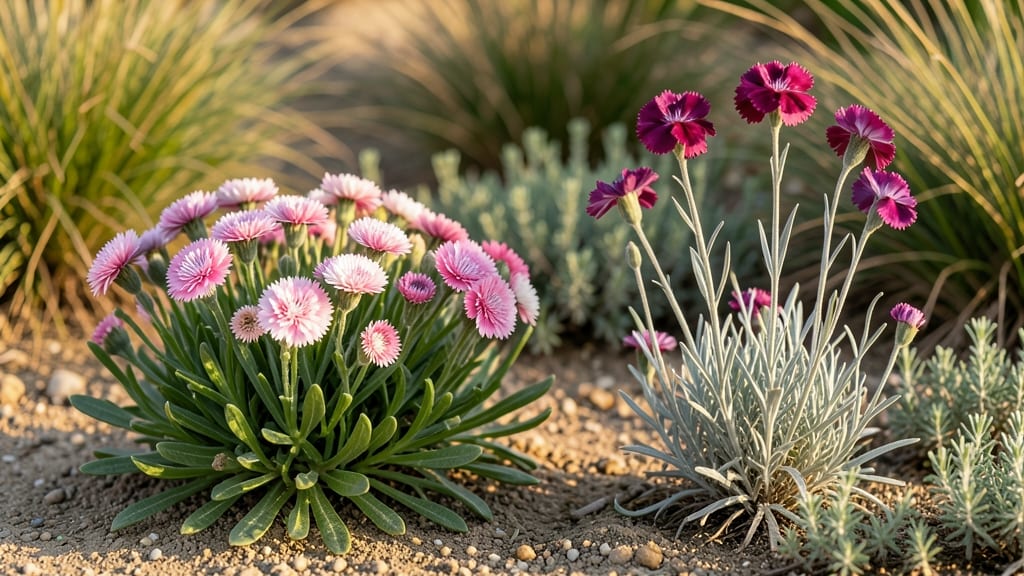
Whether dianthus plants are annual or perennial depends on the variety and climate, with hardy perennials thriving in USDA zones 3-9 and blooming annually, while tender annuals need yearly replanting in cooler regions. Most garden types survive mild winters but may die back during freezing temperatures.
Dianthus varieties fall into two main categories based on their natural lifespan and cold tolerance. Perennial types like the classic Dianthus barbatus (sweet william) return year after year in zones 3-9, often blooming from spring to summer.
In contrast, annual varieties—such as Dianthus chinensis—complete their life cycle in one season unless replanted, making them ideal for short-season gardens.
The key difference lies in their root systems: perennials develop deeper roots that store energy for regrowth, while annuals focus all their energy on rapid flowering and seed production. 🌱
For gardeners in transitional zones (like zone 7), this distinction matters when planning your landscape. Perennial dianthus may need winter protection with mulch, while annuals offer quick color but require spring replanting. Many hybrid varieties blur the line, behaving as perennials in mild winters but dying back in harsh freezes.
Understanding these patterns helps you choose the right type for your climate and blooming goals.
💡 In This Article
- Understanding Dianthus Growth Cycles by Variety
- Extending Dianthus Blooms: Seasonal Care for Perennial Types
Understanding dianthus growth cycles by variety
The distinction between annual and perennial dianthus boils down to their root systems and cold tolerance. Perennial varieties like Dianthus barbatus develop a robust, fibrous root network that can survive winter dormancy, storing energy to regenerate in spring.
These roots can extend up to 12-18 inches deep, allowing the plant to access moisture and nutrients even in dry conditions. In contrast, annual varieties such as Dianthus chinensis focus their energy on rapid above-ground growth and seed production, with shallow root systems that don't withstand frost. 🌱
Climate plays a critical role in determining whether a dianthus behaves as an annual or perennial. In USDA zones 3-5, even hardy perennial types may die back to the ground during winters with temperatures below -20°F, requiring protective measures like mulching.
Meanwhile, in zones 7-9, these same varieties often return year after year without intervention. The key threshold is typically 10°F—consistent temperatures below this point trigger dormancy in perennials. Annual varieties, however, lack this cold resistance entirely and complete their lifecycle in 90-120 days of warm weather.
Botanically, the difference lies in their reproductive strategies. Perennial dianthus prioritize long-term survival, allocating resources to root development and basal growth that can regenerate after frost. Annuals, meanwhile, follow a "live fast, die young" approach, producing seeds within 6-8 weeks of flowering to ensure genetic continuity.
This explains why perennial types often bloom more prolifically over multiple seasons, while annuals offer intense but fleeting displays. For example, Dianthus gratianopolitanus (cheddar pink) thrives as a perennial in zone 5 but behaves as an annual in zone 3 without winter protection.
One fascinating exception is hybrid varieties like Dianthus 'Firewitch', which exhibit "tender perennial" behavior. These plants survive mild winters but may succumb to prolonged freezes, creating a gray area between classifications.
The confusion arises because many garden centers sell dianthus labeled as "perennial" that actually require annual replanting in colder regions.
To avoid disappointment, always check the specific variety's hardiness rating—some Dianthus caryophyllus (carnation) hybrids, for instance, can tolerate down to -15°F with proper mulching, while others need to be treated as annuals. 🌡️
Understanding these growth patterns helps gardeners make informed choices. Perennial varieties offer long-term value with minimal replanting, while annuals provide quick color for seasonal displays. The trade-off? Perennials require winter care in colder zones, while annuals demand yearly maintenance.
For example, in zone 6, a Dianthus 'Mystic Tides' perennial might need 4-6 inches of mulch to survive winter, while an annual like Dianthus 'Fire Spirit' would simply be replanted each spring. This balance between effort and reward shapes how gardeners integrate dianthus into their landscapes.
The science behind this involves photoperiodism—the plant's response to daylight changes. Perennial dianthus detect shortening days in autumn and begin storing carbohydrates in roots, while annuals respond by accelerating flowering and seed production.
This biological clock explains why perennial types often bloom in early spring before annuals even emerge from seed. For gardeners, timing is everything: planting perennials in early spring (4-6 weeks before last frost) gives them maximum time to establish roots before summer heat arrives. 🌿